
Pasta with Colourful Vegetables in a Light Sauce
Vegetable pasta turns watery with soggy veg for two reasons: the vegetables are overcooked, and the sauce is not emulsified. Cook the veg on high heat for five minutes only, and add a cup of the starchy pasta water to bind the sauce.
- Prep
- 15 min
- Cook
- 20 min
- Total
- 35 min
- Calories
- 380
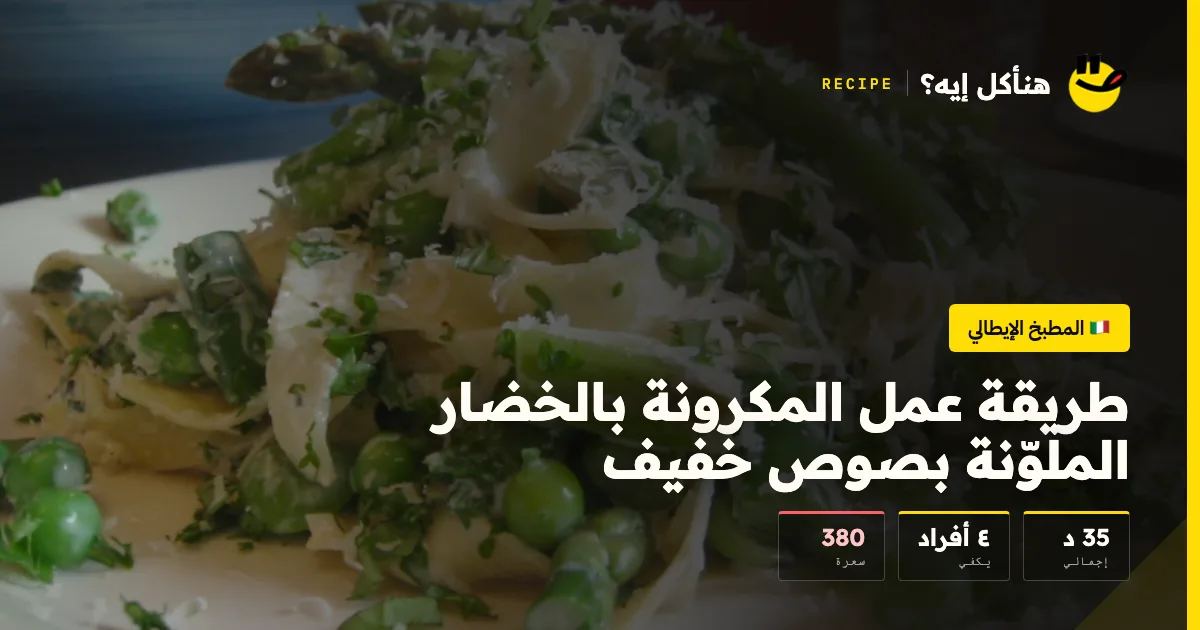
Vegetable pasta is a fast, complete, meat-free dinner, and its real Italian secret is something most people pour down the sink: the pasta cooking water.
Method
-
1
Salt the water
Bring plenty of water to the boil and salt it like seawater — a tablespoon per litre. This is your only chance to season the pasta itself from the inside.
⏱ 8 min -
2
Undercook the pasta
Boil the pasta two minutes short of the packet time. It finishes cooking in the sauce while absorbing its flavour; fully cooked pasta turns pasty.
⏱ 9 min -
3
Save the water
Before draining, keep a full cup of the cooking water. The dissolved starch in it is what binds sauce to pasta — the single most important step in the recipe.
⏱ 2 min -
4
Vegetables on high heat
In a wide pan heat the olive oil and brown the aubergine first for 4 minutes, then add the courgette, peppers and broccoli for 5 minutes only. High heat browns instead of steaming.
⏱ 11 min -
5
Garlic and cherry tomatoes
Add the garlic, chilli flakes and cherry tomatoes and toss for two minutes until the tomatoes start to split. Garlic goes in late so it does not burn.
⏱ 3 min -
6
Emulsify
Add the drained pasta and half a cup of the pasta water and toss over high heat for two minutes until the sauce wraps around the pasta and turns glossy.
⏱ 4 min -
7
Serve
Off the heat, add the parmesan and basil torn by hand. Basil cut with a knife oxidises and blackens within minutes.
⏱ 3 min
Cooked it? Rate it
Your rating tells the next cook whether this recipe is worth their time.
✓ Thanks — your rating is in.
Tips that actually matter
- Keep a cup of pasta water — the starch in it is what binds the sauce.
- Undercook by two minutes; the pasta finishes in the pan.
- High heat and a short cook keep the vegetables crisp and brightly coloured.
- Tear the basil by hand rather than cutting it — a knife oxidises it and turns it black.
People also ask
What does pasta water actually do?
It carries dissolved starch that emulsifies oil and liquid, so the sauce wraps around the noodles instead of pooling at the bottom of the bowl. It is the single most important technique in Italian pasta.
Why did my vegetables go soggy?
Low heat, a long cook and a crowded pan. Use the widest pan you own, keep the heat high, and give them five minutes — crowded vegetables release water and boil in it.
Can I make it without cheese?
Yes, for a fully vegan version. Substitute two tablespoons of nutritional yeast for the cheesy note, or add more olive oil and some toasted crushed nuts for body.
Cook mode
Pasta with Colourful Vegetables in a Light Sauce
-
1
Salt the water
Bring plenty of water to the boil and salt it like seawater — a tablespoon per litre. This is your only chance to season the pasta itself from the inside.
-
2
Undercook the pasta
Boil the pasta two minutes short of the packet time. It finishes cooking in the sauce while absorbing its flavour; fully cooked pasta turns pasty.
-
3
Save the water
Before draining, keep a full cup of the cooking water. The dissolved starch in it is what binds sauce to pasta — the single most important step in the recipe.
-
4
Vegetables on high heat
In a wide pan heat the olive oil and brown the aubergine first for 4 minutes, then add the courgette, peppers and broccoli for 5 minutes only. High heat browns instead of steaming.
-
5
Garlic and cherry tomatoes
Add the garlic, chilli flakes and cherry tomatoes and toss for two minutes until the tomatoes start to split. Garlic goes in late so it does not burn.
-
6
Emulsify
Add the drained pasta and half a cup of the pasta water and toss over high heat for two minutes until the sauce wraps around the pasta and turns glossy.
-
7
Serve
Off the heat, add the parmesan and basil torn by hand. Basil cut with a knife oxidises and blackens within minutes.


Comments
Cooked it? Tell us how it went, or ask a question — we read every comment.