
Tunisian Cuisine: Harissa, Tabil and the 6 Best-Known Dishes
Tunisian cooking is the hottest in North Africa, and the reason is harissa — a hot red chilli paste with garlic, coriander and caraway that goes into most dishes. Its second signature is tabil: a blend of ground coriander and caraway scattered over food, with no equivalent in neighbouring cuisines.
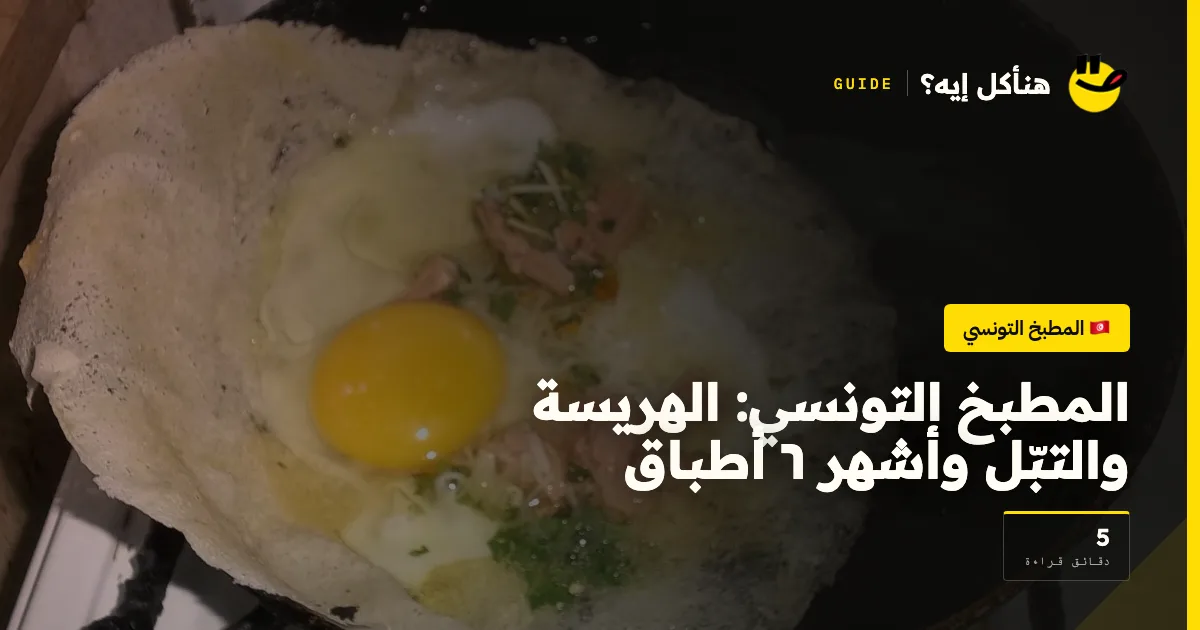
Tunisia is the smallest country in the Maghreb and the most mixed: Amazigh, Phoenician, Roman, Arab, Ottoman, Andalusian, Italian and French. The cuisine reflects all of it — pasta from Italy, couscous from the Amazigh, sweets from Andalusia, and harissa, which became its clearest identity.
The core dishes
1. Brik
A thin sheet of malsouka pastry filled with tuna, parsley, capers and a whole egg, then fried. The challenge is that the yolk must stay runny after frying — meaning a matter of seconds in very hot oil, not minutes.
Eating it has its own method: you hold the edge and bite carefully from the side so the yolk does not escape. That is part of the pleasure of the dish, and part of its reputation.
2. Lablabi
Cooked chickpeas and their liquid poured over torn stale bread, with each person assembling their own bowl: harissa, egg, tuna, olives, tabil, olive oil, lemon.
That assembly at the table is part of the dish's identity rather than a detail — which is why lablabi is sold in dedicated shops and everyone orders theirs to taste.
3. Ojja
Eggs cooked with potato, pepper, tomato and harissa, sometimes with merguez sausage. The rule: take it off while the egg is still moist and glossy — leaving it on the heat turns it rubbery.
4. Salade mechouia
Peppers and tomatoes grilled over flame, peeled and chopped by knife, with tuna, egg and olives. The peeling trick: after grilling they go into a sealed bag for ten minutes, and the steam separates skin from flesh.
Never wash them after grilling — that removes the layer of smoke which is the entire flavour. And never use a blender — that gives juice, not salad.
5. Tunisian couscous
Red with tomato and harissa, unlike the yellow saffron Moroccan version. It is made with fish on the coast and meat inland, and always steamed rather than boiled.
6. Makroudh
Semolina diamonds filled with date, fried over very low heat for six to eight minutes so the centre cooks through, then dipped into warm honey while still hot.
High heat browns the surface while the centre stays raw — the commonest mistake in the recipe.
Harissa — the Tunisian signature
A paste of dried red chillies ground with garlic, coriander, caraway and olive oil. It goes into soup, couscous, ojja, lablabi, salads and even sandwiches.
Real Tunisian harissa is hotter and deeper than commercial versions, because it is made from soaked dried chillies ground fresh. It is kept in a jar under a layer of olive oil and lasts months in the fridge.
Tabil and caraway
Tabil is a blend of ground coriander and caraway, and it is the aroma that identifies Tunisian food instantly and separates it from Moroccan and Algerian. Caraway in particular is rare in other Arab cuisines.
It is scattered over lablabi, soup and salads — added to the finished dish rather than cooked in it, so its aroma survives.
The Italian influence
Tunisia is the Arab country geographically closest to Italy, and pasta is a core part of Tunisian cooking rather than an exception. Macrouna with red sauce is eaten daily in many Tunisian homes.
The difference from the Italian is clear: the Tunisian sauce is darker red, hotter with harissa, cooked longer, and carries spices that have no place in the Italian version.
Ingredients worth buying
- Harissa: the single most important ingredient, and it keeps for months under oil.
- Tabil (ground coriander and caraway): the distinctive aroma of the cuisine.
- Brik pastry (malsouka): sold frozen in Arab grocers.
- Tuna in olive oil: it goes into brik, salads and ojja.
- Capers: pickled buds that give a salty sourness to salads and brik.
How a meal is ordered
A Tunisian meal begins with a salad — mechouia, or a very finely chopped Tunisian salad — then the main course, with bread always present. Harissa is set on the table in a small dish and each person takes what they want.
Mint tea, or tea with pine nuts, is served afterwards — the toasted pine nuts in tea being a distinctly Tunisian custom, absent in Morocco and Algeria.
Common mistakes
- Frying brik too long: the yolk sets and the dish loses its whole point.
- Washing the grilled vegetables: the smoke flavour disappears entirely.
- Using a blender for mechouia: it becomes juice, not salad.
- Frying makroudh over high heat: brown outside, raw within.
- Fresh bread in lablabi: it turns into a sticky paste.
Where to start
Ojja is the easiest entry — twenty minutes with ingredients any kitchen has, and it teaches you to control egg doneness. Then salade mechouia (slow to grill but with simple steps).
After those, lablabi (needs chickpeas soaked overnight) and brik (needs confidence in a fast fry). Makroudh last, because it demands patience in slow frying.
On the heat
Tunisian food is genuinely hot, but the heat is controllable because harissa is added rather than built into the ingredients. If you are cooking for children, halve the harissa and offer it on the side.
Tunisian heat is also a different kind from Mexican or Thai: slower to arrive, deeper and warmer, because it comes from dried chilli and garlic rather than fresh chilli.
Tunisian sweets
Makroudh is the best known, followed by Tunisian baklava (with almond and hazelnut rather than pistachio), zlabia and basbousa. Most are made in Ramadan and at Eid.
The common rule across Tunisian sweets: orange blossom water more than rose water, and a lighter syrup than the Egyptian equivalent.
FAQ
إيه هي الهريسة؟
معجون فلفل أحمر مجفّف مطحون مع ثوم وكزبرة وكراوية وزيت زيتون. بتدخل في معظم الأطباق التونسية، وبتتحفظ تحت طبقة زيت زيتون وبتقعد شهور في التلاجة.
إيه هو التبّل التونسي؟
خليط كزبرة وكراوية مطحونة، وهو الرائحة المميّزة للمطبخ التونسي. بيترشّ على اللبلابي والشوربة والسلطات بعد الطبخ، ومش بيتطبخ معاها عشان ريحته ما تروحش.
إيه الفرق بين الكسكس التونسي والمغربي؟
التونسي أحمر بالطماطم والهريسة وأحرّ، وبيتعمل بالسمك كتير في المناطق الساحلية. المغربي أصفر بالزعفران والكركم وأهدى، وغالبًا بالخضار واللحم.
Comments
Cooked it? Tell us how it went, or ask a question — we read every comment.