
Crispy Chinese Peking Duck
The secret of crisp Peking duck skin is separating the skin from the meat with air, then scalding it with a boiling solution to tighten it, then drying it uncovered in the fridge for 24–48 hours. Complete dryness is the one condition for crispness.
- Prep
- 90 min
- Cook
- 120 min
- Total
- 210 min
- Calories
- 480
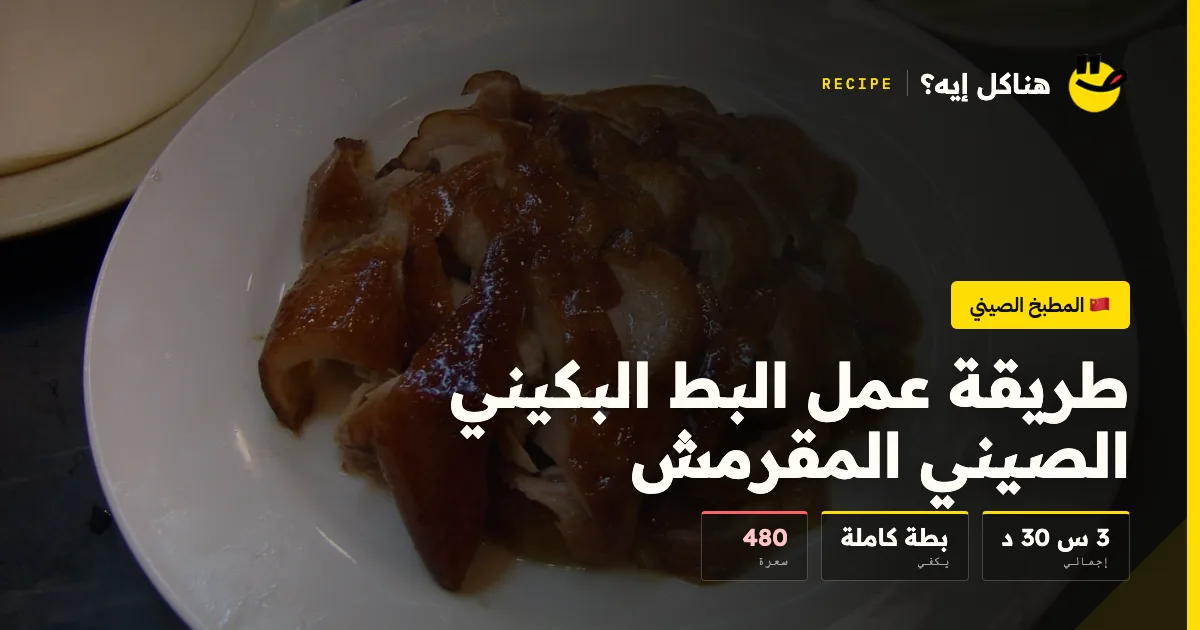
Photo: Mr Wabu — CC BY-SA 2.0 · Wikimedia Commons
Peking duck is an imperial dish centuries old, and its traditional preparation takes days. This home version gets as close as possible with ordinary kitchen equipment.
Method
-
1
Cleaning the duck and separating the skin
Remove any remaining feathers and the excess fat from the cavity opening. Separate the skin from the meat by gently working your fingers in from the neck opening and moving them between skin and meat — without tearing the skin. The air that gets between the two layers is what lets the skin lift and crisp instead of sticking and going soft.
-
2
Scalding
Bring the water to the boil with the ginger and spring onions and ladle it over the duck skin in batches for two minutes, turning the duck so all the skin is covered. You’ll see the skin tighten and shrink at once. This step seals the pores of the skin and removes surface fat.
-
3
Brushing with the glaze
Mix the vinegar, honey and salt with half a cup of the scalding water, and brush it over the whole skin 3 times, letting the skin dry between coats. The sugar gives the glossy brown colour, and the vinegar helps the skin crisp.
-
4
Drying — the decisive step
Stand the duck upright or on a rack over a tray, completely uncovered in the fridge, for 24 to 48 hours. The dry air draws all the moisture out of the skin until it feels like tight paper. This step isn’t optional — without it there is no crispness, whatever you do in the oven.
-
5
Roasting in two stages
Season the cavity with the five-spice and put spring onions and ginger inside. Roast at 160°C for 1½ hours, breast side up, on a rack over a tray holding a cup of water (it stops the fat from burning). Then raise the heat to 220°C for 20–25 minutes until the skin is deep brown and crisp.
-
6
Carving and serving
Leave the duck to rest for 15 minutes uncovered (not under foil — the steam will soften the skin). Slice the skin and meat thinly. Serve with warm pancakes, hoisin sauce, and cucumber and spring onion strips — each person spreads a pancake with sauce, adds the slices and rolls it up.
Cooked it? Rate it
Your rating tells the next cook whether this recipe is worth their time.
✓ Thanks — your rating is in.
Tips that actually matter
- Drying in the fridge for 24–48 hours is the whole recipe — any shortcut means soft skin.
- Don’t cover the duck with foil at any stage — trapped steam destroys the crispness.
- The cup of water in the tray stops the dripping fat from burning and smoking.
- The duck fat that drips off is gold — strain it and keep it for roasting potatoes; it keeps for months in the fridge.
People also ask
Why must I dry the duck in the fridge for two days?
Because wet skin spends all the oven’s heat evaporating water instead of browning, so it stays soft. Drying it uncovered draws out all the moisture until the skin is like paper — and that is the one condition for crispness.
Why separate the skin from the meat?
The air between the layers stops the skin from sticking to the meat during roasting, so the fat underneath melts and escapes and the skin crisps on its own. Skin that sticks soaks up the juices and goes soft.
Can I skip the scalding?
You can, but the result is weaker. Scalding seals the pores, tightens the skin and removes surface fat, which helps it dry and brown. If you skip it, extend the drying to a full 48 hours.
What can I use instead of Chinese pancakes?
Thin saj bread, small tortillas or another thin flatbread. It needs to be thin, soft and easy to roll — steam it before serving so it stays soft.
Cook mode
Crispy Chinese Peking Duck
-
1
Cleaning the duck and separating the skin
Remove any remaining feathers and the excess fat from the cavity opening. Separate the skin from the meat by gently working your fingers in from the neck opening and moving them between skin and meat — without tearing the skin. The air that gets between the two layers is what lets the skin lift and crisp instead of sticking and going soft.
-
2
Scalding
Bring the water to the boil with the ginger and spring onions and ladle it over the duck skin in batches for two minutes, turning the duck so all the skin is covered. You’ll see the skin tighten and shrink at once. This step seals the pores of the skin and removes surface fat.
-
3
Brushing with the glaze
Mix the vinegar, honey and salt with half a cup of the scalding water, and brush it over the whole skin 3 times, letting the skin dry between coats. The sugar gives the glossy brown colour, and the vinegar helps the skin crisp.
-
4
Drying — the decisive step
Stand the duck upright or on a rack over a tray, completely uncovered in the fridge, for 24 to 48 hours. The dry air draws all the moisture out of the skin until it feels like tight paper. This step isn’t optional — without it there is no crispness, whatever you do in the oven.
-
5
Roasting in two stages
Season the cavity with the five-spice and put spring onions and ginger inside. Roast at 160°C for 1½ hours, breast side up, on a rack over a tray holding a cup of water (it stops the fat from burning). Then raise the heat to 220°C for 20–25 minutes until the skin is deep brown and crisp.
-
6
Carving and serving
Leave the duck to rest for 15 minutes uncovered (not under foil — the steam will soften the skin). Slice the skin and meat thinly. Serve with warm pancakes, hoisin sauce, and cucumber and spring onion strips — each person spreads a pancake with sauce, adds the slices and rolls it up.





Comments
Cooked it? Tell us how it went, or ask a question — we read every comment.