
Chinese Steamed Bao with Chicken Filling
Bao are Chinese buns made from a soft yeast dough that is steamed rather than baked, so they stay white and fluffy. To stop them shrinking after steaming, keep the lid closed for 5 minutes after turning off the heat before you open it — the sudden temperature shock makes them wrinkle.
- Prep
- 50 min
- Cook
- 15 min
- Total
- 65 min
- Calories
- 240
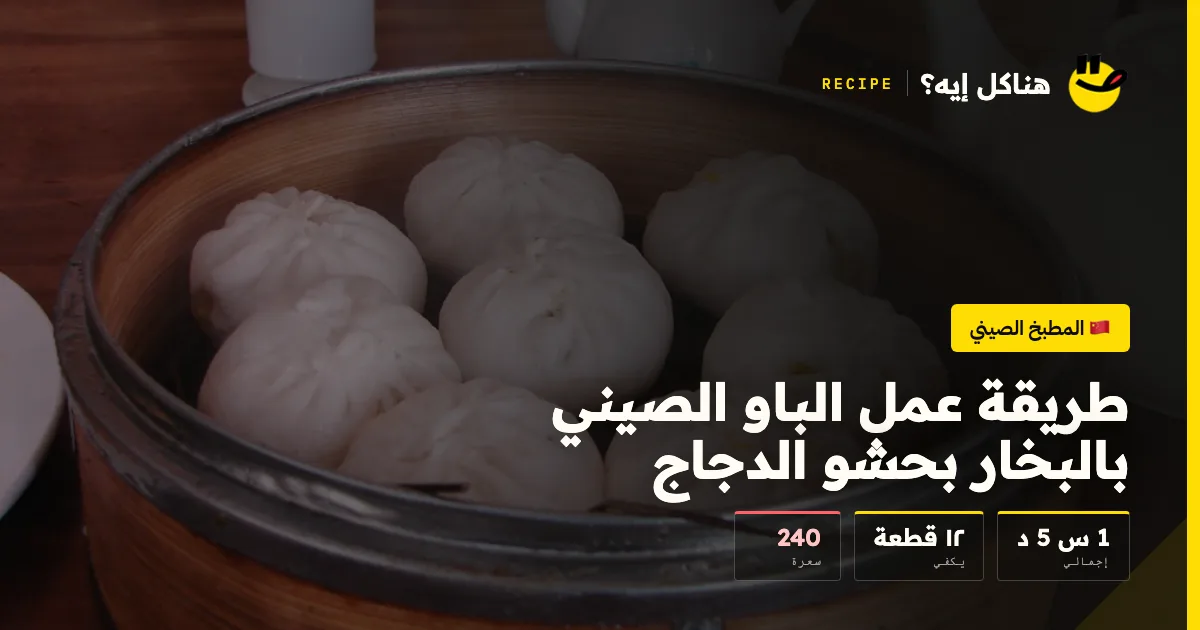
Photo: J. Samuel Burner — CC BY 2.0 · Wikimedia Commons
Bao are one of the most widespread street foods in China, and their magic is in the contrast: a very light, white, spongy dough around a boldly seasoned filling. Making them at home is much easier than it looks.
Method
-
1
The dough
Mix the flour, yeast, sugar and baking powder, then add the warm milk and oil. Knead for 10 minutes until the dough is very soft and smooth — that smoothness is what gives bao their sleek surface. Cover and leave to rise for an hour.
-
2
The filling
Fry the onion in oil for 5 minutes, then add the minced chicken and ginger and stir until cooked. Add the soy sauce, the hoisin and the cornflour dissolved in two spoonfuls of water. Simmer for 5 minutes until thick, then add the spring onions and sesame oil. Let it cool completely.
-
3
Knocking back and dividing
Punch the dough down gently to release the air, and knead it for 2 more minutes. Divide it into 12 equal balls, using scales. Equal sizes matter so they all cook at the same time.
-
4
Rolling and filling
Roll each ball into a 10 cm circle, keeping the middle thicker than the edges — thin edges pleat more easily and the thick middle holds the filling. Put a spoonful of filling in the middle.
-
5
Pleating
Hold the edge with your fingers and make small, successive pleats as you turn the circle, then pinch them closed in the middle and twist. If pleating is hard, gather the edges together over the top and turn the ball over so the seam is underneath.
-
6
The second rise
Put each bun on a square of baking paper, and arrange them in the steamer basket 3 cm apart. Cover and leave them for 25–30 minutes until puffed. This second rise is what gives bao their lightness.
-
7
Steaming and cooling gradually
Set the basket over water at a gentle, not a rolling, boil and steam for 12–15 minutes. Turn off the heat and keep the lid closed for 5 minutes before opening it — opening it suddenly causes a temperature shock, and the bao shrink and wrinkle.
Cooked it? Rate it
Your rating tells the next cook whether this recipe is worth their time.
✓ Thanks — your rating is in.
Tips that actually matter
- Wrap the basket lid in a towel so drops don’t fall on the bao.
- Keep the water at a gentle boil — a rolling boil leaves marks on the surface.
- Leave the lid on for 5 minutes after turning off the heat so they don’t shrink.
- The filling must cool completely before you fill the buns, so it doesn’t soften the dough.
- Divide the dough with scales so they all cook together.
People also ask
Why did the bao shrink after steaming?
Temperature shock from opening the lid suddenly. Turn off the heat and keep the lid closed for 5 minutes. The second cause is over-proofing — if they puff up more than they should, they collapse in the steam.
Why did my bao come out yellowish, not white?
The flour you used is slightly dark, or the dough rose for too long. For bright white bao use fine white flour, and you can add a teaspoon of white vinegar to the dough — it lightens the colour and can’t be tasted.
There are water spots on top — why?
Condensed steam dripped from the lid. Wrap the lid in a clean cotton towel to absorb the steam, and keep the water at a gentle boil, not a violent one.
Can I freeze them?
Yes, in two ways: freeze them after steaming and reheat them in the steamer for 5–7 minutes (the easiest), or freeze them after shaping, before the second rise, then let them puff up for two hours before steaming. The first method gives the more reliable result.
Cook mode
Chinese Steamed Bao with Chicken Filling
-
1
The dough
Mix the flour, yeast, sugar and baking powder, then add the warm milk and oil. Knead for 10 minutes until the dough is very soft and smooth — that smoothness is what gives bao their sleek surface. Cover and leave to rise for an hour.
-
2
The filling
Fry the onion in oil for 5 minutes, then add the minced chicken and ginger and stir until cooked. Add the soy sauce, the hoisin and the cornflour dissolved in two spoonfuls of water. Simmer for 5 minutes until thick, then add the spring onions and sesame oil. Let it cool completely.
-
3
Knocking back and dividing
Punch the dough down gently to release the air, and knead it for 2 more minutes. Divide it into 12 equal balls, using scales. Equal sizes matter so they all cook at the same time.
-
4
Rolling and filling
Roll each ball into a 10 cm circle, keeping the middle thicker than the edges — thin edges pleat more easily and the thick middle holds the filling. Put a spoonful of filling in the middle.
-
5
Pleating
Hold the edge with your fingers and make small, successive pleats as you turn the circle, then pinch them closed in the middle and twist. If pleating is hard, gather the edges together over the top and turn the ball over so the seam is underneath.
-
6
The second rise
Put each bun on a square of baking paper, and arrange them in the steamer basket 3 cm apart. Cover and leave them for 25–30 minutes until puffed. This second rise is what gives bao their lightness.
-
7
Steaming and cooling gradually
Set the basket over water at a gentle, not a rolling, boil and steam for 12–15 minutes. Turn off the heat and keep the lid closed for 5 minutes before opening it — opening it suddenly causes a temperature shock, and the bao shrink and wrinkle.


Comments
Cooked it? Tell us how it went, or ask a question — we read every comment.