
Eid Biscuits with Ghee
The secret to airy Eid biscuits is that flour is added gradually and you stop as soon as the dough stops sticking to your hand — without forcing the whole kilo in — and that the ghee and sugar are whipped for 5 minutes until they turn white. Excess flour and heavy kneading result in rock-hard biscuits, while good whipping is what makes them light and airy.
- Prep
- 55 min
- Cook
- 50 min
- Total
- 105 min
- Calories
- 180
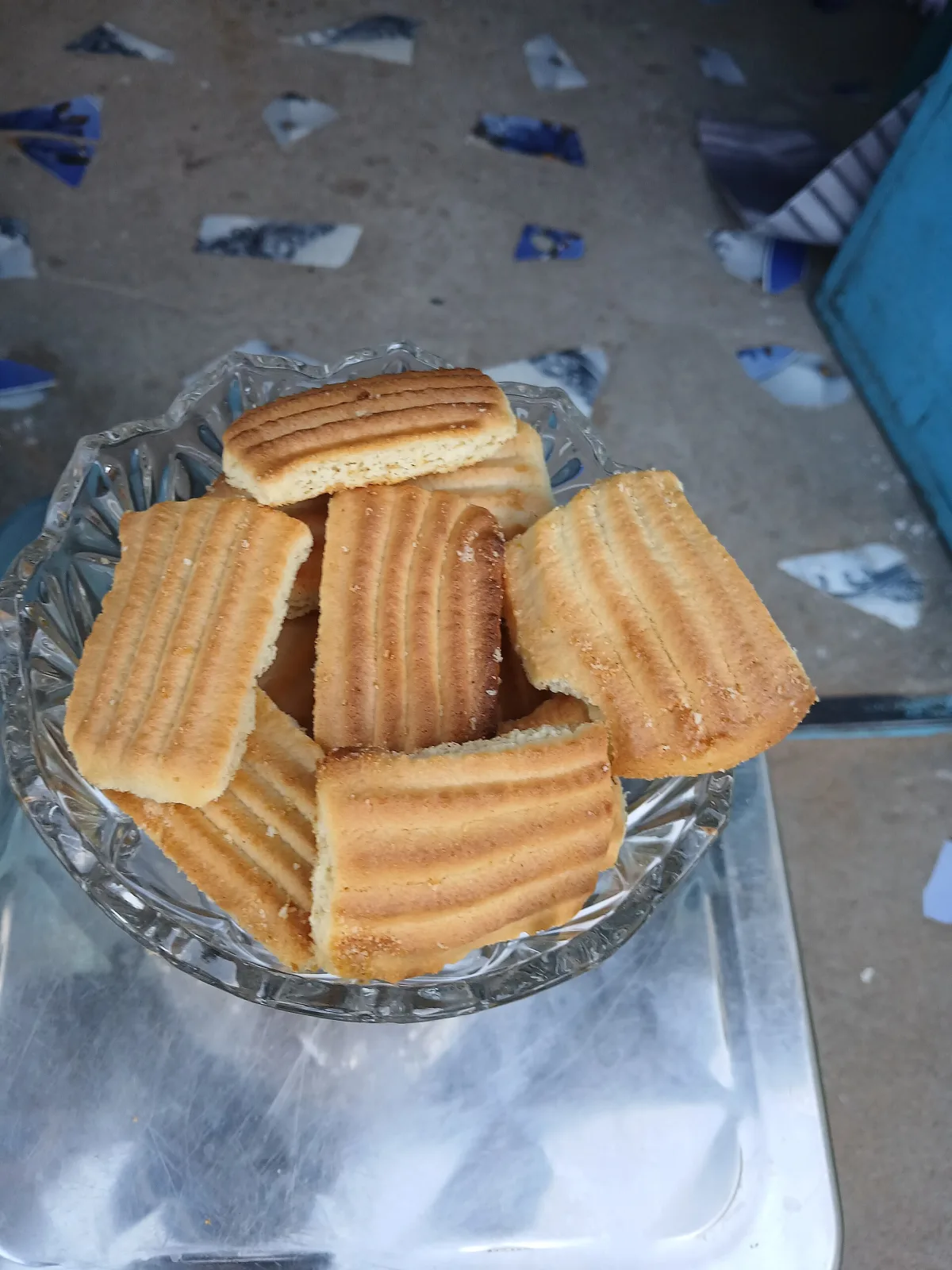
Photo: تسابيح بوحة / Wikimedia Commons · CC0 · https://commons.wikimedia.org/wiki/File:%D8%A8%D8%B3%D9%83%D9%88%D9%8A%D8%AA_%D8%A7%D9%84%D8%B4%D8%A7%D9%89_(%D9%85%D8%B9%D8%AC%D9%86%D8%A7%D8%AA_%D9%88%D8%AE%D8%A8%D8%A7%D8%A6%D8%B2).jpg
Eid biscuits made with ghee are a staple in Egyptian homes alongside kahk, ghorayeba, and petit four: golden striped fingers brushed with egg, made by the kilo, and shaped using a biscuit press, meat grinder, or by hand. Baker's ammonia (nashador) gives them the light crunch that sets them apart from any cookies.
Method
-
1
Nashador in the Milk
Dissolve the nashador in the cup of milk and stir until it disappears, ensuring the milk is at room temperature, not hot — nashador releases its gas with heat, so hot milk ruins its effect before the oven. Its smell will be pungent, which is normal and disappears in the oven.
⏱ 3 min -
2
Whipping Ghee and Sugar
Whip the ghee and powdered sugar for 5 minutes with a mixer until the mixture turns white, creamy, and light. This whipping introduces air that makes the biscuits airy from the inside.
⏱ 5 min -
3
Eggs and Vanilla
Add the eggs one by one, whipping after each until incorporated, then add the vanilla. Adding all the eggs at once causes the mixture to separate and become crumbly.
⏱ 4 min -
4
Milk with Nashador
Pour in the milk with nashador and mix on low speed. The mixture will look a bit separated — that is normal, the flour will bring it together.
⏱ 1 min -
5
Gradual Flour
Sift the flour with baking powder and salt, and add it cup by cup, gently mixing with your hand. Stop as soon as the dough is soft and non-sticky to your hand — a cup or two from the kilo may remain, as flour absorption varies. Do not over-knead: kneading activates the gluten, making the biscuits tough.
⏱ 8 min -
6
Shaping
Shape the dough using a biscuit press or the biscuit attachment on a grinder, cutting fingers about 6 cm long, or shape them by hand into rings and braids. Keep the thickness uniform across the tray so they bake evenly, and leave 2 cm between each piece. The tray does not need greasing because the dough contains enough ghee.
⏱ 30 min -
7
Brushing
Whip the egg with the tablespoon of milk, and brush the top lightly without dripping onto the tray — excess wash pools underneath the biscuits and burns.
⏱ 5 min -
8
Baking Tray by Tray
Bake on the middle rack at 180°C for 12–15 minutes until the bottom browns and the top takes on a light golden color. If the top is still pale, turn on the top heat for a minute or two while watching closely. This amount yields 3–4 trays.
⏱ 15 min -
9
Cooling and Storing
Let the biscuits cool completely on the tray before removing them — they come out of the oven soft and get crunchy as they cool. Store them in an airtight container, and do not seal them while warm because the steam softens them.
⏱ 15 min
Cooked it? Rate it
Your rating tells the next cook whether this recipe is worth their time.
✓ Thanks — your rating is in.
Tips that actually matter
- If the biscuits retain a nashador smell after cooling, the thickness was too heavy or they were underbaked — make the size smaller and add 2 minutes in the oven.
- If the dough tears in the press, add a tablespoon of milk and gently knead it; if it sticks in the press, refrigerate it for 10 minutes.
- Nashador is strictly for thin, crispy biscuits — it is not suitable for cakes or thick items, because its gas remains trapped inside with its smell.
- For a darker top color, add a pinch of instant coffee to the egg wash.
People also ask
What is the substitute for nashador in Eid biscuits?
Omit the nashador and use two tablespoons of baking powder per kilo. The biscuits will turn out good but slightly softer and less crunchy, because nashador releases all its gas in the oven and leaves no moisture inside.
Why did the biscuits turn out dry and hard?
Due to one of three things: excess flour beyond the dough's need, over-kneading, or staying in the oven until the top turned dark brown. Stop adding flour as soon as the dough stops sticking, and remove them as soon as the bottom browns.
Can I make them with butter instead of ghee?
Yes, using the same weight, and the flavor will be lighter. Butter contains about 15% water, so you might need slightly less flour, and the biscuits turn out less airy than those made with ghee.
How long do Eid biscuits last?
In an airtight container away from moisture and sunlight, they stay crispy for 3–4 weeks. If they soften, return them to the oven at 150°C for 5 minutes and let them cool again.
Cook mode
Eid Biscuits with Ghee
-
1
Nashador in the Milk
Dissolve the nashador in the cup of milk and stir until it disappears, ensuring the milk is at room temperature, not hot — nashador releases its gas with heat, so hot milk ruins its effect before the oven. Its smell will be pungent, which is normal and disappears in the oven.
-
2
Whipping Ghee and Sugar
Whip the ghee and powdered sugar for 5 minutes with a mixer until the mixture turns white, creamy, and light. This whipping introduces air that makes the biscuits airy from the inside.
-
3
Eggs and Vanilla
Add the eggs one by one, whipping after each until incorporated, then add the vanilla. Adding all the eggs at once causes the mixture to separate and become crumbly.
-
4
Milk with Nashador
Pour in the milk with nashador and mix on low speed. The mixture will look a bit separated — that is normal, the flour will bring it together.
-
5
Gradual Flour
Sift the flour with baking powder and salt, and add it cup by cup, gently mixing with your hand. Stop as soon as the dough is soft and non-sticky to your hand — a cup or two from the kilo may remain, as flour absorption varies. Do not over-knead: kneading activates the gluten, making the biscuits tough.
-
6
Shaping
Shape the dough using a biscuit press or the biscuit attachment on a grinder, cutting fingers about 6 cm long, or shape them by hand into rings and braids. Keep the thickness uniform across the tray so they bake evenly, and leave 2 cm between each piece. The tray does not need greasing because the dough contains enough ghee.
-
7
Brushing
Whip the egg with the tablespoon of milk, and brush the top lightly without dripping onto the tray — excess wash pools underneath the biscuits and burns.
-
8
Baking Tray by Tray
Bake on the middle rack at 180°C for 12–15 minutes until the bottom browns and the top takes on a light golden color. If the top is still pale, turn on the top heat for a minute or two while watching closely. This amount yields 3–4 trays.
-
9
Cooling and Storing
Let the biscuits cool completely on the tray before removing them — they come out of the oven soft and get crunchy as they cool. Store them in an airtight container, and do not seal them while warm because the steam softens them.



Comments
Cooked it? Tell us how it went, or ask a question — we read every comment.