
Greek Baklava with Walnuts and Honey
The rule that matters: hot baklava plus cold syrup (or the reverse, but never both at the same temperature). Both hot gives soft, soggy baklava. And the cutting must happen before the oven — after baking the layers shatter.
- Prep
- 45 min
- Cook
- 50 min
- Total
- 95 min
- Calories
- 340
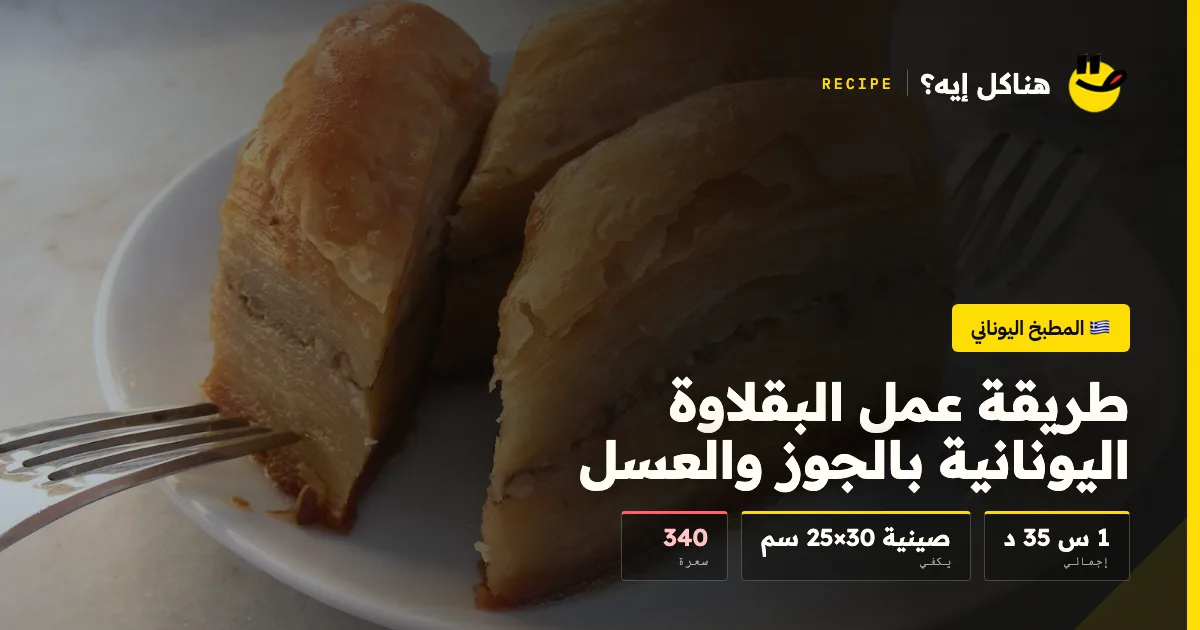
Photo: Kultigin — Public domain · Wikimedia Commons
Greek baklava differs from the Levantine kind: the filling is walnut rather than pistachio, and the syrup is honey with cinnamon and clove rather than sugar with orange blossom. Sweeter and deeper in flavour, with thinner filo layers.
Method
-
1
Syrup first
Boil the sugar, water, cinnamon, cloves and lemon peel for 10 minutes, take it off and add the honey and lemon juice. Let it cool completely in the fridge.
⏱ 15 min -
2
The filling
Mix the coarsely crushed walnuts with the sugar, cinnamon, cloves and nutmeg.
⏱ 6 min -
3
Bottom layers
Butter the tray and lay down 8 sheets of filo, brushing each with butter. Cover the remaining filo with a damp cloth so it does not dry out.
⏱ 10 min -
4
Alternate
Spread a third of the filling, then 4 buttered sheets, another third, 4 sheets, and the last third.
⏱ 12 min -
5
Top layers
Lay 8 sheets on top, brushing each, and brush the surface generously.
⏱ 8 min -
6
Cut before the oven
Cut it into diamonds with a sharp knife right down to the base before it goes into the oven. After baking the layers shatter and cutting ruins the shape.
⏱ 6 min -
7
Bake
Bake at 165°C (gentle) for 45 to 50 minutes until deep golden. The long, gentle heat cooks the inner layers.
⏱ 50 min -
8
The syrup
The moment it comes out of the oven while still sizzling, pour the cold syrup slowly over it. You will hear a crackle — that is the sign of success. Leave it 6 hours before serving.
⏱ 10 min
Cooked it? Rate it
Your rating tells the next cook whether this recipe is worth their time.
✓ Thanks — your rating is in.
Tips that actually matter
- Hot baklava plus cold syrup. Both hot equals soggy baklava.
- Cut it before the oven, right down to the base — cutting after baking shatters the layers.
- Gentle heat and a long time — high heat burns the top and leaves the centre raw.
- Cover the filo with a damp cloth while you work — it dries and cracks within minutes.
- Leave it at least 6 hours before serving so it absorbs the syrup fully.
People also ask
How is it different from Levantine baklava?
The Greek version uses walnuts, honey, cinnamon and cloves, with more and thinner layers. The Levantine uses pistachio and a sugar syrup with orange blossom, and tastes milder and less spiced.
Why did my baklava come out soft?
The syrup was hot, or there was too much of it, or the baking was insufficient. Baklava must come out deep golden, and the syrup fridge-cold.
How long does it keep?
Two weeks in an airtight tin outside the fridge. The fridge introduces moisture and softens the layers.
Cook mode
Greek Baklava with Walnuts and Honey
-
1
Syrup first
Boil the sugar, water, cinnamon, cloves and lemon peel for 10 minutes, take it off and add the honey and lemon juice. Let it cool completely in the fridge.
-
2
The filling
Mix the coarsely crushed walnuts with the sugar, cinnamon, cloves and nutmeg.
-
3
Bottom layers
Butter the tray and lay down 8 sheets of filo, brushing each with butter. Cover the remaining filo with a damp cloth so it does not dry out.
-
4
Alternate
Spread a third of the filling, then 4 buttered sheets, another third, 4 sheets, and the last third.
-
5
Top layers
Lay 8 sheets on top, brushing each, and brush the surface generously.
-
6
Cut before the oven
Cut it into diamonds with a sharp knife right down to the base before it goes into the oven. After baking the layers shatter and cutting ruins the shape.
-
7
Bake
Bake at 165°C (gentle) for 45 to 50 minutes until deep golden. The long, gentle heat cooks the inner layers.
-
8
The syrup
The moment it comes out of the oven while still sizzling, pour the cold syrup slowly over it. You will hear a crackle — that is the sign of success. Leave it 6 hours before serving.



Comments
Cooked it? Tell us how it went, or ask a question — we read every comment.