
Sicilian Aubergine Caponata
Caponata is a Sicilian dish of fried aubergine with celery, onion, tomatoes, olives and capers, dressed with vinegar and sugar — that sweet-and-sour balance is the identity of the dish. It is eaten cold or at room temperature, not hot.
- Prep
- 30 min
- Cook
- 35 min
- Total
- 65 min
- Calories
- 210
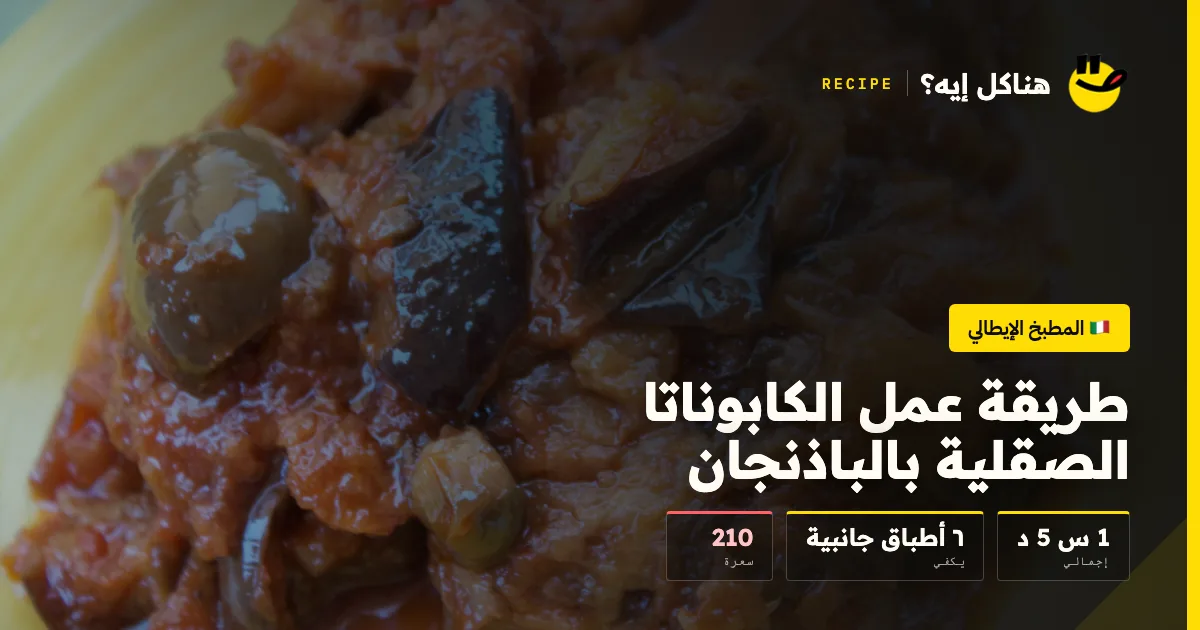
Photo: Massimoweb — CC BY-SA 3.0 · Wikimedia Commons
Caponata isn’t quite a salad or a side dish — it sits somewhere between the two, and it tastes better the next day. Like most Sicilian dishes, it pairs sweet and sour in a way that tells the island’s history.
Method
-
1
Salting the aubergine
Cube the aubergine, sprinkle it with salt and leave it in a colander for 30 minutes, then pat it dry well with kitchen paper. This draws water out of the cells, so the aubergine absorbs far less oil and browns better.
-
2
Frying the aubergine
Heat half the oil in a wide pan over high heat and fry the aubergine in batches until golden on all sides — 6–8 minutes per batch. Drain on a wire rack. Crowding lowers the heat, so the aubergine stews and soaks up oil.
-
3
Blanching the celery
Blanch the celery in salted water for 3 minutes and drain. The quick boil removes its bitterness while keeping its crunch — raw celery is too strong in caponata.
-
4
The onion and tomato base
In the same pan, sauté the onion in the rest of the oil for 8 minutes until sweet. Add the crushed tomatoes, salt and pepper, and simmer over medium heat for 15 minutes until the sauce thickens.
-
5
The sweet and sour (agrodolce)
Dissolve the sugar in the vinegar in a cup, pour it over the sauce and let it bubble for 2 minutes until the sharp smell of vinegar eases. Taste and adjust: you should clearly taste both sweetness and sourness, with neither taking over.
-
6
Bringing it together
Return the aubergine and celery to the pan and add the olives and capers. Stir gently and leave over low heat for just 5 minutes so the flavours blend without the aubergine breaking up.
-
7
Resting and serving
Turn off the heat and leave it to rest for at least 2 hours at room temperature — it is best the next day. Serve it cold or at room temperature with the toasted pine nuts and basil on top and toasted bread alongside.
Cooked it? Rate it
Your rating tells the next cook whether this recipe is worth their time.
✓ Thanks — your rating is in.
Tips that actually matter
- Salt the aubergine for 30 minutes and dry it — it halves the oil it absorbs.
- Fry in batches; crowding stews the aubergine.
- Blanch the celery for 3 minutes before adding it to take away its bitterness.
- Taste and adjust the sweet-sour balance — it is the heart of the recipe.
- It is clearly better the next day.
People also ask
The aubergine soaks up a lot of oil — what’s the fix?
Salt it for 30 minutes and dry it well, then fry it in very hot oil in batches. You can also roast it at 220°C for 25 minutes with a drizzle of oil instead of frying — much lighter and very close in result.
Is it eaten hot or cold?
Cold or at room temperature — and that isn’t a detail, it is part of the dish. The cool temperature makes the sweet-sour balance clearer. Serve it as a starter, beside fish or meat, or on toasted bread.
Can I make it without capers?
Capers add saltiness and a distinctive flavour, and without them the dish is simpler. If you can’t find them, add a few more olives and a pinch of salt. If you do find them, use them — they are a hallmark of authentic caponata.
How long does it keep?
4–5 days in the fridge in an airtight container, and it improves every day. Take it out half an hour before serving so the oil turns liquid again and the flavours open up.
Cook mode
Sicilian Aubergine Caponata
-
1
Salting the aubergine
Cube the aubergine, sprinkle it with salt and leave it in a colander for 30 minutes, then pat it dry well with kitchen paper. This draws water out of the cells, so the aubergine absorbs far less oil and browns better.
-
2
Frying the aubergine
Heat half the oil in a wide pan over high heat and fry the aubergine in batches until golden on all sides — 6–8 minutes per batch. Drain on a wire rack. Crowding lowers the heat, so the aubergine stews and soaks up oil.
-
3
Blanching the celery
Blanch the celery in salted water for 3 minutes and drain. The quick boil removes its bitterness while keeping its crunch — raw celery is too strong in caponata.
-
4
The onion and tomato base
In the same pan, sauté the onion in the rest of the oil for 8 minutes until sweet. Add the crushed tomatoes, salt and pepper, and simmer over medium heat for 15 minutes until the sauce thickens.
-
5
The sweet and sour (agrodolce)
Dissolve the sugar in the vinegar in a cup, pour it over the sauce and let it bubble for 2 minutes until the sharp smell of vinegar eases. Taste and adjust: you should clearly taste both sweetness and sourness, with neither taking over.
-
6
Bringing it together
Return the aubergine and celery to the pan and add the olives and capers. Stir gently and leave over low heat for just 5 minutes so the flavours blend without the aubergine breaking up.
-
7
Resting and serving
Turn off the heat and leave it to rest for at least 2 hours at room temperature — it is best the next day. Serve it cold or at room temperature with the toasted pine nuts and basil on top and toasted bread alongside.




Comments
Cooked it? Tell us how it went, or ask a question — we read every comment.