
Korean Kimbap with Vegetables
Kimbap is a Korean rice roll wrapped in nori with vegetables and protein. The essential difference from sushi is that the rice is seasoned with sesame oil and salt rather than rice vinegar, and the filling is cooked, not raw.
- Prep
- 40 min
- Cook
- 20 min
- Total
- 60 min
- Calories
- 340
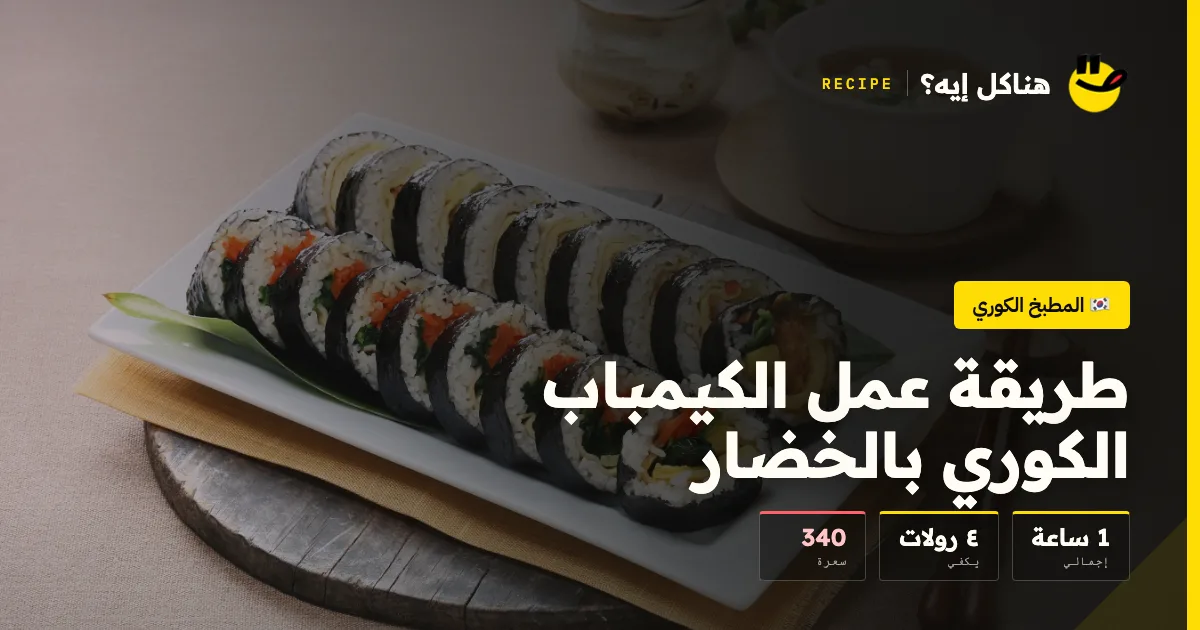
Photo: changupn — CC0 · Wikimedia Commons
Kimbap is Korea's picnic food — eaten cold and sturdy enough to travel, which makes it ideal for a lunchbox. It looks like sushi, but the flavour and the whole philosophy behind it are different.
Method
-
1
Seasoning the rice
The rice has to be warm — not hot and not cold. Fold it with the sesame oil, salt and sesame seeds using a cutting motion with a wooden spoon rather than stirring in circles; stirring crushes the grains and turns the rice to paste. The sesame oil is the Korean signature here, and it takes the place of the vinegar in sushi rice.
-
2
Preparing the filling
Blanch the spinach for one minute in boiling water, move it straight into iced water, squeeze it dry, and dress it with a little sesame oil and salt. Sauté the carrot in a drop of oil for two minutes only. Make a thin omelette from the eggs and cut it into strips. Fry the beef with the soy and sugar until it has absorbed them.
-
3
Spreading the rice
Put a sheet of nori on the rolling mat rough side up, and spread the rice over it with a wet hand — rice sticks to a dry one. Leave 3cm clear at the far edge so the roll can seal. And keep the layer thin — too much rice and the roll bursts open.
-
4
Arranging the filling
Lay the filling in a horizontal line across the third nearest you: carrot, spinach, egg, radish, beef. Alternate the colours so the slices look good. Do not overfill — too much filling stops the roll closing.
-
5
Rolling
Lift the near edge with the mat and roll away from you while pressing inwards with your fingers so the filling stays put. Keep rolling with steady pressure to the end, and wet the final edge with a little water so it sticks. Press the whole roll in the mat for 30 seconds to set it.
-
6
Slicing and serving
Brush the outside of the roll with sesame oil and scatter sesame seeds. Cut it with a sharp, wet knife — wipe and wet it between every two slices so the rice does not drag and the cuts stay clean. Cut slices 2cm thick and serve at room temperature.
Cooked it? Rate it
Your rating tells the next cook whether this recipe is worth their time.
✓ Thanks — your rating is in.
Tips that actually matter
- Warm rice, not hot — hot rice dampens the nori and tears it, and cold rice crumbles.
- Keep your hand wet the whole time you are spreading the rice, or you will spend the session peeling it off your fingers.
- Wet the knife between every two slices — that is the difference between clean rounds and squashed ones.
- Kimbap does not go in the fridge — cold hardens the rice. Eat it the same day at room temperature.
People also ask
What is the difference between kimbap and sushi?
Kimbap rice is seasoned with sesame oil and salt; sushi rice with rice vinegar and sugar. Kimbap filling is fully cooked (vegetables, beef, egg), while sushi often carries raw fish. And kimbap is eaten as a complete meal.
Why does my roll fall apart?
Usually too much rice or too much filling. The rice should be a thin layer with 3cm left clear at the far edge. Pressure matters too — press the roll in the mat for 30 seconds once it is rolled.
Can I make it vegetarian?
Easily — leave out the beef and egg and add more vegetables: grilled mushroom, coloured peppers, avocado, seasoned tofu. Vegetarian kimbap is very common in Korea itself.
How long does it keep?
Eat it the same day at room temperature. Do not refrigerate it — the cold hardens the rice and ruins the texture, which is exactly why it is picnic food made in the morning and eaten at midday.
Cook mode
Korean Kimbap with Vegetables
-
1
Seasoning the rice
The rice has to be warm — not hot and not cold. Fold it with the sesame oil, salt and sesame seeds using a cutting motion with a wooden spoon rather than stirring in circles; stirring crushes the grains and turns the rice to paste. The sesame oil is the Korean signature here, and it takes the place of the vinegar in sushi rice.
-
2
Preparing the filling
Blanch the spinach for one minute in boiling water, move it straight into iced water, squeeze it dry, and dress it with a little sesame oil and salt. Sauté the carrot in a drop of oil for two minutes only. Make a thin omelette from the eggs and cut it into strips. Fry the beef with the soy and sugar until it has absorbed them.
-
3
Spreading the rice
Put a sheet of nori on the rolling mat rough side up, and spread the rice over it with a wet hand — rice sticks to a dry one. Leave 3cm clear at the far edge so the roll can seal. And keep the layer thin — too much rice and the roll bursts open.
-
4
Arranging the filling
Lay the filling in a horizontal line across the third nearest you: carrot, spinach, egg, radish, beef. Alternate the colours so the slices look good. Do not overfill — too much filling stops the roll closing.
-
5
Rolling
Lift the near edge with the mat and roll away from you while pressing inwards with your fingers so the filling stays put. Keep rolling with steady pressure to the end, and wet the final edge with a little water so it sticks. Press the whole roll in the mat for 30 seconds to set it.
-
6
Slicing and serving
Brush the outside of the roll with sesame oil and scatter sesame seeds. Cut it with a sharp, wet knife — wipe and wet it between every two slices so the rice does not drag and the cuts stay clean. Cut slices 2cm thick and serve at room temperature.


Comments
Cooked it? Tell us how it went, or ask a question — we read every comment.