
Lebanese Esh El Saraya with Qishta
The secret to Esh El Saraya is that the caramel reaches the exact dark honey color and is then dissolved with hot water into a heavy syrup, poured hot over toasted, dried bread — soft bread gets soggy and turns into a wet layer. The qishta layer must thicken until it coats the back of the spoon, and it must sit for at least 3 hours in the fridge before cutting.
- Prep
- 20 min
- Cook
- 45 min
- Total
- 4 hr
- Calories
- 495
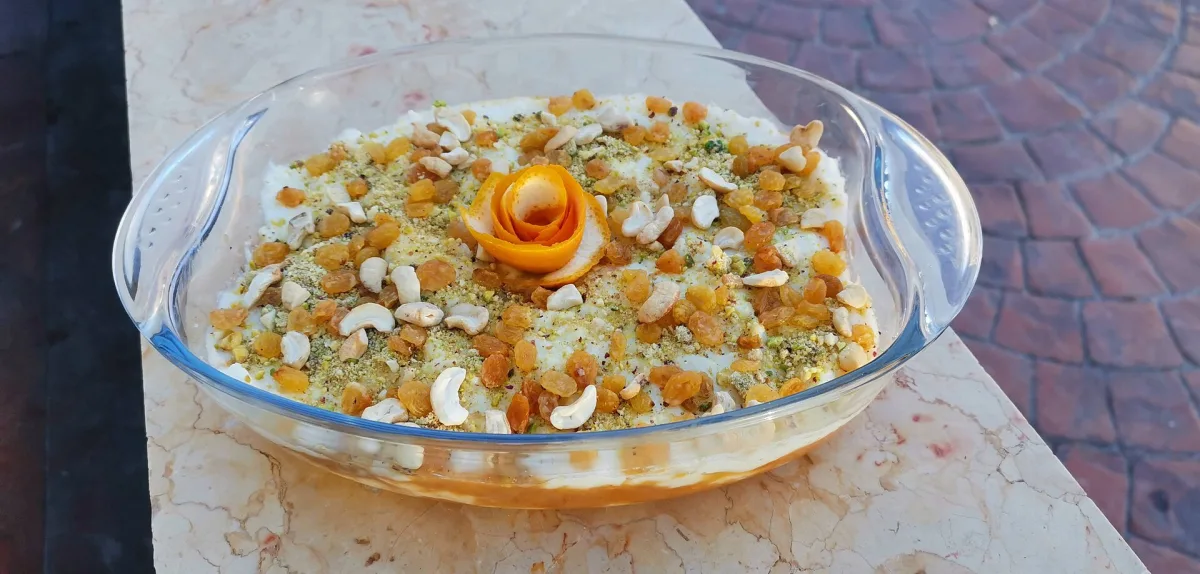
Photo: منال شحادة / Wikimedia Commons · CC BY-SA 4.0 · https://commons.wikimedia.org/wiki/File:%D8%B9%D9%8A%D8%B4_%D8%A7%D9%84%D8%B3%D8%B1%D8%A7%D9%8A%D8%A7.jpg
Esh El Saraya means "palace bread," and it is one of the most famous desserts in Lebanon and Syria: a layer of bread soaked in amber caramel syrup, topped with smooth white qishta scented with rose and orange blossom water, and finished with green pistachios. It is served chilled during Ramadan and gatherings, and requires only a pot and a fridge — the oven is just to dry the bread, and you can substitute stale bread.
Method
-
1
Drying the bread
Remove the crusts of the toast and cut each slice into 4 squares, spread them on a tray and place them in an oven at 160 °C for 15 minutes until dry and lightly colored. Arrange them tightly together in a 20x30 cm serving dish. The dried bread absorbs the syrup and holds together, while soft bread gets soggy.
⏱ 15 min -
2
Making the caramel
In a heavy pot over medium heat, sprinkle 1 and a half cups of sugar and let it melt without stirring with a spoon — just move the pot by its handle so it doesn't crystallize. As soon as it reaches the dark honey color (about 8 minutes) it is ready; if it reaches burnt brown, it will make the whole dish bitter.
⏱ 8 min -
3
Dissolving the caramel into syrup
Remove the pot from the heat and pour in the hot water slowly while staying away from it, because it will bubble and splatter. Return it to the heat and stir until any hardened caramel melts again, add the lemon juice and let it boil for 5 minutes until it thickens a bit. Turn off the heat and add the rose and orange blossom water.
⏱ 7 min -
4
Soaking the bread
Pour the hot syrup over the bread with a ladle in 3 batches, pressing with the back of a spoon after each time until the bread absorbs it all and becomes a single cohesive layer with no visible squares. Let it cool on the counter while you make the qishta.
⏱ 5 min -
5
Making the qishta
In a clean pot, whisk the cornstarch into the cold milk with a whisk until completely dissolved before putting it on the heat — this prevents lumps. Add the cream, sugar, and mastic, place it over medium heat and stir constantly for 10–12 minutes until it thickens, coats the back of the spoon, and the whisk marks remain visible. Turn off the heat and add the rose water.
⏱ 12 min -
6
Pouring the qishta layer
Pour the hot qishta over the bread layer and spread it with the back of a spoon to the edges. Cover the top with plastic wrap pressed directly onto the surface of the qishta itself so it doesn't form a dry skin.
⏱ 3 min -
7
Chilling in the fridge
Leave the tray for half an hour on the counter until lukewarm, then put it in the fridge for at least 3 hours or overnight. The qishta sets and the syrup distributes throughout the bread, allowing it to be cut into neat squares.
⏱ 180 min -
8
Garnishing and serving
Remove the plastic wrap, sprinkle the ground pistachios all over the top, and cut into squares with a knife dipped in hot water, wiping it between each piece. Serve chilled straight from the fridge.
⏱ 3 min
Cooked it? Rate it
Your rating tells the next cook whether this recipe is worth their time.
✓ Thanks — your rating is in.
Tips that actually matter
- Stale fino bread or coarsely ground dry kaak give the exact same result — this is the traditional way in Levantine homes. The important thing is that it is completely dry before the syrup.
- Want a richer qishta? Make the cream 1 and a half cups and reduce the milk to half a cup. Without any cream at all, use 5 cups of milk with the same amount of cornstarch.
- If the syrup becomes too thick and hardens in the pot before pouring it, return it to the heat with a quarter cup of water until it melts again.
- It is stored in the fridge for 3 days well covered so the qishta doesn't absorb food odors. Add the pistachios on the day of serving so they stay green.
People also ask
Why did the bread layer in Esh El Saraya turn out soggy and not holding together?
Either the bread wasn't dry enough, or the syrup was thin and wasn't boiled for the 5 minutes after dissolving the caramel. Dry the bread in the oven until crispy, boil the syrup until it thickens a bit, and pour it in stages while pressing down. The layer holds together better after a night in the fridge.
Why does the caramel turn out bitter?
Because it was left on the heat past the dark honey color stage. Caramel darkens very quickly in the last minute, so stay close to the pot, and as soon as it reaches the amber color remove it from the heat immediately. If it smells burnt or is dark brown, start over — nothing fixes bitterness.
Can I make Esh El Saraya the day before a gathering?
That is even better, because the two layers set and the flavors meld after a night in the fridge. Leave it covered with plastic wrap, then sprinkle the pistachios and cut it before serving. Freezing is not recommended because starch-based qishta releases water and its texture ruins after thawing.
What is the difference between Esh El Saraya and Om Ali?
Esh El Saraya is a chilled sweet that is not baked: bread soaked in caramel syrup, topped with cornstarch-thickened qishta, and cut into squares. Om Ali is a hot Egyptian sweet: puff pastry or baked dough drowned in sweetened milky nuts, baked in the oven and eaten with a spoon.
Cook mode
Lebanese Esh El Saraya with Qishta
-
1
Drying the bread
Remove the crusts of the toast and cut each slice into 4 squares, spread them on a tray and place them in an oven at 160 °C for 15 minutes until dry and lightly colored. Arrange them tightly together in a 20x30 cm serving dish. The dried bread absorbs the syrup and holds together, while soft bread gets soggy.
-
2
Making the caramel
In a heavy pot over medium heat, sprinkle 1 and a half cups of sugar and let it melt without stirring with a spoon — just move the pot by its handle so it doesn't crystallize. As soon as it reaches the dark honey color (about 8 minutes) it is ready; if it reaches burnt brown, it will make the whole dish bitter.
-
3
Dissolving the caramel into syrup
Remove the pot from the heat and pour in the hot water slowly while staying away from it, because it will bubble and splatter. Return it to the heat and stir until any hardened caramel melts again, add the lemon juice and let it boil for 5 minutes until it thickens a bit. Turn off the heat and add the rose and orange blossom water.
-
4
Soaking the bread
Pour the hot syrup over the bread with a ladle in 3 batches, pressing with the back of a spoon after each time until the bread absorbs it all and becomes a single cohesive layer with no visible squares. Let it cool on the counter while you make the qishta.
-
5
Making the qishta
In a clean pot, whisk the cornstarch into the cold milk with a whisk until completely dissolved before putting it on the heat — this prevents lumps. Add the cream, sugar, and mastic, place it over medium heat and stir constantly for 10–12 minutes until it thickens, coats the back of the spoon, and the whisk marks remain visible. Turn off the heat and add the rose water.
-
6
Pouring the qishta layer
Pour the hot qishta over the bread layer and spread it with the back of a spoon to the edges. Cover the top with plastic wrap pressed directly onto the surface of the qishta itself so it doesn't form a dry skin.
-
7
Chilling in the fridge
Leave the tray for half an hour on the counter until lukewarm, then put it in the fridge for at least 3 hours or overnight. The qishta sets and the syrup distributes throughout the bread, allowing it to be cut into neat squares.
-
8
Garnishing and serving
Remove the plastic wrap, sprinkle the ground pistachios all over the top, and cut into squares with a knife dipped in hot water, wiping it between each piece. Serve chilled straight from the fridge.


Comments
Cooked it? Tell us how it went, or ask a question — we read every comment.