
Pan-Seared Steak, Cooked to the Doneness You Want
Two steps matter more than anything else: drying the surface completely, because surface moisture blocks the Maillard reaction that builds the crust, and a 5-minute rest after cooking so the juices redistribute through the meat rather than pouring onto the board.
- Prep
- 50 min
- Cook
- 12 min
- Total
- 62 min
- Calories
- 520
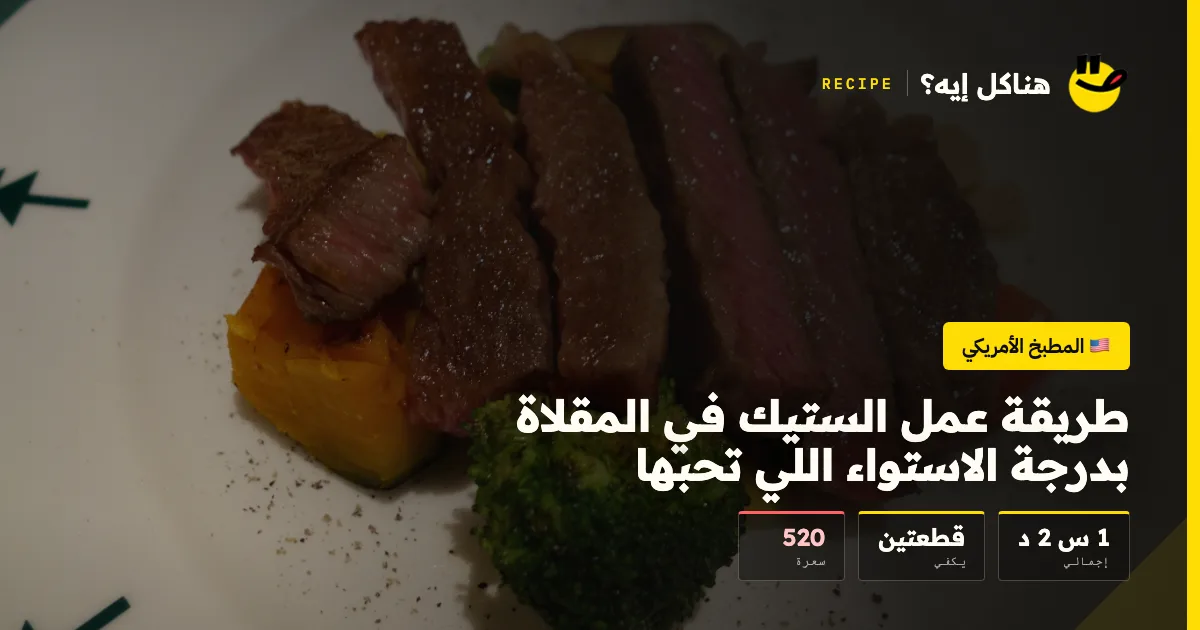
Photo: Jiří Berkovec — CC BY-SA 3.0 · Wikimedia Commons
Steak has the simplest ingredient list and the most exacting execution: meat, salt and heat. What separates restaurant steak from home steak is a handful of small details, almost all of them before and after the pan.
Method
-
1
Salt in advance
Salt the steaks with coarse salt and leave them uncovered on a rack in the fridge for at least 40 minutes. The salt draws moisture out, then it returns carrying the seasoning — and the surface dries.
⏱ 42 min -
2
Room temperature
Take them out 20 minutes before cooking. Cold meat drops the pan temperature sharply and cooks unevenly.
⏱ 21 min -
3
Final dry
Pat the surface with kitchen paper right before the pan. Any moisture turns to steam and blocks the Maillard reaction that creates the brown crust.
⏱ 3 min -
4
A very hot pan
Heat cast iron or a heavy pan over maximum heat for 5 minutes until it just smokes, then add the oil. A warm pan boils the steak instead of searing it.
⏱ 6 min -
5
Sear
Lay the steak down and do not move it for 3 minutes, then turn and give it 2–3 minutes depending on doneness. Every movement interrupts crust formation.
⏱ 7 min -
6
Butter and herbs
Add the butter, garlic and rosemary, tilt the pan and spoon the foaming butter over the steak for a minute. This is basting, and it deepens both flavour and crust.
⏱ 2 min -
7
The mandatory rest
Move it to a board and leave it 5 minutes under foil. Cutting immediately loses all the juice — resting redistributes it through the meat.
⏱ 6 min
Cooked it? Rate it
Your rating tells the next cook whether this recipe is worth their time.
✓ Thanks — your rating is in.
Tips that actually matter
- Timing for a 3 cm steak: medium rare 3+2, medium 3+3, well done 4+4.
- Do not move the steak while it sears — the crust needs continuous contact.
- Five minutes of rest is non-negotiable; without it the juice ends up on the plate.
- Always slice against the grain — it makes a noticeable difference to tenderness.
People also ask
Why doesn't my steak form a crust?
The surface was wet or the pan was not hot enough. Pat it dry with kitchen paper, heat the pan until it just smokes, and leave it untouched for a full 3 minutes.
How do I judge doneness without a thermometer?
The finger test: press the meat and compare it to the flesh at the base of your thumb — very soft is rare, soft with resistance is medium rare, firm is medium, hard is well done. A thermometer is more precise: 54, 58, 63 and 71°C.
Why does resting matter?
While cooking, the muscle fibres contract in the heat and push juices toward the centre. Resting lets them relax and the juices spread back through the meat — cutting immediately dumps all of it onto the board.
Cook mode
Pan-Seared Steak, Cooked to the Doneness You Want
-
1
Salt in advance
Salt the steaks with coarse salt and leave them uncovered on a rack in the fridge for at least 40 minutes. The salt draws moisture out, then it returns carrying the seasoning — and the surface dries.
-
2
Room temperature
Take them out 20 minutes before cooking. Cold meat drops the pan temperature sharply and cooks unevenly.
-
3
Final dry
Pat the surface with kitchen paper right before the pan. Any moisture turns to steam and blocks the Maillard reaction that creates the brown crust.
-
4
A very hot pan
Heat cast iron or a heavy pan over maximum heat for 5 minutes until it just smokes, then add the oil. A warm pan boils the steak instead of searing it.
-
5
Sear
Lay the steak down and do not move it for 3 minutes, then turn and give it 2–3 minutes depending on doneness. Every movement interrupts crust formation.
-
6
Butter and herbs
Add the butter, garlic and rosemary, tilt the pan and spoon the foaming butter over the steak for a minute. This is basting, and it deepens both flavour and crust.
-
7
The mandatory rest
Move it to a board and leave it 5 minutes under foil. Cutting immediately loses all the juice — resting redistributes it through the meat.





Comments
Cooked it? Tell us how it went, or ask a question — we read every comment.