
Best Dish Drying Rack in Egypt: Countertop or Over the Sink?
The bottom line: For most homes, a two-tier stainless steel rack with a drip tray and a spout that drains into the sink, like DMTXCRP. If you want something cheaper that doesn't rust, the Best House plastic rack with a tray. If the countertop is small, an over-the-sink rack that adjusts to its width or a stainless rolling mat. If the countertop is narrow, the compact two-tier Hekima.
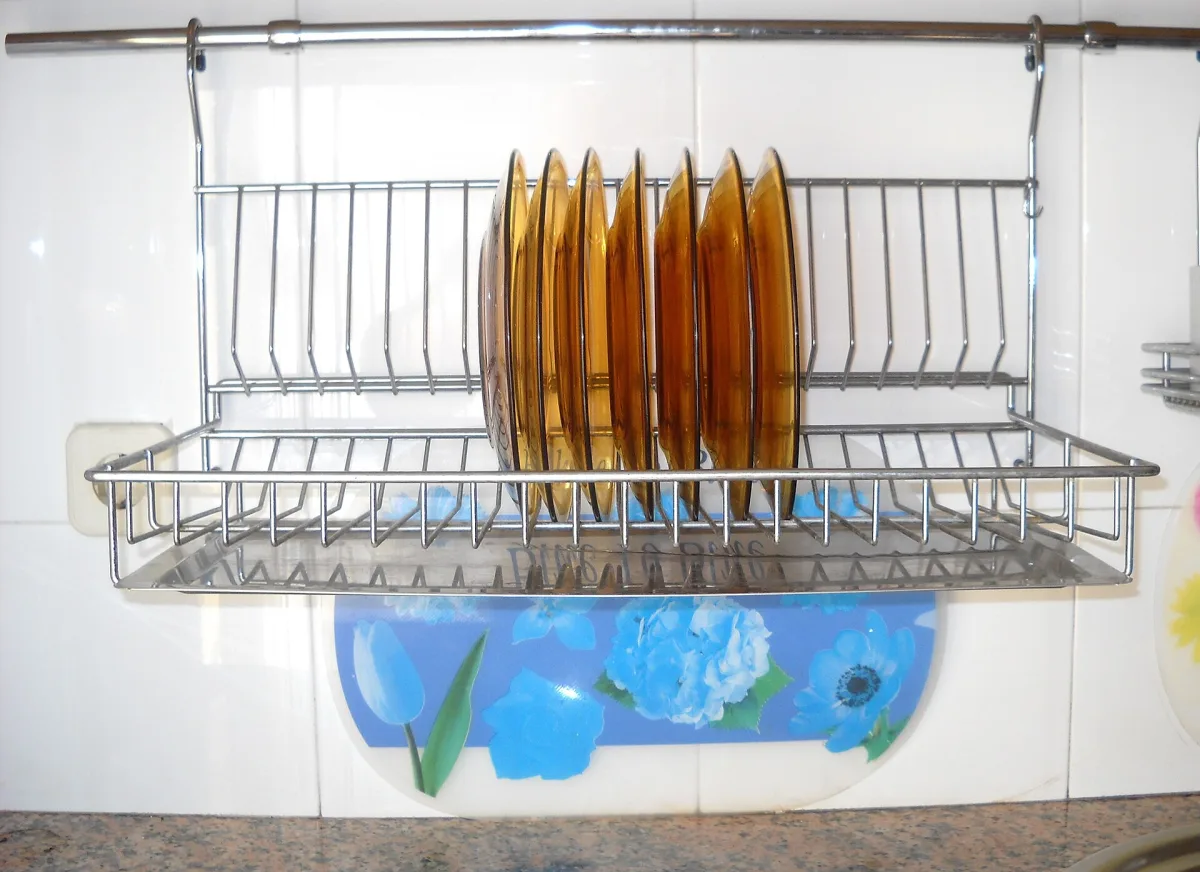
Photo: Mcapdevila — CC BY-SA 3.0 · Wikimedia Commons
One Tier, Two Tiers, or Over the Sink?
- One tier: Low and easy to clean, suitable for a small family or if you have a dishwasher and only dry a few items.
- Two tiers: Dishes on the bottom and cups and bowls on top, taking up less width on the countertop while holding more. Suitable for a family of 4 or more and for gatherings.
- Over the sink: Water drips directly into the sink and takes up zero countertop space. But it requires precise measurements, and it reduces the space above the sink while washing large pots.
- The rolling mat: Silicon-coated stainless steel tubes that unfold over the sink and roll up after use. Suitable for a very small kitchen and holds a few dishes and cups.
Stainless Steel vs. Plastic?
Stainless steel is stronger and handles heavy china easily, and it is easier to clean. But not everything labeled metal is good stainless steel: there are painted iron or carbon steel racks, and these rust the moment the paint gets scratched. Look for 304 stainless steel or rust-resistant on the product page, and read the reviews talking about rust after a few months. Plastic is cheaper and never rusts, but it gets scratched and yellows over time, and thin plastic racks can tilt if you load them with heavy dishes.
The Drip Tray Is Half the Story
Most complaints about dish racks are caused by water, not the rack itself. Choose a tray with a slope or a spout that drains into the sink so that water doesn't pool and create odors and a slimy layer. If the tray is enclosed without drainage, empty it every day. Place the rack right next to the sink so the spout reaches, and measure the height difference between the countertop and the sink rim if the sink is not level with the countertop.
Sizes in the Small Egyptian Kitchen
Before you buy, measure the space next to the sink by length and width, and the height up to the upper cabinet if you are getting two tiers. For a family of 4, a rack that holds about 12 plates with enough space for cutlery and cups is sufficient for daily use. For the over-the-sink rack, measure 3 things: the width of the sink from outside to outside, the height of the faucet, and the distance between the countertop and the bottom of the upper cabinet. For the rolling mat, measure only the width of the sink opening.
Rust and Odors in the Humid Kitchen
The Egyptian kitchen often has cooking steam and humidity, which accelerates rust and mold. Wash the rack and tray once a week with warm water and soap, and wipe welding spots and corners with a brush. Let it dry completely without dishes from time to time. The cutlery holder in particular collects water at the bottom, so choose one with holes at the bottom. If a speck of rust appears, wipe it and dry it quickly before it grows, and if the paint starts to peel, the rack is not actually stainless steel.
Cutlery, Cups, and Cutting Board
A removable cutlery holder is easier to clean. Put knives in it pointing downwards so you don't cut your hand when taking them out. Flip cups and bowls upside down on the upper tier or on their designated edge so the water drains out of them. Cutting boards and trays need a side slot to stand in, so if you use them every day, choose a rack with a spot for them. Large pots usually won't fit in the rack, so dry them with a towel right away or leave them upside down on a clean towel.
Check Before You Buy
- The actual size in centimeters on the product page, not the picture.
- The material explicitly written, and any mention of carbon steel or iron means rust is possible.
- Whether the tray is easily removable and has a sink drainage system or not.
- Most two-tier racks are assembled, so count the screws and parts as soon as the order arrives.
- Who the seller is and their ratings, because the exact same rack is sold under multiple names.
FAQ
Is a stainless steel dish rack better or a plastic one?
Good stainless steel is stronger and lasts longer, while plastic is cheaper and doesn't rust. If you choose metal, make sure the product page states 304 stainless steel or rust-resistant, not painted iron.
How do I prevent rust on a dish rack?
Dry the rack and tray every few days, don't leave accumulated water in the tray or cutlery holder, and wash it with a brush once a week. If the paint gets scratched on an iron rack, rust will start from that spot.
Does the over-the-sink dish rack fall?
If measured correctly against the sink width and its legs rest on the countertop on both sides, it remains stable. Choose one with anti-slip feet or suction cups, and do not load it beyond the weight listed on the page.
What do I do about the water that collects under the dish rack?
Choose a rack with a sloped tray or a spout that drains into the sink, and place it right next to the sink. If the tray is enclosed, empty it every day and wash it once a week to prevent odors.

Comments
Cooked it? Tell us how it went, or ask a question — we read every comment.