
Best Kitchen Hood in Egypt: Window Exhaust Fan or Range Hood?
In short: For a small kitchen with a window, a 25 cm window exhaust fan (Tornado TVH-25BG) or 30 cm (Toshiba VRH30J10C) vents steam and odors at the lowest cost. If you fry frequently and want to trap grease, choose a range hood over the stove: a 60 cm under-cabinet model (Purity PTSLIM, or Beko CFB 6433 with a carbon filter if there is no external duct), or a chimney hood like the Beko CWB6441XN if you have clear wall space.
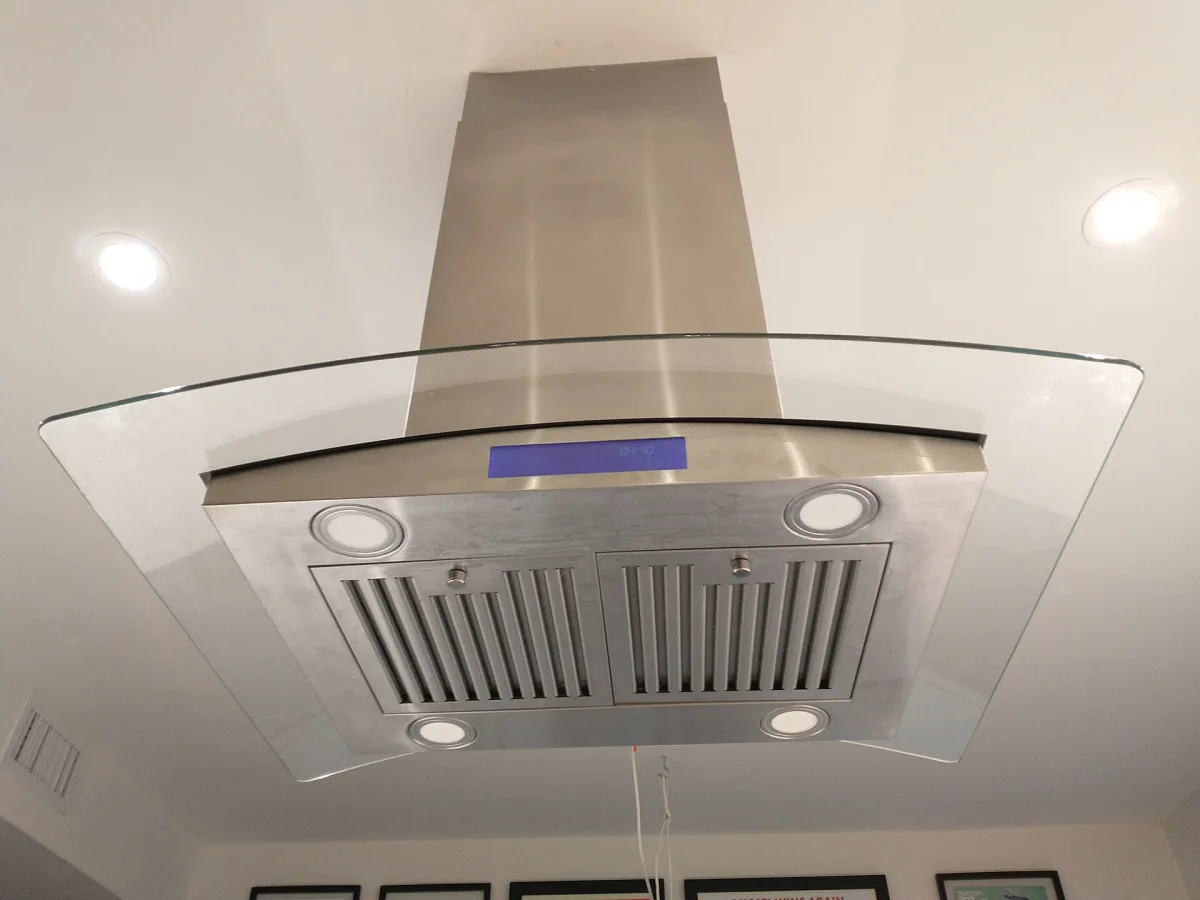
Photo: Stilfehler — CC BY-SA 4.0 · Wikimedia Commons
Window Exhaust Fan or Range Hood?
A window (or wall) exhaust fan is a fan that pulls kitchen air and expels it outside through an opening. It is affordable and easy to install, removing steam, odors, and heat. However, it does not trap grease, so oil settles on walls and cabinets over time. A range hood is installed directly above the cooker to capture steam and grease at the source with a filter, then either vents the air outside through a duct or purifies it through a carbon filter and recirculates it into the kitchen. If you do a lot of frying, a range hood is the solution. If your kitchen is small and has a window, an exhaust fan is sufficient, though having both is ideal: the hood traps grease while the exhaust fan refreshes the kitchen air.
25 cm or 30 cm Exhaust Fan?
The size indicated on a window exhaust fan refers to the blade diameter, not the wall opening. According to Tornado and Toshiba specifications, a 25 cm fan requires an opening of approximately 30×30 cm, while a 30 cm fan needs around 35×35 cm. Measure your window or wall opening before ordering, and check whether the unit mounts on glass or inside a wall aperture. A small kitchen is well-served by a 25 cm model, whereas a larger kitchen or one used for daily heavy cooking requires 30 cm. Choose a reversible model (intake and exhaust) so you can bring fresh air in during summer.
Suction Power in Cubic Meters
Range hoods measure extraction capacity in cubic meters per hour (m³/h). A simple rule of thumb: multiply kitchen length by width by height, then multiply the result by 10. A kitchen measuring 3×3 meters with a 3 meter ceiling has a volume of 27 cubic meters, requiring at least 270 m³/h of suction capacity. If you fry frequently or have an open-concept kitchen connected to the living area, aim higher. The hood width should match or exceed your cooker width: 60 cm for a 60 cm cooker, and 90 cm for a 90 cm cooker. Check the noise level in decibels if specified, as powerful hoods run loudly on their highest setting.
Chimney or Under-Cabinet? Ducted or Carbon Filter?
- Chimney hood: Mounted on the wall above the cooker with an exposed vertical flue. It requires unobstructed wall space without overhead cabinets.
- Under-cabinet (slim): Low-profile and installed directly underneath an existing kitchen cabinet. Ideal when overhead storage sits directly above the cooker.
- Ducted outside: Offers the highest extraction efficiency because grease and air are expelled entirely outdoors. It requires an exhaust hole through the wall or window.
- With carbon filter: Suitable when an external vent is unavailable. The charcoal filter traps odors and recirculates clean air back into the room, requiring replacement every few months depending on cooking frequency and manufacturer instructions.
Installation and Cleaning
Above a gas cooker, a range hood is typically installed at a height of 65–75 cm; check the exact clearance in the product manual. Keep duct runs short with minimal bends to maintain optimal suction power. Wash aluminum grease filters roughly once a month using hot water and dish soap, as grease buildup reduces airflow and creates a fire hazard. For window fans, detach and wash the blades every 1 or 2 months. If you rely solely on a window fan and fry frequently, consider metal-body models equipped with an oil-collection tray, such as the Tornado TVH-25CM and TVH-30CM according to retail listings; this tray must be emptied and cleaned periodically.
Before You Buy
- Verify that the hood runs on 220V and that a grounded power outlet is nearby.
- Check the warranty coverage: confirm whether it is backed by the official brand agency in Egypt or a third-party seller, and for how many years.
- Confirm whether the hood includes carbon filters or if they are sold separately, and check where replacement filters can be purchased.
- Inspect the package contents upon delivery to ensure filters, chimney flues, and mounting hardware are all included.
FAQ
What size kitchen exhaust hood or fan do I need?
A 25 cm window fan suits small kitchens, while a 30 cm unit is best for larger spaces; always measure the wall opening, as it is wider than the blade size. For range hoods, match or exceed the cooker width: 60 cm or 90 cm.
How often should a carbon filter be replaced?
Replacement frequency depends on cooking habits and the manufacturer guidelines, typically every few months. Standard charcoal filters cannot be washed unless explicitly stated by the manufacturer, as with select Beko models.
How high should a range hood be installed above the cooker?
Above a gas cooker, range hoods are generally mounted between 65 and 75 cm high. Placing it lower presents a safety hazard, while mounting it too high weakens extraction efficiency. Consult your specific model manual for exact specifications.
Does a window exhaust fan remove frying odors?
It vents steam and odors outdoors, but it does not capture airborne grease. If you fry food frequently, an overhead range hood is essential to prevent oil from settling onto your kitchen walls and cabinetry.

Comments
Cooked it? Tell us how it went, or ask a question — we read every comment.