
Best Tea Flask in Egypt: Glass Interior or Stainless Steel?
The bottom line: For a daily tea flask at home on a budget, the Rose RS-1313 1.4 l with a glass interior. If you want unbreakable stainless steel, the Tiger PWL-A122, or a Borosil 1 l jug for the dining table and office. For trips and long work hours, the Stanley Classic 1 l. And for gatherings and Ramadan setups, the Tiger 3 l pump flask.
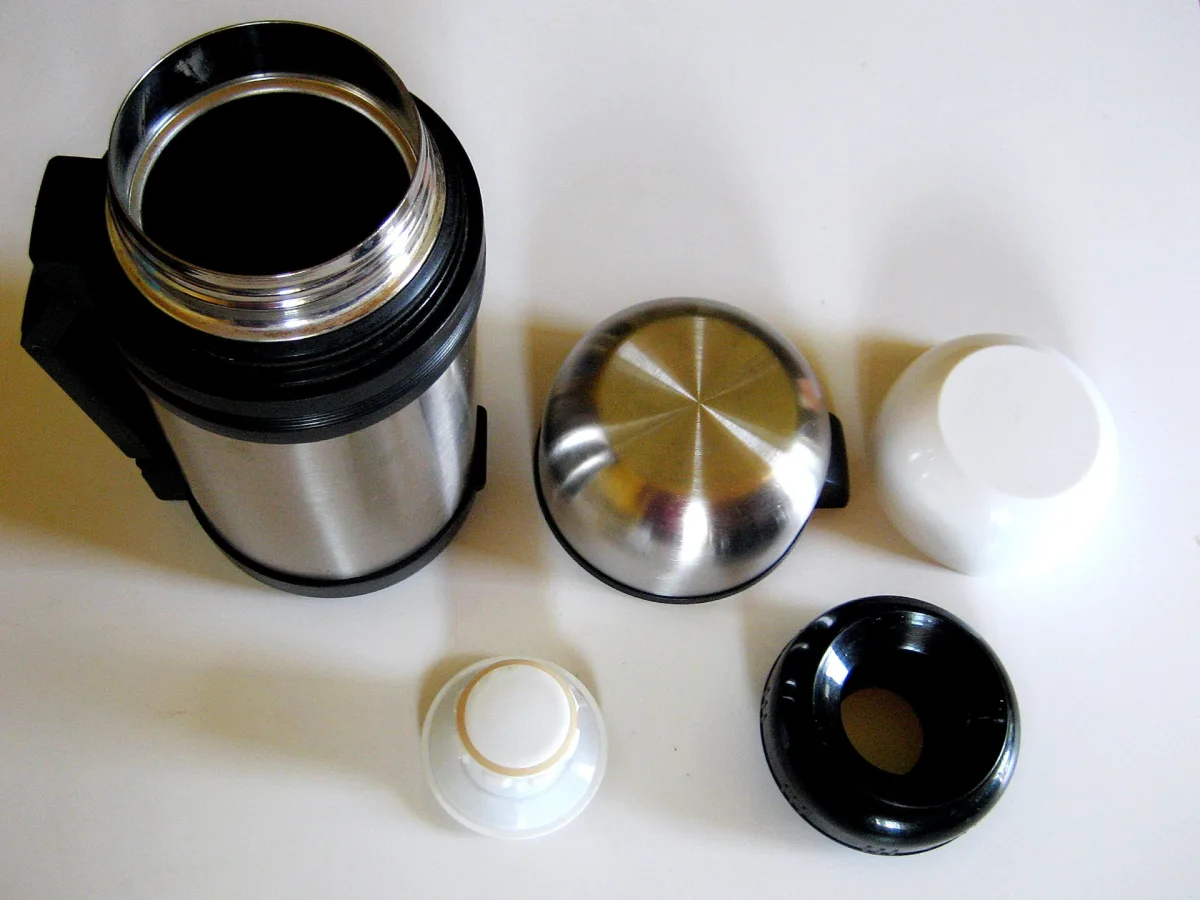
Photo: Schekinov Alexey Victorovich — CC BY-SA 4.0 · Wikimedia Commons
Glass Interior or Stainless Steel?
- Glass Interior: This is the flask found in many Egyptian homes. Glass does not react with tea and doesn't hold odors easily, and it's usually cheaper. Its drawback is that it breaks if the flask is dropped, or if you pour boiling water into very cold glass. If the glass breaks, the whole flask usually needs to be replaced.
- Stainless Steel Inside and Out: Unbreakable, great for bags, cars, and homes with kids, and lasts for years. Its drawback is that it's more expensive, and tea stains show on it and need cleaning every period.
- Plastic Body: Lighter and cheaper, but all the insulation is on the interior glass, so handle it with care.
How Many Hours Does It Stay Hot?
The numbers on sales pages vary from 8 to 24 hours and more, and they are usually measured when the flask is completely full, closed, and nobody has opened it. At home, every time you open the flask and pour, the temperature drops. Some companies write down the exact temperature after a certain number of hours, like Tiger which says 10 hours above 69°C, and that is clearer than "stays hot for 24 hours". To get the longest time: fill the flask with boiling water for 5 minutes and empty it, then put the tea while it is still boiling, fill it to the top, and don't open it until you are pouring.
Size: For the Family or Just for You?
- 0.5 l to 750 ml: For one person at work or university, about 2 to 3 cups.
- 1 l to 1.5 l: Most suitable for home, yields about 5 to 7 cups of tea, meaning a round for a family of 4 or 5 members.
- 2 l to 3 l with Pump: For gatherings, Ramadan tables, and offices.
A flask that is half empty cools down faster, so don't buy a size larger than your daily need.
Tea Stains and Odor
- Rinse the flask with hot water every day after it's done, and leave it open until it dries.
- Brown stains that accumulate: put two tablespoons of bicarb and hot water, close it and leave it for a few hours, then rinse it well.
- In stainless steel, do not use chlorine or steel wool, because they scratch the surface and ruin it.
- In glass, use a long-handled soft brush, and don't hit the brush against the bottom.
- The lid and gasket are what hold the odor, especially with coffee and milk tea, so take them apart and wash them separately.
The Lid: Button or Twist?
A button lid lets you pour with one hand, which is convenient at the table and in the office, but it has more parts that need cleaning. A twist lid is simpler, and safer against leaks if the flask is carried in a bag or car. In travel flasks, a lid that turns into a cup saves you from carrying cups. Whichever type, the rubber gasket in the lid is what seals in the heat, so if it cracks or smells bad, look for a replacement.
Things That Ruin the Flask
- Dropping it, even if stainless steel, because the impact can ruin the insulation between the two layers.
- Putting ice and boiling water back to back immediately in a glass flask.
- Putting the body in the dishwasher when the page doesn't say it's dishwasher safe.
- Closing it while wet from the inside for days, causing an odor to stick.
Check Before Buying
- Is it written "glass interior" or "double wall stainless steel", because the exterior look might look similar.
- Temperature by degree after how many hours if written, not just a big number of hours.
- Capacity in liters, and whether the lid is a button or twist, and easy to take apart and wash or not.
- Inspect the glass flask as soon as it arrives: shake it gently next to your ear, and if you hear glass rattling, return it immediately.
- Who the seller and warranty are, especially with famous brands that have similar-looking products.
FAQ
Is a glass flask better or stainless steel for tea?
Glass doesn't hold odors and is usually cheaper, which is why it's common in homes, but it breaks. Stainless steel is for bags, cars, and trips because it doesn't break, but it needs tea stain cleaning every now and then.
How do I remove tea stains from the flask?
Put two tablespoons of bicarb and hot water in it, close it for a few hours, then rinse it well. Do not use steel wool or chlorine on stainless steel, nor a harsh brush that hits the flask's glass.
Why does the flask cool down quickly?
Usually because it's not full, gets opened often, or wasn't pre-warmed with boiling water first. If it suddenly gets cold and its exterior body becomes hot, the insulation itself is broken or the glass is cracked.
Can I put coffee or milk tea in the flask?
Yes, but the odor clings more to the lid and gasket, so wash them right away after use. Don't leave milk tea in it until the next day.

Comments
Cooked it? Tell us how it went, or ask a question — we read every comment.