
Best Water Dispenser in Egypt: Bottom-Loading, Top-Loading, or with a Fridge?
The bottom line: if you do not want to lift a 19-liter bottle and flip it on top, go for bottom-loading: Tornado WDM-H40ADE with three taps, or Koldair A-BL with a longer compressor warranty. If you need a mini fridge for water and juice, Tornado TWD-36CH with a 16-liter fridge or White Point WPWD01FS. On a tight budget, Jac NGWD-2225S with two taps.
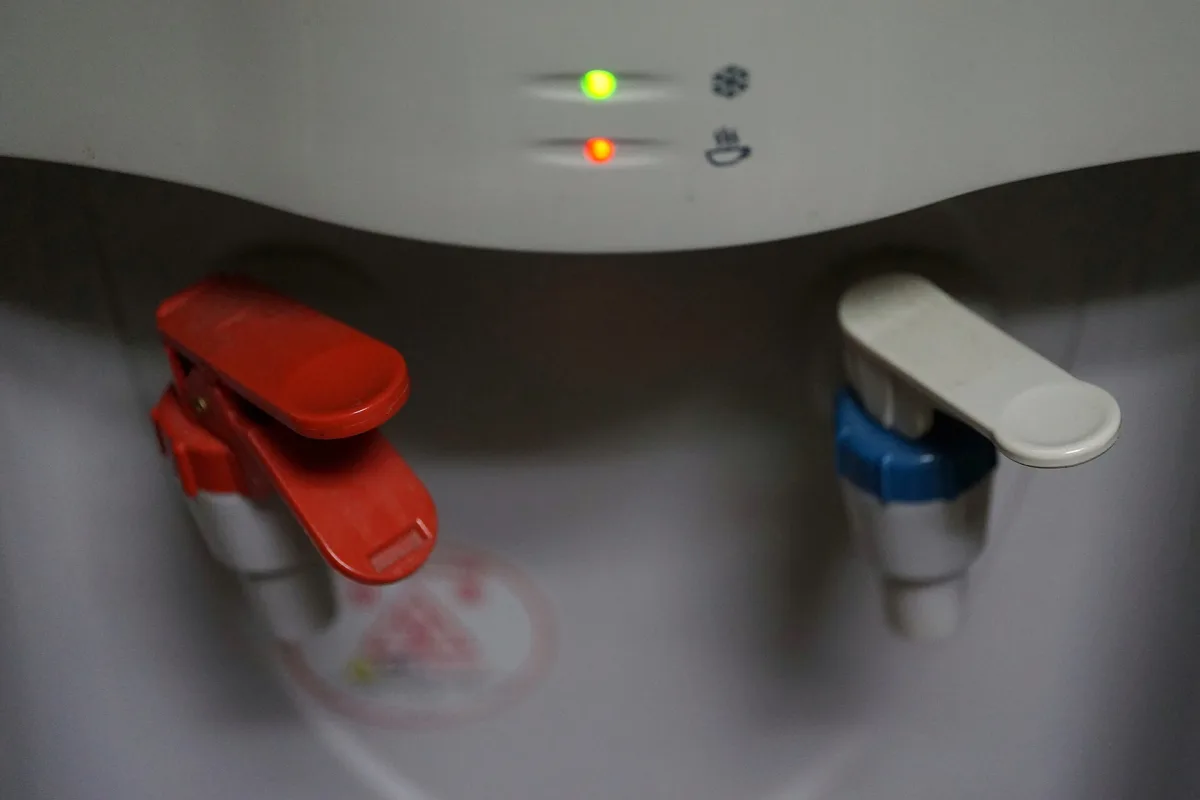
Photo: 些細な日常 — CC BY-SA 4.0 · Wikimedia Commons
Top-Loading or Bottom-Loading?
With top-loading, you lift the bottle (around 19 liters) and flip it onto the dispenser. This is cheaper and simpler, but lifting is heavy for many people, and water can spill while inverting it. With bottom-loading, the bottle sits in a cabinet underneath, and a small pump draws water upward. It is much more convenient and looks cleaner because the bottle is hidden, but it is more expensive, and there is an extra part that could malfunction.
- Elderly family members or someone with back issues: Bottom-loading without hesitation.
- An office changing multiple bottles a day: Bottom-loading also saves time and spills.
- Low budget and light use: Top-loading is plenty.
Two Taps or Three?
Two taps (cold and hot) are enough for most households. A third tap gives you room-temperature water, which is handy in winter, for kids, or if someone at home dislikes very cold water. The most important feature on the hot tap is a child safety lock, since the water gets near boiling.
Mini Fridge Underneath or a Cabinet?
Some dispensers have a mini fridge underneath instead of a storage cabinet. This is useful in an office without a refrigerator, or a small apartment needing extra room for water bottles and juice. However, it is small and not a substitute for a home refrigerator. If you already have a good fridge, a standard dispenser is cheaper, lighter, and easier to move if you relocate your home or office.
What to Look for in the Specifications?
- Cooling: Compressor cooling is stronger than the electronic cooling found in some compact dispensers. If the product listing offers a separate compressor warranty, that is a good sign.
- Cooling and heating capacity: How many liters per hour. A higher number means you will not have to wait after filling several cups in a row.
- Water tank: Stainless steel is better than plastic and does not hold odors.
- Separate switches for cooling and heating: So you can switch off heating when you do not need it.
- Size: Measure your space before buying, as most dispensers stand close to 1 meter tall, and bottom-loading units require clearance in front to open the cabinet and slide the bottle in.
- Electricity: Make sure it is 220 volts and has voltage surge protection if your power fluctuates.
Bottles and Cleaning
A dispenser cools and heats the bottled water; it does not filter it. Always buy factory-sealed bottles with intact seals, store them in a dark spot away from direct sun, and do not leave an open bottle on the dispenser for too many days if your consumption is low. If your household is small and finishes bottles slowly, a two-tap dispenser with a smaller tank is better suited than a large unit. If you choose bottom-loading, ensure the probe or hose that goes into the bottle fits the bottle size available in your area, and ask the seller if it is not clear in the photos.
Clean the dispenser every few months according to the manual: drain the tanks using the rear drain plug, and wash the bottle receptacle and the probe that goes inside. Wash the drip tray under the taps every week. Wipe the neck of a new bottle with a clean cloth before installing it.
Before You Click Buy
- Check who the seller is and the type of warranty: on the entire unit or just the compressor, and the duration for each.
- Open the box in front of the delivery courier if possible, and verify there is no damage to the body or taps.
- Let it stand upright for a while before turning it on for the first time as directed by the manual, especially if it was shipped laying down.
- Leave ventilation space behind the dispenser, and keep it away from direct sunlight and stovetops.
FAQ
Does a water dispenser use a lot of electricity?
Heating consumes the most electricity. Most dispensers have a separate switch for heating, so keep it turned off if you do not need hot water all day, and switch it on only when needed.
What should I do if the water is not cold enough?
After first turning it on, give it enough time for the tank to cool down. Make sure the cooling switch is on, there is proper ventilation behind the unit, and it is kept away from direct sun. If it remains warm after 1 day, contact customer service while still within the return window.
How do I clean a water dispenser?
Unplug it from the power outlet, drain the tanks using the rear drain plug, and wash the bottle receptacle area with mild soapy water and rinse thoroughly. Wash the drip tray every week. Always follow the specific instructions in your user manual.
Should I buy a water dispenser with a fridge or without?
Choose one with a fridge if it is for an office or a compact studio where you need extra space to chill bottles and juice. Go without a fridge if you already have a kitchen refrigerator, as it is cheaper and lighter to move.

Comments
Cooked it? Tell us how it went, or ask a question — we read every comment.