
Best Water Filter in Egypt: Reverse Osmosis, 5-Stage, or Tap Filter?
Summary: If your tap water tastes heavy or the TDS meter reads a high number, get a reverse osmosis (RO) under-sink filter like the Tank Power 7-stage. If the water is fine and your only issue is chlorine and sediment, the Tank 5-stage Plus is cheaper and doesn't waste water. Without a plumber, go for the Philips tap filter or Brita pitcher. And if there is sand, install a jumbo filter at the apartment entrance.
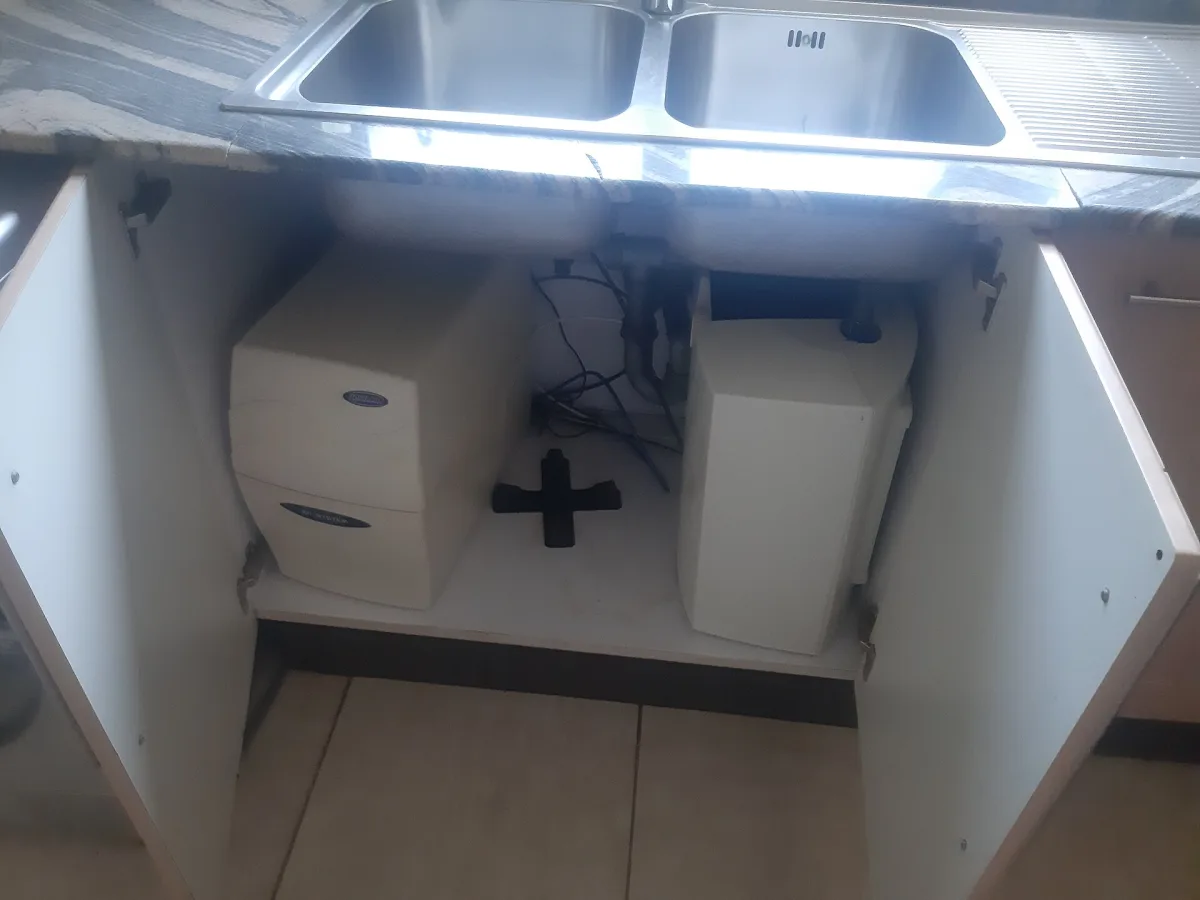
Photo: Fanti Salms — CC BY-SA 4.0 · Wikimedia Commons
Start with a TDS Meter Before You Choose
TDS is the amount of dissolved salts and minerals in water, measured in ppm. A TDS meter is cheap and sold on Amazon, and it saves you a lot of money: measure the tap water first, then decide. This number isn't a final verdict on whether the water is safe or not because it doesn't measure bacteria or chlorine, but it tells you whether the water is heavy or not, and later tells you when the filter is getting weak.
- High number and heavy or salty taste: You need reverse osmosis (RO).
- Reasonable number and the issue is chlorine smell or sediment: A 5-stage carbon filter, or a tap filter.
- Sand and rust appearing in the sink: A jumbo filter at the apartment entrance, before any other filter.
Reverse Osmosis (RO) or 5-Stage?
An RO filter has a membrane that lets water through and blocks most dissolved salts, significantly reducing TDS. That's why it needs a small tank, outputs water more slowly, and wastes a portion of the water down the drain while running. Most 7-stage filters in Egypt are RO, and their last stage is a calcite stage that puts some minerals back into the taste. The filter faucet is separate next to the sink faucet, so it requires a hole in the sink or countertop.
A regular 5-stage filter (sediment, carbon, and calcite) doesn't have a membrane. It removes sediment and the taste and smell of chlorine, but it doesn't reduce dissolved salts. Its advantage is that it's cheaper, doesn't waste water, and water comes out with tap pressure. Meaning the question isn't the number of stages, the question is: does it have a membrane or not?
Tap Filter and Pitcher: When Are They Enough?
If you live in a rented apartment, or drink a small amount, a tap filter or pitcher might be enough for you. Both are carbon, so they improve the taste and reduce chlorine, but they don't reduce TDS like RO. Calculate the cost of the filters: the pitcher filter is changed about every month, and its cost over a year can get close to the price of an under-sink filter. Use the filtered water for drinking and cooking only, not for washing dishes, so the filter lasts longer.
Apartment Entrance Filter (Jumbo)
This is not a drinking filter. It is installed on the main water pipe, and its job is to catch sand and rust before they reach the water heater, washing machine, and faucets. If the water comes out murky or the first filter in the kitchen turns black quickly, the jumbo extends its lifespan. It requires a plumber, and the connection size must match the pipe.
Changing Filters: The Dates That Make a Difference
- Sediment and carbon filters (first 3 stages): Usually every 3 to 6 months, and faster if the water has a lot of sediment.
- Last carbon and calcite: About once a year.
- Membrane: Lasts much longer, usually 2 years or more. Measure the TDS after the filter, and if the number starts rising clearly, its time has come.
The exact dates are in the filter's manual itself. Buy the filters for your exact model, and write the change date on the filter with a marker. And note that some budget filter packs do not include the membrane.
Before You Buy and Install
- Measure the space under the sink: The RO filter with the tank needs room, and sometimes a 220-volt electrical outlet if there is a booster pump.
- If your water pressure is weak, look for a model with a booster pump, because RO without one produces very little water.
- See who the seller is and who will install it: Some companies send a technician, and some send just the box.
- Read the warranty: How long is it, and is it on the device only or on the filters too?
- Count the parts as soon as they arrive: The tank, faucet, hoses, and connections, and follow the manual during first-time startup.
FAQ
Is a 7-stage filter better than a 5-stage?
Not by the number. The 7-stage in Egypt usually includes an RO membrane that reduces dissolved salts, while the 5-stage is mostly sediment and carbon only. If the TDS is high or the taste is heavy, get an RO. If the water is fine and your issue is chlorine and sediment, the 5-stage is enough and cheaper.
How often should I change the filter cartridges?
The first 3 filters are usually every 3 to 6 months depending on the water, the last carbon and calcite about a year, and the membrane 2 years or more. The filter manual is the reference, and the TDS meter tells you when the membrane has weakened.
Does the RO filter waste a lot of water?
Yes, a portion of the water goes down the drain while it filters, and the amount varies depending on the model and water pressure. Many people connect the drain hose to a jerry can and use this water for mopping and cleaning.
Does the TDS meter tell me the water is safe?
No. It measures dissolved salts only, and doesn't measure bacteria or chlorine. Use it to compare water before and after the filter, and to know when to change the filters, not as a final judgment on the water.

Comments
Cooked it? Tell us how it went, or ask a question — we read every comment.