
Built-in Cooker vs Freestanding: Kitchen, Cost, and Maintenance Differences
The bottom line: If it is a rented apartment or your kitchen is ready and you won't change the countertop, get a freestanding cooker: the Zanussi CoolMax 60 cm, or the Bosch HGV1F8Y50S 90 cm if your family is large. If you are making a new kitchen and want a clean look and an oven at eye level, get a built-in: a Fresh 60 cm hob with cast iron supports and a Fresh 60 cm gas oven, and factor in the carpenter, the countertop, and the installation.
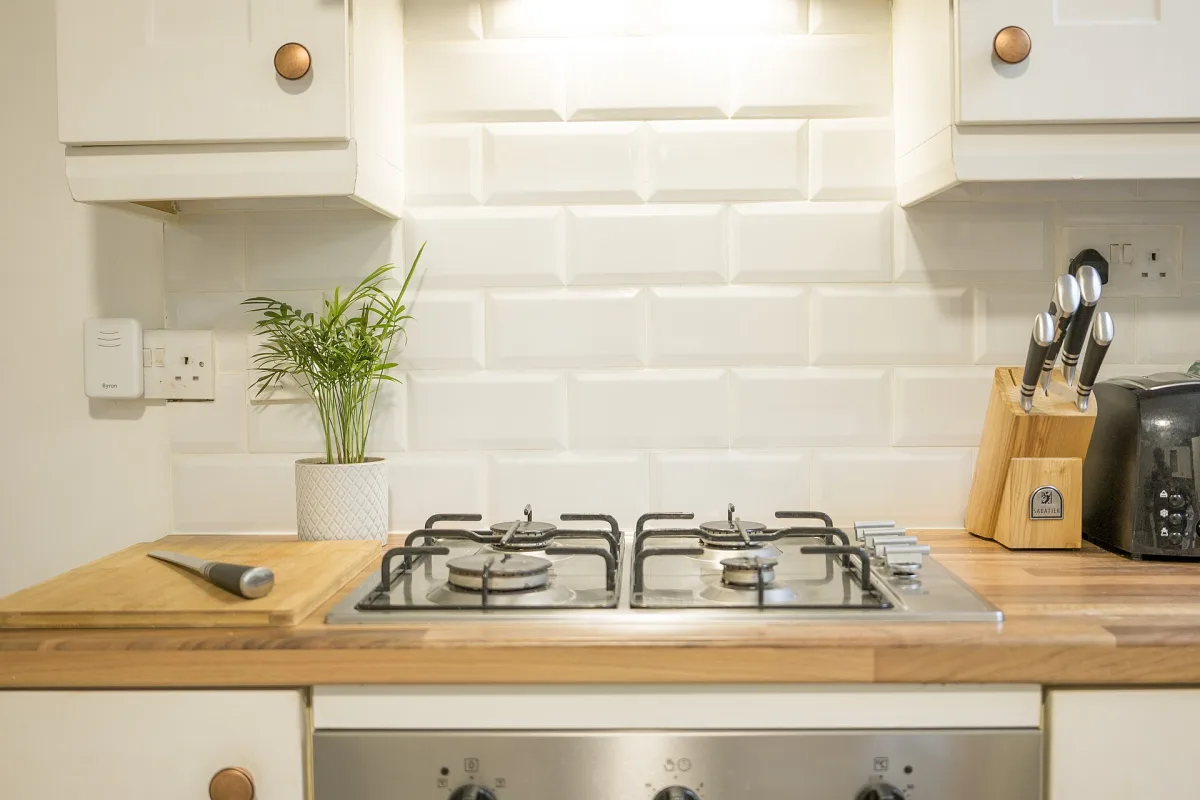
Photo: Stonesynergyimages — CC BY-SA 4.0 · Wikimedia Commons
The Difference in a Sentence
The standard (freestanding) cooker is a single appliance: the surface and the oven together; you place it in its spot, connect the gas, and you're done. The built-in is two separate appliances: a hob that is installed inside the countertop, and an oven that is installed inside the kitchen cabinet. You can also get just the hob without an oven if you don't bake, or put the oven in a high cabinet away from the hob. Both types have models with full safety, auto-ignition, and fans, so the difference isn't in the cooking itself, but in space, cost, and installation.
The Real Expenses
With a built-in, you will pay for two appliances instead of one, and besides that, there is carpenter work to adjust the oven's spot in the cabinet, a cutout in the countertop to the exact dimensions of the hob, and a technician to install both and connect the gas and electricity. The standard cooker has no extra expenses other than the gas hose. That's why if the budget is tight or the kitchen is already ready, the standard one is much more economical. If you are making a new kitchen anyway, the cost difference decreases because the carpenter and marble worker are already working. As for a rented apartment, the built-in you install is hard to take with you when you leave, because the countertop cutout and the oven spot in the cabinet are made to its exact measurements, and the next appliance must be the same size.
Sizes and Installation
- Hob: Usually 60, 75, or 90 cm. The countertop cutout has a size written in the manual, which is smaller than the width of the hob itself, so have the marble cutter cut according to the manual rather than the visual shape.
- Oven: Mostly 60 cm wide, and needs a cabinet of that size and a ventilation opening so that the heat doesn't get trapped.
- Electricity: Auto-ignition, the oven light, and fans need a nearby 220-volt plug in both cases.
- Gas: Make sure the nozzles are suitable for your gas type: natural gas or a cylinder. Some appliances come with other nozzles in the box.
Maintenance and Transport
The standard cooker is easy to move to another apartment, and easy to pull out of its spot to clean behind it or for maintenance. The built-in is tied to the kitchen: if the hob breaks down after years, you must find a new one with the same cutout size or modify the countertop. Its advantage is that if the oven breaks, the hob keeps working, and vice versa, and there are no gaps between the cooker and the countertop where food and oil can fall.
Who is Each Type Suited For?
- Rented apartment or ready kitchen: Freestanding cooker.
- New kitchen being made from scratch: Built-in, if the budget allows.
- Elderly or someone with a bad back: Built-in oven in a high cabinet that lets you take out the tray without bending down.
- Large family that makes many trays: 90 cm freestanding cooker, because its oven is wider than a 60 cm built-in oven.
- Very small kitchen: Built-in hob without an oven, with a small electric oven or an air fryer for light things.
Before You Buy
In the hob itself, look at 3 things: the number of burners and whether there is a large burner (wok) for large pots, whether the supports are cast iron or sheet metal, and whether the surface is stainless steel or glass. Glass looks fancier and wipes easily, but scratches and stains show on it more, while stainless steel has less noticeable scratches. In the oven, compare the capacity in liters and the type of grill: gas or electric. In the built-in, buy the hob and oven first, and then make the countertop and cabinet to their sizes, not the other way around. In both cases: the warranty is from the company in Egypt, not the seller, keep the receipt with the purchase date, and open the box in front of the delivery representative and count the supports, shelves, and trays.
FAQ
Is the built-in more expensive than the standard cooker?
Usually yes, because you are buying a separate hob and oven, and besides that, there are carpenter, countertop, and installation expenses. If you get just the hob without an oven, the difference decreases a lot.
Can I install a built-in hob without an oven?
Yes, the hob is a standalone appliance and works without an oven. Many people install it and use a small electric oven or an air fryer for light baking.
Does the built-in hob work on natural gas?
Yes, but the nozzles must be suitable for natural gas. Ask the seller what type the appliance is set to, whether there are other nozzles in the box, and have a technician install and change them.
Should I make the countertop first or buy the hob first?
Buy the hob first. The countertop cutout must be cut to the size written in its manual, and every brand has a slightly different size.

Comments
Cooked it? Tell us how it went, or ask a question — we read every comment.