
Difference Between Quraysh and White Cheese: Calories, Protein, and Diet
The main difference is in fat: Quraysh is made from skimmed milk, so its calories are around 90–120 calories per 100g, while full-fat white cheese has about 250–300 calories. The protein is close in both, so Quraysh gives you about the same protein with less than half the calories and less salt — which is why it is the diet cheese.
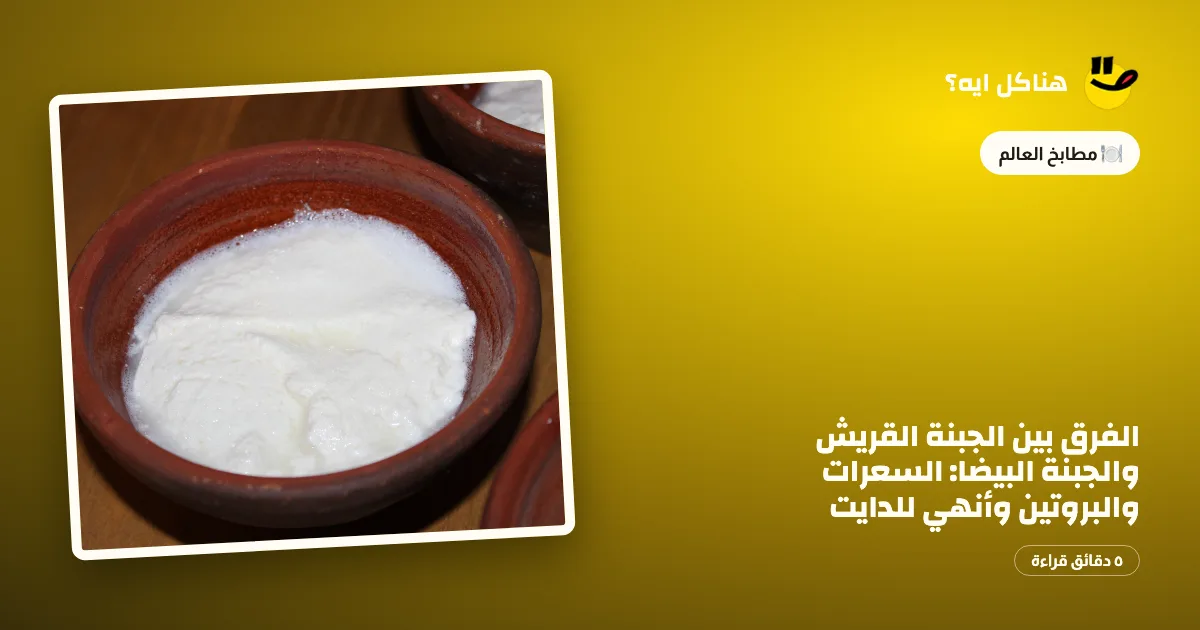
Photo: 8w9d — CC0 · Wikimedia Commons
Quraysh cheese and white cheese are both white and soft and eaten for breakfast, but beneath the uniform color, there is a huge difference in fat, calories, and salt — and that makes all the difference if you are on a diet or cutting back on salt.
How Both Are Made
Quraysh is traditionally made from clabbered milk after the cream is skimmed off the top — meaning semi-skimmed milk. It is curdled by natural acidity rather than rennet, and strained in cloth or mats, with light salt.
White cheese (Dumyati and similar types, and full-fat tub cheese) is made from full-fat milk, curdled with rennet, and lots of salt is added to preserve it.
These two differences — fat content and the curdling method — are what create all the following variations.
Calories and Fat per 100g
- Quraysh: About 90–120 calories, and only 2–5g of fat.
- Full-Fat White Cheese: About 250–300 calories, and 18–24g of fat.
With these numbers, a quarter kilo of Quraysh has about 225–300 calories, and the same weight of white cheese can reach 625–750. Numbers vary from maker to maker, so check the label. There is also low-fat light white cheese with fewer calories, but its salt is still high.
Types in the Market That Confuse Calculations
- "Full-Fat Quraysh" or "Quraysh with Cream": Made from whole milk or with added cream, so its calories are noticeably higher. If your goal is a diet, choose regular Quraysh.
- "Light White Cheese" or "Low-Fat": Its fat and calories are truly lower, but its salt is still high.
- "Plant-Fat" White Cheese: Its calories are close to full-fat, and the difference is that the fat is not from milk — and it is written in the ingredients.
Protein: The Surprise
Protein is very close — Quraysh has about 14–18g per 100g, and white cheese has about 13–17g. Meaning Quraysh gives you about the same protein with less than half the calories. If you calculate it per 100 calories, Quraysh has about 15g of protein, and white cheese only has about 5–6g. This is why it is the number one cheese for dieting and gym food in Egypt.
Salt
White cheese is high in salt because salt is what preserves it: 100g of it can contain about 2.5–4g of salt, and the World Health Organization recommends less than 5g of salt in the whole day. Quraysh usually has light salt, which is an important difference if you are trying to cut back on salt.
Calcium: A Point in Favor of White Cheese
Acid curdling causes a large part of the calcium to dissolve and go away with the whey, so Quraysh has noticeably less calcium than cheese curdled with rennet. If Quraysh is your main cheese, make milk or yogurt part of your day.
Taste, Texture, and Cooking
Quraysh is soft, moist, and slightly grainy, with a milky taste and pleasant acidity, and it doesn't melt at all — even in the oven it stays as curds, because its protein is curdled by acidity. This makes it excellent for stuffing with eggs and parsley, and a good substitute for ricotta after being strained and smoothed. If it goes into sweets, strain it well first and blend it in the blender until smooth, so the excess water doesn't ruin the texture.
White cheese is denser, saltier, stronger in taste, and softens in the oven without stretching. In stuffings, a small amount of it gives a clear flavor.
| Comparison Point | Quraysh | Full-Fat White Cheese |
|---|---|---|
| Milk | Skimmed | Full-Fat |
| Curdling | By Acidity | With Rennet and Salt |
| Calories per 100g | 90–120 | 250–300 |
| Fat | 2–5g | 18–24g |
| Protein | 14–18g | 13–17g |
| Salt | Light | High |
| Calcium | Lower | Higher |
| In the Oven | Stays as curds | Softens without stretching |
Which Is Better for a Diet?
Quraysh without competition if you want to eat a quantity that satisfies you: 150g of it with cucumber, tomato, a teaspoon of olive oil, and cumin makes a satisfying breakfast around 250 calories (without bread). If you love the taste of white cheese, don't forbid it — but keep it as a flavor not a base: 30–40g in a meal, or mix Quraysh with a little mashed white cheese to get the taste with half the calories. The high protein in Quraysh also helps you feel full until lunch.
Make It at Home
The traditional method is simple: boil the milk and let it cool, remove the cream that formed on top, then add two tablespoons of yogurt per liter and leave it in a warm place until it clabbers. Heat the clabbered milk on very low heat without boiling until the white curds separate from a clear yellow whey, strain it in a clean cloth or cheesecloth and hang it for a few hours, and salt it lightly. Don't throw away the whey that came out — it works in dough or soup.
Safety and Price
Loose Quraysh made from raw milk can be a source of contamination, so buy it from a trusted source or make it at home from boiled or pasteurized milk, and store it in the fridge and eat it within days because its moisture is high. Pregnant women in particular, health guidelines advise them to avoid any soft cheese made from unpasteurized milk. In price, Quraysh is usually cheaper than full-fat white cheese, because it is made from milk whose cream was removed and sold separately.
Which for Which Dish
- Diet Breakfast: Quraysh with tomatoes, cucumber, and mint, beside a plate of ful medames.
- Dips to Break the Monotony: Quraysh with dill and grated cucumber, or with tomatoes and hot peppers, or with minced olives and a little thyme — all give flavor without adding many calories.
- Sweet Snack: Quraysh with a tablespoon of honey or chopped fruit.
- Filling for Pies and Sambousek: Quraysh, an egg, and a little grated white cheese for flavor.
- Sandwich and Salad: White cheese in a small amount, because its strong taste is enough.
Conclusion
Quraysh = high protein, low fat, and light salt, which is what makes it the diet cheese. White cheese = stronger taste, much higher calories and salt, and more calcium. Eat Quraysh by quantity, and white cheese by the spoonful.
FAQ
How many calories are in Quraysh cheese?
About 90–120 calories per 100g depending on the fat percentage left in the milk, and it contains about 14–18g of protein. Numbers vary from maker to maker so check the label.
Does white cheese cause weight gain?
No single food causes weight gain by itself, but full-fat white cheese is high in calories (250–300 per 100g) and high in salt, so quantity is key: 30–40g in a meal is reasonable.
Which of them has more protein?
In 100g they are very close, but relative to calories Quraysh is much higher: about 15g of protein per 100 calories, compared to 5–6g in white cheese.
Does Quraysh cheese melt in the oven?
No, because it is curdled by acidity so its protein holds together with heat and it stays as curds. This is an advantage in fillings, but if you want stretch use mozzarella.
Can I eat Quraysh cheese every day?
Yes, as part of a varied diet. Buy it from a trusted source or make it from boiled milk, and keep in mind that its calcium is lower than regular cheese, so supplement with milk or yogurt.

Comments
Cooked it? Tell us how it went, or ask a question — we read every comment.