
The Difference Between Rice, Bulgur, and Freekeh: Calories, Fiber, and Cooking
Rice is a hulled grain from the rice plant, while bulgur and freekeh are both wheat: bulgur is mature wheat that has been boiled, dried, and cracked, whereas freekeh is harvested green and roasted over fire. Because of this, bulgur and freekeh have much more fiber (about 4–5g compared to less than 1g per 100g cooked) and contain gluten, while rice is gluten-free.
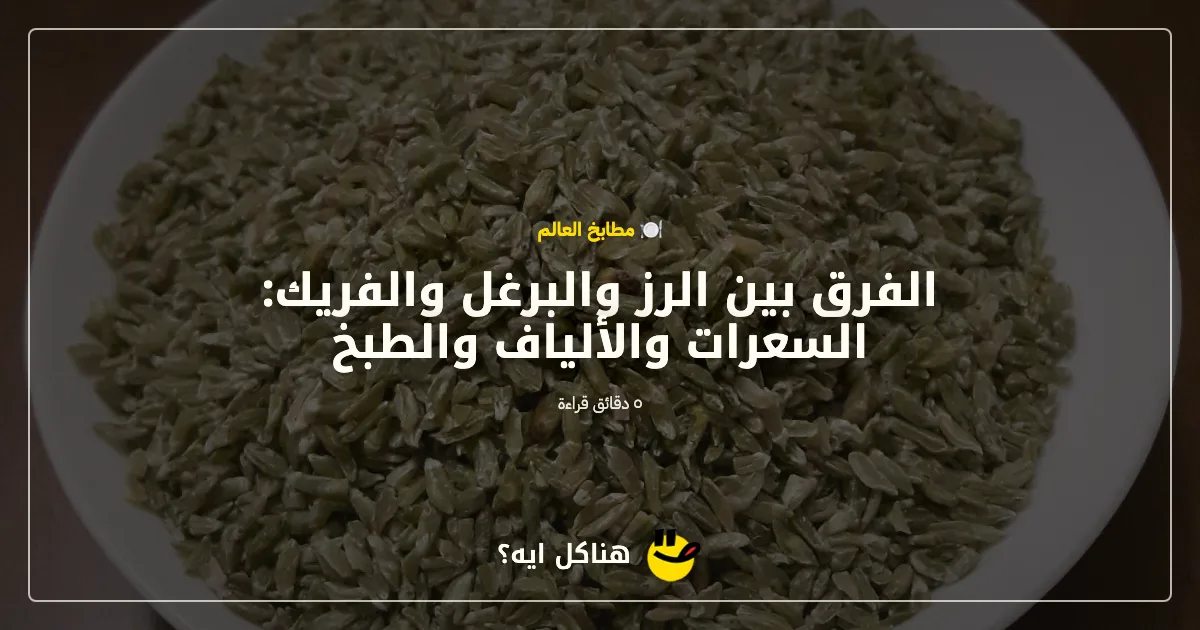
Photo: Wribln — CC BY-SA 4.0 · Wikimedia Commons
On the Egyptian dining table, rice is the staple, freekeh is the occasion guest in stuffed pigeon and casseroles, and bulgur comes from Levantine cuisine, becoming a popular alternative to rice for those looking for a more filling dish. The recurring question is: what is the actual difference between them? And which one is lighter?
The Origin: One Rice, Two Wheats
Rice is a grain from the rice plant. White rice has its husk, bran, and germ removed, leaving mostly starch.
Bulgur is mature wheat that has been boiled, dried, and cracked. This boiling makes it half-cooked from the start, which is why it cooks quickly, and the fine variety is simply soaked without heat.
Freekeh is harvested while still green and tender, and roasted over an open fire while still in the spikes. The chaff burns while the moist grain stays intact, and it is then rubbed, dried, and usually cracked. This roasting is the source of its irreplaceable smoky flavor.
This means bulgur and freekeh are both essentially whole-grain wheat with its bran, and white rice is a hulled grain — and from this comes most of the difference.
Calories and Fiber per 100g
When dry, all three are very close in calories: rice is around 360, bulgur is around 340, and freekeh is around 340–370 depending on the variety. The huge difference is in fiber: white rice is about 1g, bulgur is about 18g, and freekeh is about 12–16g.
After cooking, the numbers change because each grain absorbs water differently:
| Per 100g cooked | White Rice | Bulgur | Freekeh |
|---|---|---|---|
| Calories | about 130 | about 83 | about 110–120 |
| Protein | about 2.7g | about 3g | about 4g |
| Fiber | less than 0.5g | about 4.5g | about 4–5g |
| Gluten | None | Contains | Contains |
| Cooking Time | 15–20 minutes | 12–15 minutes (coarse) | 20–25 minutes (cracked) |
| Flavor | Neutral | Mild nutty | Smoky |
Freekeh numbers are approximate because they vary by variety and cracking degree. Cooked bulgur is lower in calories because it absorbs more water than its weight, not because it "burns fat". What really makes a difference is fiber: it slows down digestion and makes the dish more filling. That is why the glycemic index of bulgur is low (about 45–50), freekeh with its high fiber is close to it, and white rice is clearly higher.
Calculating the dish: a cup of cooked rice (about 160g) has roughly 200 calories, and a cup of cooked bulgur (about 180g) has roughly 150 calories along with about 8g of fiber. So if you swap your daily bowl of rice with bulgur, the difference isn't just in calories — the feeling of fullness lasts longer too.
Gluten: The Difference Many Don't Know
Bulgur and freekeh are wheat, meaning they contain gluten. If anyone at home has celiac disease or follows a gluten-free diet, rice is the safest choice among the three, and bulgur and freekeh are off-limits no matter how "healthy" they are.
Cooking: Ratios and Time
- Egyptian Rice: A cup of rice to 1 and 1/4 or 1 and 1/2 cups of water, and 15–20 minutes on low heat.
- Fine Bulgur: Is not cooked — it is soaked for 10–15 minutes in water or lemon juice, which is how Tabbouleh and Kebbeh are made.
- Coarse Bulgur: Sauté it in a tablespoon of oil or ghee, add 1 and 1/2 to 2 cups of water or broth per cup of bulgur, 12–15 minutes on low heat and 10 minutes of resting. It turns out fluffy like rice with a clearer "bite".
- Cracked Freekeh: Needs sorting and washing first because it is roasted in the field and might contain burnt chaff or small pebbles. The ratio is 1 cup of freekeh to 2.5–3 cups of broth, and 20–25 minutes on low heat. Whole freekeh (not cracked) takes about 40 minutes.
Broth makes a bigger difference with freekeh than any other grain, because its smoky flavor needs richness to carry it — which is why it is always cooked with meat, chicken, or pigeon broth.
Texture and Flavor
Rice is soft, neutral in flavor, and absorbs the taste of whatever is with it. Bulgur has separate grains with a clear chew and a mild nutty taste. Freekeh is the heaviest in flavor: smoky and earthy, with a texture between tender and crunchy.
In leftovers, the difference shows even more: rice dries out and hardens in the fridge and needs a splash of water and reheating while covered, whereas bulgur and freekeh handle reheating better, and bulgur especially works cold in a salad the next day. Place any cooked grains in the fridge within two hours of cooking, and eat them within two to three days.
Which One for Which Egyptian Dish
- Rice: Mahshi, vermicelli rice, Koshari, Rice Pudding, and Muammar Rice — any dish needing firmness or a mild taste.
- Freekeh: Freekeh-stuffed pigeon, freekeh casserole with meat or chicken in the oven, and winter freekeh soup.
- Bulgur: Tabbouleh, Kebbeh, bulgur salad, and as a rice alternative next to stew — coarse bulgur with vermicelli or tomatoes plays the same role as vermicelli rice.
If you want to substitute: coarse bulgur and freekeh can stand in for rice in any fluffy dish alongside stew or meat. But in Mahshi, the result differs — bulgur holds together less and freekeh's flavor overpowers the tomato sauce — and in rice pudding there is no substitute for rice.
There is a middle ground that satisfies the whole household: half rice and half coarse bulgur in the same pot. Both take a similar cooking time, and the dish takes on the rice flavor everyone is used to while significantly increasing the fiber.
Storage: Bulgur and Freekeh Have a Shorter Shelf Life Than Rice
White rice has had its oil-containing germ removed, so it lasts for many months in a sealed jar. As for bulgur and freekeh, they contain part of the bran and germ, and this oil turns rancid with heat and time. Store them in a tight jar in a cool, dark place. In summer, the fridge is safer, and use them within a few months. If you smell old oil or bitterness, throw them away.
Conclusion
Rice is an easy, hulled grain with a mild taste and no gluten. Bulgur and freekeh are wheat grains with much more fiber and are more filling. When dry, the calories are nearly the same; the difference is in fiber, flavor, and gluten. Choose rice for firmness, bulgur for speed and lightness, and freekeh when you want an occasion-worthy flavor.
FAQ
Which has fewer calories: rice or bulgur?
Cooked: bulgur is about 83 calories per 100g and rice is about 130, because bulgur absorbs more water. Dried, they are nearly the same (about 340 vs 360). Bulgur's real advantage is that its fiber is about 10 times higher, making it much more filling.
Are bulgur and freekeh gluten-free?
No. Both are wheat and contain gluten, so they are forbidden for celiac patients and wheat allergy sufferers. Rice is the only gluten-free option among the three.
Why does freekeh contain chaff and pebbles?
Because it is roasted over fire in the fields while in the spikes and then rubbed, so burnt chaff or small pebbles may remain. Spread it on a tray and sort it, then wash it in water and skim off what floats.
Can I make Mahshi with bulgur instead of rice?
You can use coarse or medium bulgur, but the texture will be less firm and the taste nutty. Many mix half bulgur and half rice to keep the Mahshi firm and increase the fiber.
Are freekeh and frikhi the same thing?
Yes, they are the same roasted green wheat. In Egypt, it is called freekeh and is usually sold cracked, while in the Levant and Jordan it is called frikhi and is sold whole and cracked.

Comments
Cooked it? Tell us how it went, or ask a question — we read every comment.