
Difference Between Sugar and Honey: Calories, Baking, and How to Substitute
Sugar is almost 100% pure sucrose, while honey is about 80% sugars (fructose and glucose) and 17% water. Because of this, honey has fewer calories by weight (about 304 vs 387 calories per 100 g), but it is higher per spoon because it is denser (about 64 vs 48 calories). In desserts, honey provides moisture and faster browning, so if you substitute with it, reduce the quantity, liquids, and oven temperature.
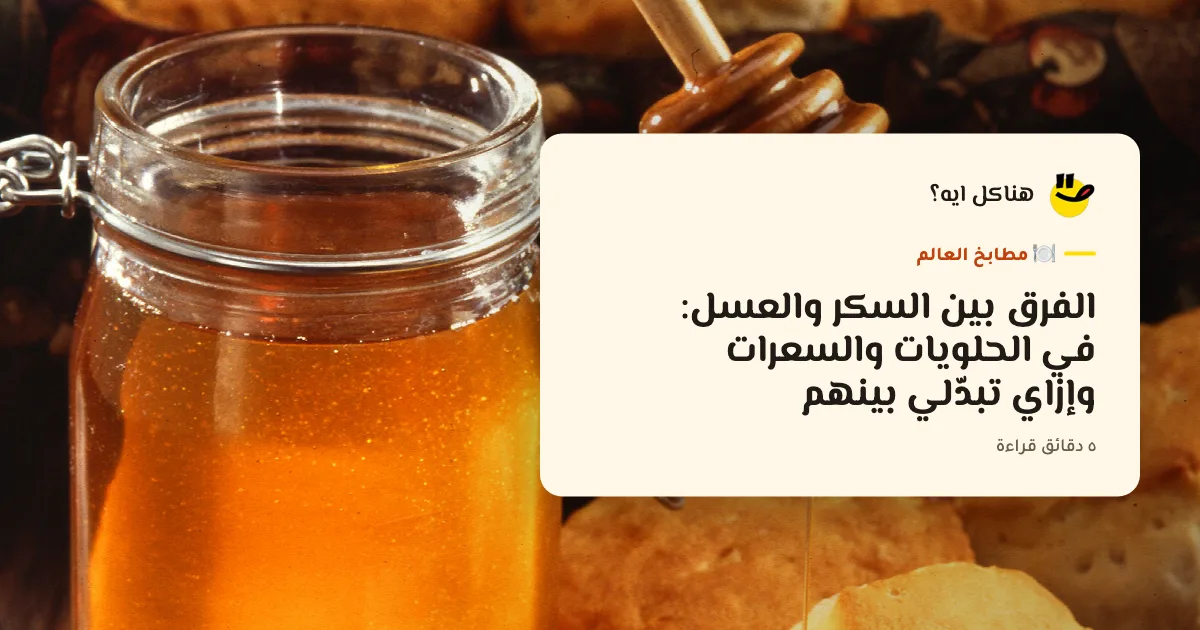
Photo: Scott Bauer, USDA ARS — Public domain · Wikimedia Commons
First things first: "Honey" here means bee honey, not "Basbousa honey" which is sugar syrup and water, nor black honey which is sugarcane molasses. The comparison between sugar and bee honey holds surprises for many people—starting with the fact that honey is not "lower in calories" in the way we imagine.
Composition: Single Sugar or a Blend?
White sugar is almost pure sucrose—a single molecule with glucose and fructose bound together.
Honey is about 80% sugars, mostly separate fructose and glucose, about 17% water, and very small amounts of minerals, enzymes, and aromatic compounds that vary depending on the flower the bees fed on.
Fructose is sweeter than regular sugar, so honey tastes slightly sweeter—which is why we need less of it.
Calories: By Weight or By Spoon?
- By weight: Honey is lower—about 304 calories per 100 g compared to 387 for sugar, because part of honey's weight is water.
- By spoon: Honey is higher—a tablespoon of honey weighs about 21 g = 64 calories, and a tablespoon of sugar is about 12.5 g = 48 calories, because honey is denser.
The glycemic index of honey is on average slightly lower than sugar (about 55–60 vs 65), with the difference varying by honey type and small in both cases. The World Health Organization counts both as "free sugars" and recommends they do not exceed 10% of daily calories. This means honey is not a safe alternative for diabetics, and the minerals in it are in quantities too small to make a difference.
In Desserts: What Changes If You Add Honey
1. Moisture
Fructose draws moisture from the air, so cakes made with honey come out moister and stay soft for more days. This is also its drawback in cookies and Ghraybeh: instead of coming out crispy, they will be soft and chewy.
2. Browning
Honey's separate sugars caramelize and brown at a lower temperature than sugar, so the top darkens before the center is done. The solution: reduce the oven temperature by about 15 degrees, and if the top darkens early, cover it with foil.
3. Acidity
Honey is mildly acidic, so it reacts with baking soda. That is why recipes with a lot of honey often have a pinch of soda added to balance the acidity and help with rising.
4. Whipping
Sugar crystals when whipped with butter create small air pockets that make light cakes rise—and liquid honey doesn't do that. Same goes for meringue: without sugar crystals, egg whites won't stand up and hold.
How to Substitute Sugar with Honey in Baking
- Start with half: Substitute only half the sugar the first time so the texture doesn't change suddenly.
- Quantity: Every cup of sugar (200 g) = 3/4 cup of honey (about 255 g)—which has roughly the same amount of sugars.
- Liquids: Reduce milk or water by 1/4 cup (60 ml) for every cup of honey.
- Soda: Add 1/4 to 1/2 teaspoon of baking soda for every cup of honey.
- Oven: Reduce it by 15 degrees (for example, 165 instead of 180).
- Measuring: Grease the cup or spoon with a little oil, and the honey will slide right out without sticking.
Keep an important calculation in mind: a cup of sugar (200 g) has about 770 calories, and the 3/4 cup of honey you substitute it with (about 255 g) has about 775 calories. This means substituting with honey does not reduce a cake's calories—it only changes its taste and texture. If your goal is fewer calories, the solution is to reduce the amount of sweetener itself.
In Syrups and Drinks
Basbousa and Knafeh syrups are based on sugar because honey on its own has an overwhelming taste and heavy texture. But a spoonful or two of honey after the syrup is turned off gives a nice aroma and reduces the chance of the syrup crystallizing—because fructose and glucose delay sucrose crystallization, which is the same idea as lemon juice in syrup. Do not boil honey too much: boiling darkens its color and makes its aroma fade.
In cold drinks, honey dissolves easier than sugar which needs heat. In tea, put it in after it cools down a bit so its aroma doesn't get lost.
Which Honey for Desserts and Which for Savory Food?
The taste of honey varies by flower: clover and citrus honey are light in color and mild in flavor, so they work well in cakes and drinks without overpowering the vanilla or fruit. Dark honey has a stronger taste and mild bitterness, so its best place is with strong-flavored items like walnuts, cinnamon, and ginger.
In savory food, honey creates a nice gloss and browning in chicken marinades or roasted carrots. But because it burns quickly, brush it on in the last 10 minutes of cooking or roasting, not from the beginning. Brown sugar plays the same role if you don't want an obvious honey flavor.
Quick Comparison Table
| Comparison Point | White Sugar | Bee Honey |
|---|---|---|
| Composition | Almost 100% sucrose | About 80% fructose and glucose + about 17% water |
| Calories per 100 g | About 387 | About 304 |
| Calories in a tablespoon | About 48 | About 64 |
| Sweetness | Reference | Slightly sweeter |
| Moisture in baked goods | Normal | Higher — cake stays moist |
| Browning | Normal | Faster |
| Crunch and whipping | Excellent for cookies and meringue | Poor |
| Substitution in cake | 1 cup | 3/4 cup + reduced liquids and temperature |
Two Safety Points
Honey is forbidden for children under one year old in any form, even if baked into a recipe, because it may contain botulism spores and an infant's gut cannot handle them. And honey crystallization is natural and not a sign of adulteration—put the jar in warm water and it will turn liquid again.
Conclusion
Honey has fewer calories by weight and more by spoon, and both are ultimately sugar in the body's view. In desserts, honey provides moisture, aroma, and faster browning, while sugar provides crunch, whipping, and stability. Use honey in moist cakes and drinks and as a touch in syrups, and leave sugar for cookies, meringue, and the syrup itself.
FAQ
Does honey have fewer calories than sugar?
By weight, yes: about 304 calories per 100 g compared to 387 for sugar. But by spoon, the opposite is true: a tablespoon of honey is about 64 calories and sugar is about 48, because honey is denser in weight.
How much honey should I use instead of a cup of sugar in a cake?
3/4 cup of honey for every cup of sugar, along with reducing liquids by a quarter cup, adding 1/4 to 1/2 a teaspoon of baking soda, and lowering the oven temperature by 15 degrees. To be safest the first time, substitute only half the sugar.
Can I make Basbousa syrup with bee honey instead of sugar?
It is not recommended, because its flavor will overpower the Basbousa and its texture is heavy. It is better to make the syrup with sugar and add a spoonful or two of honey after turning off the heat for the aroma.
Why does cake with honey brown so quickly?
Because the fructose and glucose in honey caramelize at a lower temperature than regular sugar. Lower the oven temperature by 15 degrees, and cover the top with foil if it darkens before the center is done.
Is honey better than sugar for diabetics?
No, it is not a safe alternative. Both raise blood sugar, and honey's glycemic index is only slightly lower. Quantity is what matters, and the reference in this case is a doctor.

Comments
Cooked it? Tell us how it went, or ask a question — we read every comment.