
Iraqi Cuisine: Dolma, Tashreeb, Masgouf and Quzi
Iraqi cooking differs from its neighbours in two ways: pomegranate molasses as the primary source of sourness across many dishes, and side-grilling in masgouf — the fish is butterflied from the back and stood beside the fire rather than over it, so it takes on smoke without burning.
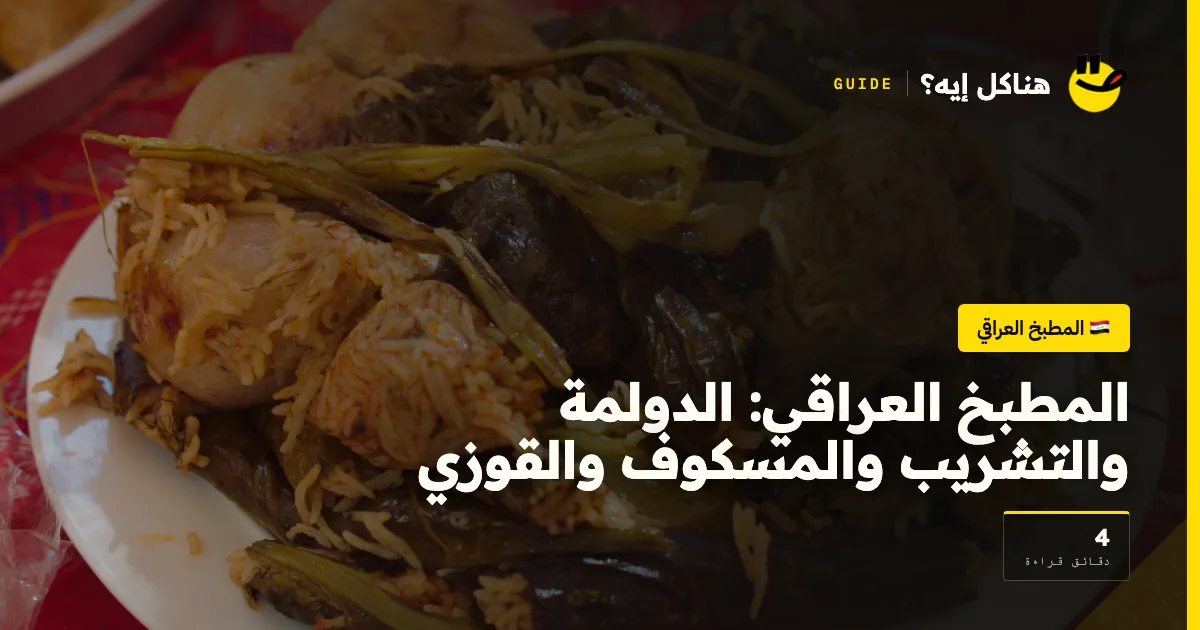
Photo: Kritzolina — CC BY-SA 4.0 · Wikimedia Commons
Iraq is the land between two rivers, and Iraqi cooking is among the oldest documented cuisines in history — Babylonian clay tablets from 3,700 years ago carry actual recipes. That explains why dishes like tashreeb and marag have followed the same logic for thousands of years.
Pomegranate molasses — the signature
If one ingredient defines Iraqi food, it is pomegranate molasses. It goes into dolma, tepsi, marag and even some salads, and gives a deep sourness quite unlike lemon — less sharp and far more rounded.
The practical rule: one or two spoonfuls is enough. More overwhelms everything else and leaves the dish merely sour.
The core dishes
Dolma
An assortment of stuffed vegetables — vine leaves, aubergine, courgette, pepper, onion — cooked together in one pot with pomegranate molasses. The difference from Egyptian mahshi: the filling contains pomegranate molasses, and the vegetables are layered in a single pot and inverted onto a platter at serving.
Tashreeb
Bread soaked in meat or chicken broth. The difference from Saudi thareed is that the broth is thinner and the bread soaks for longer, so it ends up softer.
Masgouf
The fish is opened from the back, not the belly, spread flat like a book, and stood upright beside the fire about thirty centimetres away. The side heat cooks it slowly over forty-five minutes so it takes deep smoke without burning, then it is moved over the embers for a quarter of an hour to crisp the skin.
Quzi
The occasion dish: lamb simmered for two hours until it falls apart, then browned in the oven for twenty minutes to form a crust. Both stages are essential — meat that goes into the oven raw comes out tough outside and raw within.
Tepsi baytinjan
"Tepsi" means tray. Layers of aubergine, potato, tomato and meat baked together. The rule: salting the aubergine for half an hour before frying halves the oil it absorbs.
Iraqi spices
The Iraqi baharat blend contains coriander, cumin, cinnamon, cardamom, clove, black pepper and nutmeg — closer to Indian spicing than to Gulf spicing, a legacy of the old trade routes.
Dried black lime is used as it is in the Gulf, but Iraqis use it less and lean on pomegranate molasses instead.
Iraqi bread
Samoon (a crisp-crusted oval white bread) and tannour (thin bread slapped onto the wall of a clay oven) are the best known. Bread in Iraq is not a side dish — tashreeb, masgouf and quzi are all eaten with it.
Where to start
Tepsi baytinjan is the easiest entry — one tray and the oven does the rest. Then tashreeb, then quzi (long but with clear steps). Leave masgouf and dolma until last, because they demand technique.
Ingredients worth buying
- Pomegranate molasses: the most important ingredient, and it keeps a year in the fridge.
- Ready-made Iraqi baharat: or mix your own from coriander, cumin, cinnamon, cardamom and clove.
- Dried black lime: for the broth.
- Tamarind: for the masgouf marinade.
How an Iraqi meal is ordered
An Iraqi lunch opens with soup, usually lentil, then the main course with rice — timman is present alongside everything. Pickles and amba (mango pickle with curry) accompany almost every meal, and amba is a clear Indian legacy.
Iraqi tea is served in an istikan, a small hourglass-shaped glass, drunk very sweet and very black, and brewed on the same principle as Turkish tea: concentrated in a pot on top with hot water below.
Common mistakes
- Pomegranate molasses: too much leaves the dish merely sour — one or two spoonfuls is enough.
- Masgouf: grilling directly over the fire burns the surface while the centre stays raw.
- Quzi: putting the meat in the oven raw instead of simmering first gives tough meat.
- Tepsi: not salting the aubergine leaves the tray swimming in oil.
- Dolma: no weight on top of the pot means the parcels come apart.
Iraqi sweets
Zalabia (spiral fried dough dipped in syrup), man al-sama (a starch sweet with cardamom and pistachio), and Iraqi kleeja (similar to the Saudi version but filled with walnut, date or coconut). Most Iraqi sweets are made for holidays rather than every day.
Geymar — very thick buffalo cream — is eaten with honey and bread at breakfast, and is among the most distinctive things about an Iraqi morning.
Where to begin with Iraqi cooking
Tepsi baytinjan is the easiest point of entry — everything is layered into a tray and the oven does the rest, with no difficult technique. Then tashreeb, which is really just a good broth with bread.
After those, quzi: long but with clear steps and no surprises, and the result suits any gathering. Leave masgouf and dolma until last — masgouf needs a grill and the side-heat technique, and dolma needs patience in rolling and layering.
One important note: most Iraqi dishes improve on the second day, because the pomegranate molasses and spices need time to penetrate. So make a large batch without hesitation.
FAQ
Why is masgouf grilled beside the fire rather than over it?
Direct heat burns the surface of the fish before the centre cooks, especially in a thick fish. Side heat is gentler, cooks the flesh evenly and gives the smoke time to get in.
What is the difference between Iraqi dolma and Egyptian mahshi?
Dolma brings different vegetables together in one pot in layers, and the filling contains pomegranate molasses. Egyptian mahshi is usually one vegetable at a time and the filling is made with tomato and dill.
What is the difference between tashreeb and thareed?
Iraqi tashreeb has a thinner broth and the bread soaks for longer, so it goes softer. Saudi thareed has a thick stew and the bread is moistened at the last moment, so it holds its shape.

Comments
Cooked it? Tell us how it went, or ask a question — we read every comment.