
Kofta vs Kebab vs Burger
The difference is the state of the meat and how it is shaped: kofta is minced meat seasoned with parsley and onion and moulded onto a skewer, kebab is whole pieces of meat marinated, and a burger is minced meat with no fillers, formed into patties and very simply seasoned.
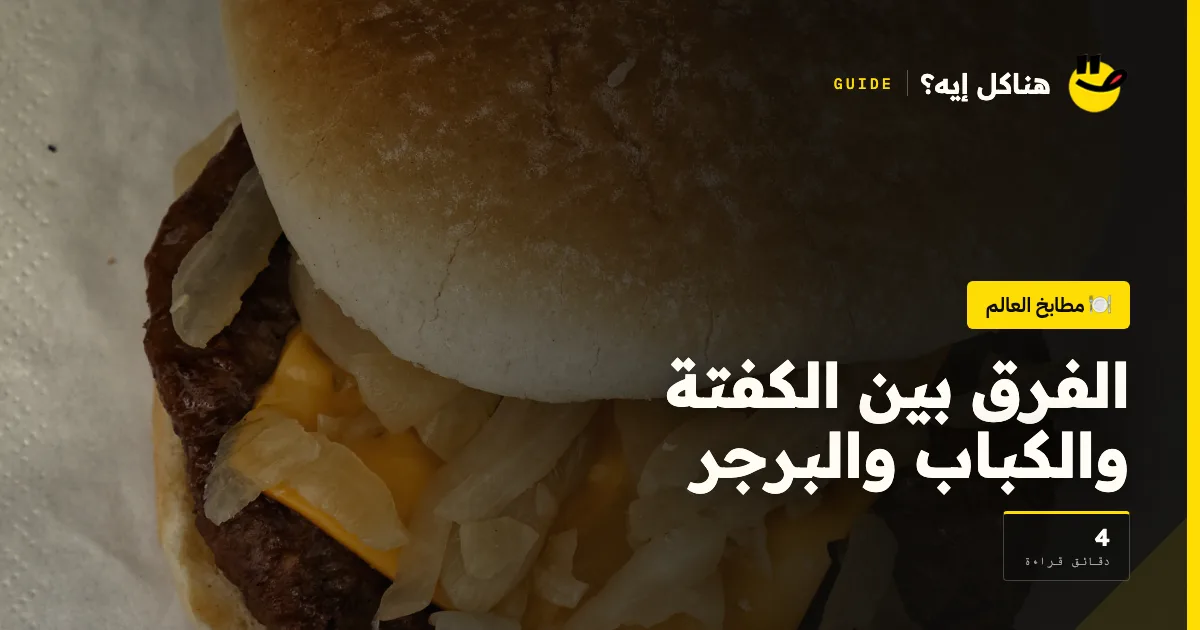
Photo: Acabashi — CC BY-SA 4.0 · Wikimedia Commons
All three are meat over fire, and plenty of people lump them together as "grills" and leave it there. But each follows an entirely different set of rules — and confusing them produces poor results.
Kofta: minced meat with fillers
Kofta is minced meat, seasoned and worked thoroughly so it binds.
Core ingredients: minced meat, very finely chopped onion (or grated and squeezed), plenty of parsley, spices, salt and pepper.
Shaping: moulded around a flat skewer, formed into fingers, or patted into patties for a tray bake.
The secret: thorough kneading develops the sticky protein that holds the mixture — without it the kofta falls off the skewer.
Kebab: whole pieces of meat
Kebab is not minced — it is cubes cut from a tender piece.
Suitable cuts: lamb leg or rack, or beef fillet or escalope.
The marinade: onion, oil, spices and a light acid, for two to four hours.
The secret: a piece of fat between every two pieces of meat on the skewer — it renders and bastes the meat as it grills.
In Egyptian restaurants "kebab and kofta" are served together — whole pieces and minced on the same plate.
Burger: pure meat, no fillers
This is the biggest difference and the one people most often get wrong: a real burger is meat, salt and pepper, and nothing else.
No onion, no parsley, no egg, no breadcrumbs — those turn it into a flattened kofta.
Fat: at least 20%, ideally 20–30%.
Shaping: with the lightest possible hand — pressing and working it makes the patty rubbery.
The salt is sprinkled on the surface immediately before grilling, not mixed into the meat — mixing it dissolves the protein and gives a sausage-like texture.
Fat ratio: the number that decides everything
- Kofta: 20% fat — below that it comes out dry and falls apart.
- Burger: 20–30% — a lean burger tastes like cardboard.
- Kebab: the meat itself, plus pieces of fat on the skewer.
"Lean" meat is not the healthy choice for grilling — it is simply the dry one.
Why does kofta fall off the skewer?
Five causes, all of them fixable:
- Not enough kneading — work it 5–10 minutes until it is sticky and cohesive.
- Too much water — the onion must be squeezed well; onion juice is problem number one.
- Too little fat — fat binds.
- Not cold — after kneading, chill it for at least an hour before shaping.
- A round skewer — a flat, wide skewer grips far better.
Parsley and onion: the proportions
Per kilo of minced meat:
- One large onion, very finely chopped and squeezed dry.
- A large bunch of parsley, finely chopped (about a cup).
- A teaspoon each of cumin, coriander, allspice and black pepper.
- Salt: 15 g per kilo.
Some cooks add a pinch of cinnamon or nutmeg — it gives a pleasant sweet depth.
Mincing: once or twice?
Kofta: minced twice — it gives the fine, cohesive texture that clings to the skewer.
Burger: minced once, coarsely — so it keeps a texture you can feel in the mouth.
Mincing at home just before use is far better than pre-minced meat — a cleaner flavour and control over the fat.
Grilling: the rules
Kofta: medium-high heat with constant turning — fierce heat burns the outside and leaves the centre raw.
Kebab: high heat and a short time — whole pieces want a fast sear.
Burger: very high heat, one or two turns, and never press it with a spatula — pressing squeezes the juice out.
Internal temperatures
- Kofta: 71°C (minced meat must be cooked through).
- Burger: 71°C for safety, 65°C for those who like it medium (only with fresh mince from a trusted source).
- Kebab: 60–65°C for lamb, 65°C for beef.
Mince needs a higher temperature than whole cuts because the meat's surface has been distributed throughout the mixture.
Kofta in the oven and in a tray
Not all kofta goes over charcoal. Kofta with tomato in a tray is a staple home dish:
Shape fingers or patties, brown them in a pan for colour only, then arrange them in a tray with sliced tomato, onion and pepper and tomato sauce, and bake at 180°C for 30–40 minutes.
That initial browning matters — it seals the surface and stops them disintegrating in the sauce.
Common burger mistakes
- Mixing salt into the meat — gives a sausage texture.
- Compressing the patty by hand — makes it dense.
- No dimple in the centre — the patty domes in the middle; press a dimple with your thumb.
- Lean meat — the result is dry no matter what you do.
- Pressing it on the grill — the juice runs into the coals and is gone.
Summary
Kofta is minced with fillers and thoroughly kneaded, kebab is whole pieces with fat between them, and a burger is pure meat with no fillers, handled as lightly as possible. All three need at least 20% fat.
FAQ
Why does my kofta fall off the skewer?
The most common cause is onion juice — it must be squeezed out thoroughly after chopping. After that: too little kneading (it needs 5–10 minutes until sticky), under 20% fat, and shaping without an hour of chilling first.
Should I add egg and breadcrumbs to a burger?
No. A real burger is meat, salt and pepper and nothing else — egg, breadcrumbs and onion turn it into a flattened kofta. And the salt goes on the surface just before grilling, not into the meat.
What is the right fat ratio?
20% for kofta and 20–30% for burgers. Lean meat comes out dry as cardboard on a grill. In kebab, the fat comes from the pieces of tail fat threaded between the meat on the skewer.
Should I mince the meat once or twice?
Twice for kofta, so the texture is fine and cohesive and clings to the skewer. Once and coarse for burgers, so there is still a meaty texture to bite into — mincing twice makes them dense.

Comments
Cooked it? Tell us how it went, or ask a question — we read every comment.