
Saudi Cuisine: Kabsa, Jareesh, Tharid and the Regional Dishes
Saudi cooking is rice, meat and a specific spice profile — loomi (dried lime), cardamom, cinnamon and clove. Kabsa is the national dish, and its defining move is that the rice cooks in the meat broth, not in water. That single step is most of the flavour.
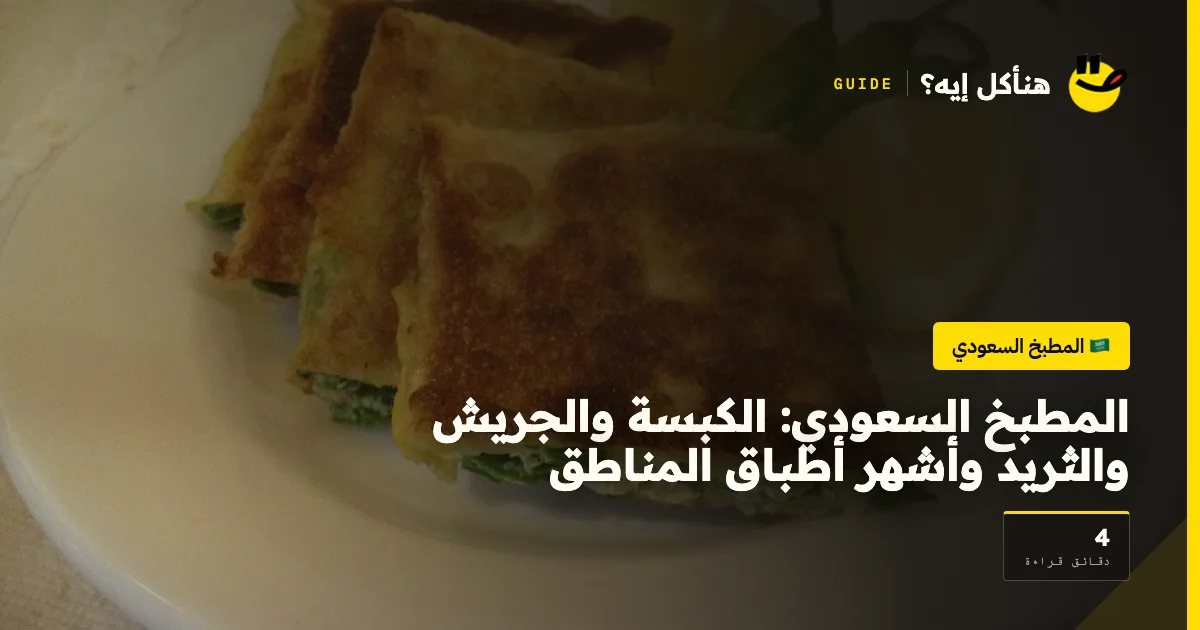
Photo: Basel15 at en.wikipedia — Public domain · Wikimedia Commons
Saudi Arabia is large enough that its regions cook differently: the Hejaz on the Red Sea absorbed influences from pilgrims across the Muslim world; Najd in the centre kept a leaner Bedouin repertoire of wheat, dates and meat; the Eastern Province leans toward Gulf and Persian flavours; and the south has its own chilli-forward tradition.
The essential dishes
1. Kabsa
Spiced rice cooked with chicken or lamb. The meat is browned, then simmered with onion, tomato, loomi and whole spices — and the rice is then cooked in that broth.
The loomi (dried black lime) is pierced before it goes in, and it is the flavour that makes kabsa recognisably itself. Without it the dish is just spiced rice.
2. Jareesh
Crushed wheat slow-cooked with yoghurt or laban and chicken until it breaks down into a thick, comforting porridge. It is finished with onion browned deeply in ghee, poured over the top.
Constant stirring in the last stage stops it catching, and the texture should be rough, not smooth.
3. Tharid
Meat and vegetable stew ladled over thin flatbread that softens in the broth. One of the oldest dishes in the Arabian repertoire.
The bread goes in at the table, not in the kitchen — soaked early it dissolves.
4. Mutabbaq
Thin dough folded around spiced mince, leek and egg, then griddled flat. Hejazi street food and a Ramadan staple.
The dough is stretched almost transparent. Thick dough gives a bready result rather than the crisp, layered one intended.
5. Kleeja
Date-filled biscuits scented with cardamom and sometimes saffron, associated especially with Qassim.
6. Ma'soub
Banana mashed with shredded bread, ghee and honey, topped with cream and nuts. A Hejazi breakfast that eats like a dessert.
The spice profile
Saudi cooking is aromatic rather than hot. The recurring set is cardamom, cinnamon, clove, black pepper and loomi, often bought pre-mixed as bezar or kabsa spice.
Heat, where it appears, tends to come from the south or from a chilli condiment served alongside rather than cooked into the dish.
Coffee and hospitality
Saudi coffee is lightly roasted, almost golden, heavily cardamomed and served unsweetened in small cups with dates. It is poured by the host, and the cup is refilled until the guest shakes it.
This is not a detail around the food — for many meals it is the frame the whole occasion sits in.
The pantry that matters
- Loomi (dried lime): pierce it; the flavour is unmistakable.
- Kabsa spice mix: saves assembling eight spices each time.
- Basmati rice: aged, long grain, rinsed until the water runs clear.
- Ghee: the fat of choice, especially for jareesh and ma'soub.
- Cardamom: green for coffee and rice, black for meat.
Common mistakes
- Cooking kabsa rice in water: the broth is the dish.
- Skipping loomi: the signature disappears.
- Not rinsing the rice: it turns sticky instead of separate.
- Soaking tharid bread early: it dissolves.
- Thick mutabbaq dough: bready instead of crisp.
Where to start
Kabsa is the right first dish — one pot, clear stages, and it teaches the broth rule that carries across the whole Gulf.
Then mutabbaq and tharid. Jareesh last: it needs an hour of attention and a feel for when the texture is right.
FAQ
What is the difference between kabsa and mandi?
In kabsa the rice and meat cook together in one pot on the hob. In mandi the meat roasts in a pit or sealed oven over steam and the rice cooks separately in its stock — so mandi tastes smoky and kabsa does not.
What is the difference between marqooq and qursan?
Marqooq is raw dough dropped into the stew to cook in it, so it stays soft. Qursan is dough baked on a griddle first, then broken up and moistened with the stew, so its texture is firmer and denser.
What is black dried lime?
A small lime boiled and dried in the sun until it blackens. It is pierced and dropped into the stew, where it gives a distinctive deep sourness. A stand-in: lemon juice, though the flavour is different.

Comments
Cooked it? Tell us how it went, or ask a question — we read every comment.