
Stand Mixer or Hand Mixer? Choosing Based on What You Bake
The bottom line: If most of your baking is cakes, cream, meringue, and light dough, a hand mixer is enough (Bosch MFQ40304, or Kenwood HMP30 on a tighter budget). If you knead bread or pastry every week or make Eid cookies at home, get a stand mixer: Moulinex Masterchef Essential with a 4.8 l bowl, or Kenwood Prospero+ if you want a blender and grinder included.
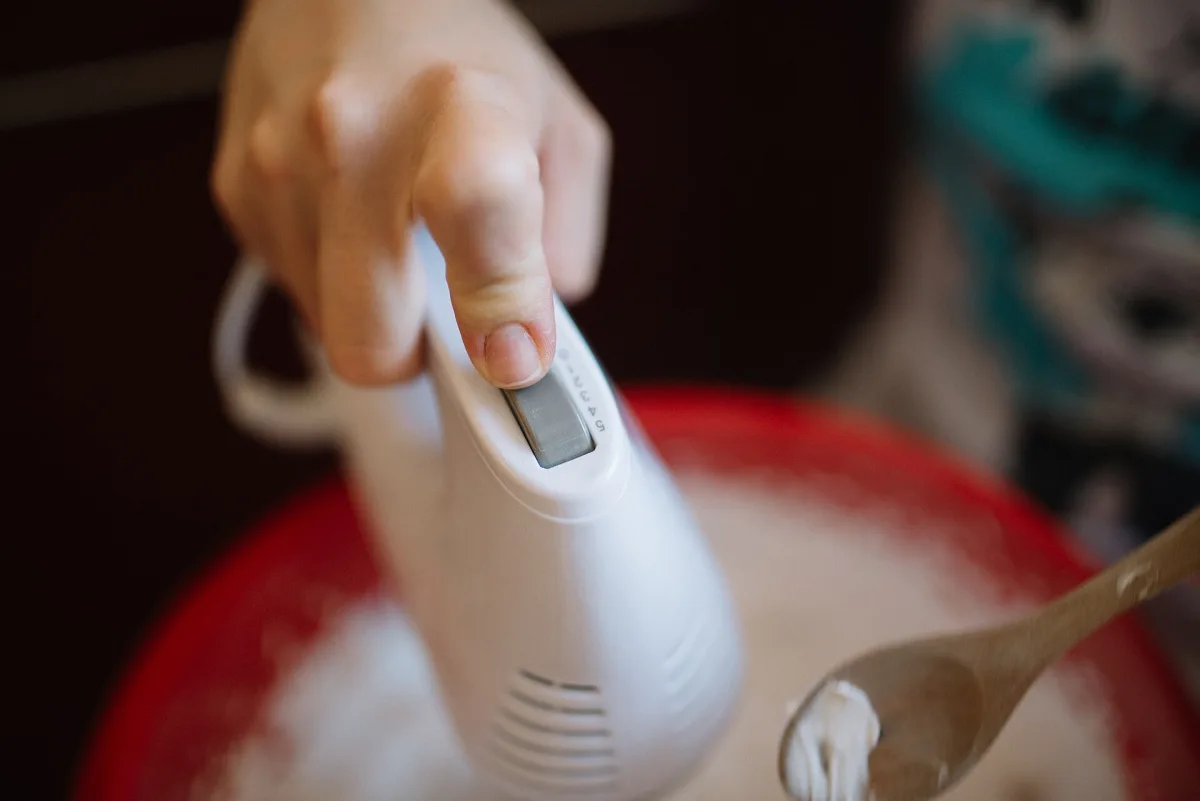
Photo: Shixart1985 — CC BY 2.0 · Wikimedia Commons
The Main Difference
A hand mixer is a small appliance you hold and move around in the bowl. It whips cream and eggs, mixes cakes, and uses dough hooks for small amounts of light dough. A stand mixer sits permanently on your countertop with a stainless steel bowl and a larger motor, working on its own while your hands are free, built specifically for bread, pastries, and cookies by the kilo. So the question isn't which one is better, but what you make and in what quantities.
When Is a Hand Mixer Enough for You?
- You bake a cake or layered cake a few times a month.
- You whip chantilly cream, meringue, and eggs for cakes or basbousa.
- You make a small pizza dough or a small batch of cookies using dough hooks.
- You have a small kitchen, or you don't want an appliance permanently sitting on your counter.
A 450 to 500 W mixer with 5 speeds and turbo is enough for these tasks. Always start on the lowest speed so flour and sugar don't fly around your kitchen.
When Do You Need a Stand Mixer?
- You knead bread or Feteer Meshaltet every week.
- You make Eid cookies, biscuits, and Ghorayeba at home by the kilo.
- You whip cream or meringue for a long time and don't want to stand holding a mixer.
- You sell homemade food or sweets.
Bread and stiff doughs need a motor of 900 W or more so it doesn't overheat and shut down halfway through. An 800 W stand mixer like the Moulinex Masterchef Essential works, but you should divide stiff dough into batches. A hand mixer, even at 500 W, struggles with bread, so if you notice the motor sound changing or getting hot, stop and finish by hand.
Space, Cleanup, and Budget
A hand mixer is stored in a drawer, and you only wash two beaters or dough hooks, then wipe the body with a damp cloth. A stand mixer is heavy and needs a permanent spot on the counter near an outlet, and you have to wash a large bowl, an attachment, and sometimes a splash guard. Budget-wise, most well-known brand hand mixers fall into the budget or mid-range category, while stand mixers start from mid-range and go up to high-end options featuring larger bowls and stronger motors.
There Is a Middle Ground Solution
A bowl-and-stand mixer, like the Kenwood HMP32 or Black + Decker M700, saves your hands during long whipping tasks because the mixer stays fixed above the bowl. However, its motor is close to a regular hand mixer, ranging from 300 to 450 W, so don't treat it like a stand mixer for bread and stiff doughs. There's another approach: a regular hand mixer for cream and cakes, and a mid-range stand mixer for doughs. Together, they serve a household that bakes frequently much better than one expensive bowl mixer.
Mistakes That Strain Both Appliances
- Kneading stiff dough with a hand mixer until the motor gets hot: Dough hooks are meant for small amounts of soft dough. Stop as soon as the sound changes.
- Putting more than the manual's capacity into the stand mixer: The appliance will shake on the counter and strain the motor. Split the dough in half.
- Leaving cream in the stand mixer and walking away: The stand mixer whips effortlessly, so cream can easily overbeat and turn into butter. Stay close by and stop as soon as it holds its shape.
- Using the wrong attachment: The dough hook is for bread, the K-beater is for cookies and heavy cakes, and the whisk is for cream and eggs only.
Before You Pay
- Voltage: It must be 220–230 V. Some imported appliances on Amazon Egypt are rated at 120 V and require a step-down transformer.
- Warranty: Manufacturer warranties in Egypt are better than "international warranties", and make sure to ask who provides the repairs.
- Contents List: Dough hooks, whisks, and K-beaters aren't included in every version, even if the picture shows them.
- Upon Arrival: Test it on the lowest speed and inspect the splash guard, bowl, and attachments before the return window closes.
If you want more choices for each type, check out the guide for the best electric stand mixer in Egypt, and the guide for the best electric hand mixer.
FAQ
Can I whip cream in a stand mixer?
Yes, using the included wire whisk while your hands are free. However, if the quantity is small, like a single carton of cream, the wire whisk might not reach the cream properly at the bottom of the large bowl, making a hand mixer faster and easier in that case.
Does a stand mixer replace a hand mixer?
For whipping, mixing, and kneading, yes—a stand mixer does everything a hand mixer does and more. But for quick tasks like two eggs or a small amount of cream, a hand mixer is quicker to pull out and wash. If your budget allows, having both is very convenient.
How many watts do I need in a stand mixer if I'm going to make bread?
For bread, pastries, and stiff doughs, 900 W or more is better. 800 W works, but you should knead in smaller batches. Check the manual for the maximum flour capacity the appliance can knead at once, because wattage alone doesn't tell the whole story.
Which is easier to clean: a stand mixer or a hand mixer?
A hand mixer is easier: you pop out the two beaters or hooks with a button and wash them, then wipe the body with a damp cloth. A stand mixer features a large bowl, an attachment, and sometimes a splash guard, all of which need immediate washing before the dough dries. In either case, never submerge the motor housing in water.

Comments
Cooked it? Tell us how it went, or ask a question — we read every comment.