
Turkish Cuisine: From Menemen to Künefe — 6 Essential Dishes
Turkish cooking is built on yoghurt, butter and slow-cooked onion. Yoghurt appears in soups, sauces and drinks; butter carries the spice; and onion cooked down properly is the base of most stews. Menemen and künefe are its two most travelled dishes.
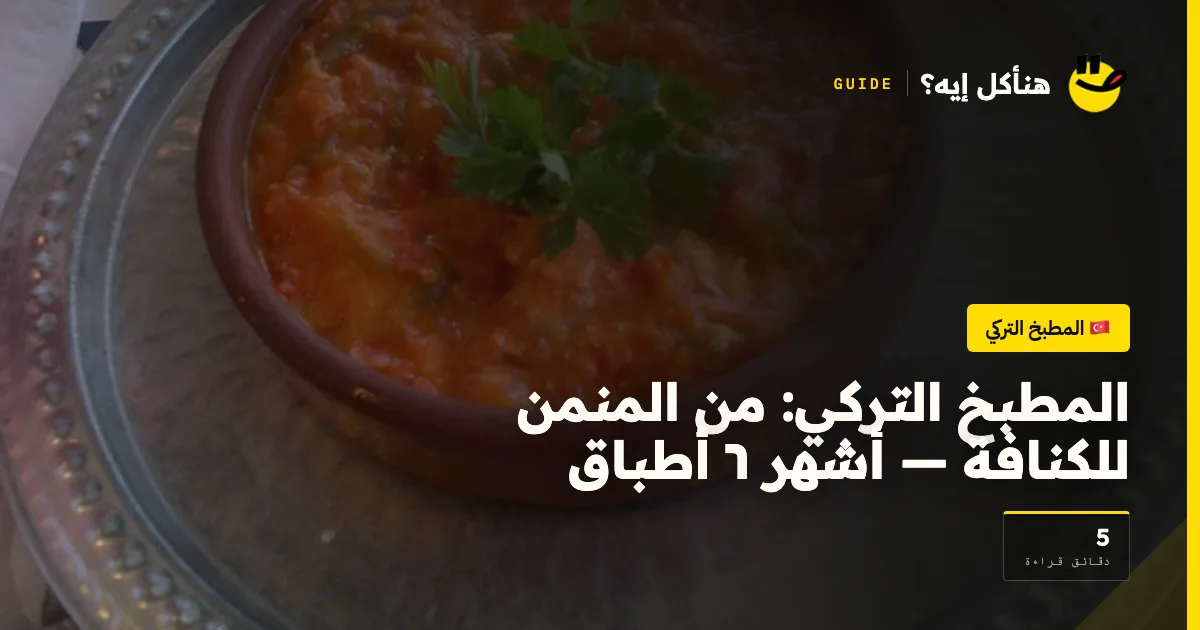
Turkey sits between Europe, the Caucasus and the Middle East, and its kitchen absorbed all three. Ottoman palace cooking refined the techniques; Anatolian village cooking supplied the ingredients. The result is a cuisine with genuine range — from delicate stuffed vegetables to blunt, brilliant grilled meat.
The essential dishes
1. Menemen
Eggs cooked into softened peppers and tomato. The critical detail is that the vegetables must break down completely before the eggs go in — twenty minutes, not five. Rushed vegetables give a watery pan.
The eggs are stirred gently and pulled off the heat while still slightly loose. They finish in the residual heat.
2. Mantı
Tiny dumplings served under garlic yoghurt and hot butter with pepper. The pasta is rolled very thin and the parcels are genuinely small — traditionally forty fit on a spoon.
The yoghurt must be at room temperature; cold yoghurt on hot dumplings splits and looks curdled.
3. Red lentil soup
The most-eaten soup in the country. Red lentils, onion, carrot and a little flour or bulgur, blended smooth and finished with mint bloomed in butter poured over at the table.
That mint butter is not a garnish — it is where most of the flavour lives.
4. Künefe
Shredded pastry around unsalted stretchy cheese, baked hard and soaked in syrup. Two rules decide it: the cheese must be desalted by soaking, and the syrup must be cold onto hot pastry.
5. İskender
Sliced döner over bread with tomato sauce, yoghurt and browned butter. The bread underneath is doing real work — it absorbs the sauce and butter, and stale bread is better than fresh here.
6. Stuffed vegetables (dolma)
Peppers, aubergines, courgettes or vine leaves filled with spiced rice. The rice goes in uncooked and loosely packed — it swells, and a tight fill splits the vegetable.
Yoghurt as an ingredient
Turkish cooking uses yoghurt structurally, not as a topping: thinned into ayran, strained into sauces, stirred into soups off the heat. When it goes into something hot it must be tempered — a ladle of the hot liquid whisked into the yoghurt first, then the mixture returned.
Skip that step and it splits, every time.
The pantry that matters
- Pul biber (Aleppo pepper): mild, fruity, essential in butter sauces.
- Dried mint: used more than fresh, and bloomed in fat.
- Pepper paste (biber salçası): depth that tomato paste alone can't give.
- Full-fat yoghurt: low-fat splits under heat.
- Butter: Turkish cooking is a butter cuisine, not an oil one.
Common mistakes
- Rushing the menemen vegetables: watery eggs.
- Cold yoghurt on hot food: it splits.
- Salty cheese in künefe: soak it first.
- Hot syrup on hot pastry: the künefe goes soggy.
- Overpacking dolma: the rice swells and splits the skin.
Where to start
Menemen is the obvious first dish — twenty-five minutes, four ingredients, and it teaches the patience the rest of the cuisine asks for. Lentil soup next, then İskender.
Mantı and künefe last: one needs fine pasta work, the other needs specific cheese and precise syrup timing.
FAQ
إيه الفرق بين المنمن والشكشوكة؟
الشكشوكة صلصتها تقيلة والبيض بيفضل كامل في حفر داخلها. المنمن الفلفل الأخضر هو أساسه، والبيض بيتقلّب مع الخضار فبيطلع كريمي متشابك.
إيه هي الزبدة الحمرا؟
زبدة بتتدوّب وبعدين بتتضاف لها بابريكا ونعناع ناشف على نار مطفية. بتتصبّ فوق المانتي وشوربة العدس والأرز. البابريكا لازم تنزل بعد إطفاء النار لأنها بتحترق في ثواني.
إيه الفرق بين الكنافة التركية والنابلسية؟
النابلسية بتتخبز في الفرن بكنافة خشنة ملوّنة. التركية بتتعمل على الموقد في طاسة بكنافة ناعمة مفرومة، وقاعها بيتقلي في السمنة فبيطلع مقرمش.
Comments
Cooked it? Tell us how it went, or ask a question — we read every comment.