
Why Garlic Turns Green or Blue in Cooking and Pickles (And the Fix)
Garlic turns green or blue when sulfur compounds formed after cutting react with amino acids in the presence of an acid like vinegar or lemon juice, producing blue and green pigments. This color change is completely safe and not a sign of spoilage, and it happens more with cold-stored garlic. If you want it white: blanch the cloves for a minute before pickling, and sauté the garlic before adding acid in cooking.
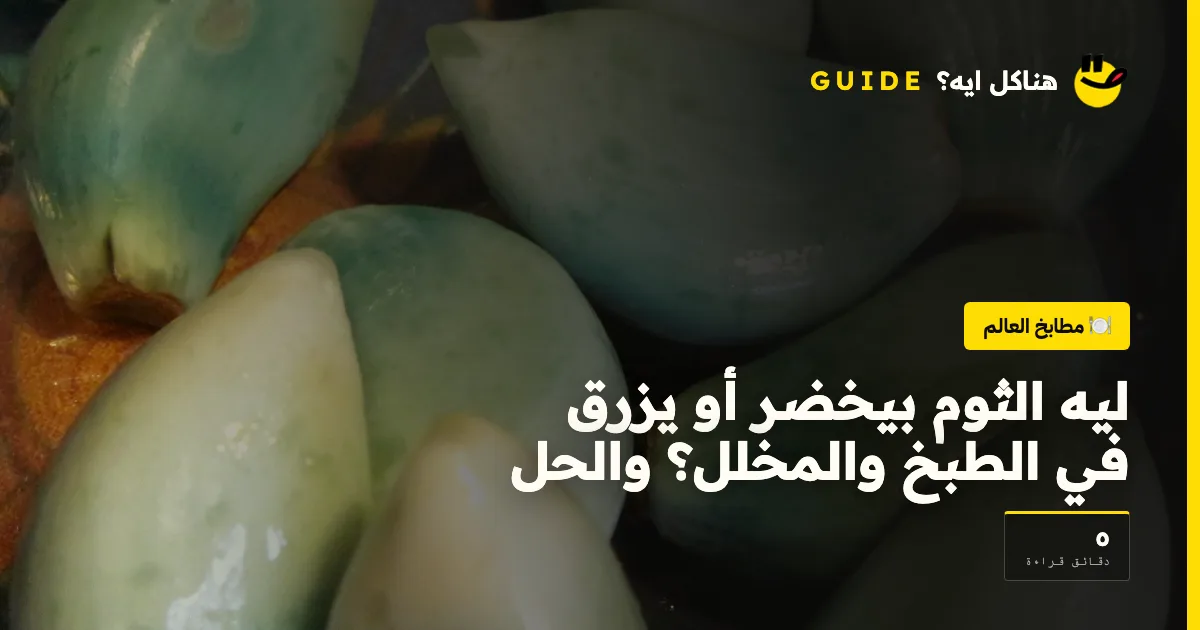
Photo: GrammarFascist — CC BY-SA 4.0 · Wikimedia Commons
You open a jar of pickles to find the garlic cloves have turned bright turquoise-green or blue, or you make a garlic-lemon sauce and notice it has a greenish tint a few hours later. Many people throw away the whole jar out of fear of mold — but the truth is this is a safe chemical reaction, so much so that there is a famous Chinese pickle called "Laba garlic" that is made green on purpose. (As for why garlic tastes bitter when browned, that is another story for another article.)
What Happens Inside a Garlic Clove?
A whole garlic clove has a mild scent because the sulfur compounds inside it are trapped away from the enzyme that converts them. As soon as you chop or crush it — or vinegar seeps inside and breaks down its cells — the two meet, forming active sulfur compounds that give garlic its sharp smell.
One of these compounds reacts with the amino acids naturally present in garlic, creating small molecules that link into chains. These chains are pigments: some blue and some yellow, and when they mix, the color appears green. And acidity helps this reaction, which is why it shows up especially with vinegar and lemon.
Why Does It Happen in Pickling?
The vinegar enters the clove and slowly breaks down its cells, so the reaction progresses at its own pace over days. The color starts light blue, then darkens and turns green. This happens in mixed pickles, pickled garlic on its own, and the garlic and vinegar sauce served with calf's head meat if it is stored for a couple of days.
And the proof that it is a natural reaction rather than spoilage: Chinese "Laba garlic" is made exactly like this — peeled garlic cloves in vinegar, in a cold environment, for a few weeks until they turn completely green, and it is eaten alongside meals just like pickles.
Why Does It Happen Sometimes and Not Others?
- Cold Storage: This is the most important factor. Garlic that has been stored for weeks in the fridge or in cold storage builds up the compound that triggers the reaction, making it turn green faster and stronger. Garlic sold out of season is usually from cold storage.
- Acid Strength and Amount: The higher the acidity, the faster the color appears.
- Minerals: Copper, iron, and tin — from a pot or spoon, or even tap water with high mineral content — can help produce a bluish-green color.
- The Batch Itself: The same method with the same vinegar might yield a different result with garlic from another source, so don't be surprised.
And in Cooking: Why Does Garlic Turn Green?
In cooking, this happens when raw garlic meets acid without enough heat: Toum (garlic sauce) and sauces with garlic and lemon, chicken-lemon-garlic marinade left in the fridge, and minced garlic added to lukewarm vinegar sauce.
The Solution: If the recipe allows, sauté the garlic first in oil or ghee until its aroma is released, then add the lemon or vinegar — the heat deactivates the enzyme so the reaction doesn't start. In raw sauces like Toum, use garlic stored at room temperature, store the sauce in a glass jar — and if it turns a bit green, it is still safe.
How to Keep Garlic White in Pickles?
- Choose firm, dry heads of garlic stored at room temperature and free of green sprouts.
- Peel the cloves and blanch them in boiling water for 1 to 2 minutes, then plunge them straight into cold water. Quick blanching deactivates a large part of the enzyme to reduce greening, and also softens the sharpness of the garlic.
- Use glass jars, stainless steel spoons, and filtered water if your tap water is hard.
- Stick to safe vinegar ratios: 5% vinegar, without diluting it with water more than half and half.
Even with all this, some color might still appear in a few cloves — this is normal and has nothing to do with safety.
Is the Green Color Safe?
Yes, completely safe. This pigment is not mold and not a sign of spoilage, the taste remains almost the same, and some people even find it milder. Real signs of spoilage are different: fuzzy mold on top, a slimy liquid, a bad odor that isn't acidic, soft and mushy cloves, or a bulging lid. In that case, the whole jar must be thrown away, regardless of the garlic's color.
And watch out for an important difference: This reaction happens after cutting or pickling, and the color is smooth and distributed inside the flesh of the clove. But if you find on the raw garlic head — before any vinegar or lemon — soft, powder-like blue or green spots, or the clove underneath is soft or brown, that is mold, not a reaction. Throw away the affected cloves, and if the mold has spread across the whole head, throw it all away.
More Important Than Color: Garlic in Oil
If you are storing minced garlic or cloves submerged in oil, this is where the real danger lies, not the color. Garlic in oil kept at room temperature creates an oxygen-free, low-acidity environment that is ideal for botulism bacteria, whose toxin is dangerous and cannot be detected by taste or smell. The rule: homemade garlic in oil must be kept in the fridge and consumed within 4 days, or frozen.
What About Fresh Green Garlic We Buy?
This is a completely different thing: fresh green garlic sold with its stalks in the spring is young garlic pulled early, and its color is natural. Also, the green sprout you find in the middle of an old clove means the garlic has started to sprout — it is safe, but its taste is sharper and tends toward bitterness, so remove it with the tip of a knife if you are using the garlic raw.
Conclusion
Garlic turns green or blue when its sulfur compounds react with amino acids in the presence of an acid, and this happens more with cold-stored garlic. The color is safe and not a sign of spoilage. If you want it white: blanch the cloves for a minute before pickling, and sauté the garlic before adding acid in cooking. What is actually worth worrying about is garlic in oil left at room temperature, not the color.
FAQ
Why does garlic turn green in vinegar?
Vinegar breaks down the clove's cells, so the formed sulfur compounds react with amino acids to create blue and yellow pigments that look green. This happens more with garlic stored in the cold for weeks.
Is blue or green garlic in pickles safe?
Yes, completely safe and not a sign of spoilage, and the taste is mostly unchanged. True signs of spoilage are fuzzy mold, slimy liquid, bad odor, mushy cloves, or a bulging lid.
How do I prevent garlic from turning green in pickles?
Use dry garlic stored at room temperature, not in the fridge. Blanch peeled cloves for 1 to 2 minutes in boiling water followed by cold water, and use glass jars and filtered water. Some color may still appear and that is normal.
Why does Toum or garlic-lemon sauce turn green?
Because raw garlic meets lemon acidity without heat, starting the reaction. Use room-temperature stored garlic and store the sauce in glass. The color is safe if it appears.
Can I store garlic in oil outside the fridge?
No. Garlic submerged in oil at room temperature creates a suitable environment for botulism bacteria, whose toxin cannot be detected by taste or smell. Store it in the fridge and eat it within 4 days, or freeze it.

Comments
Cooked it? Tell us how it went, or ask a question — we read every comment.