
Why Potatoes Turn Green, Are They Safe to Eat, and How to Fix It
Potatoes turn green when exposed to light at the store or at home, which forms chlorophyll — the green itself is not harmful, but it is a sign that the same conditions raised a bitter compound called solanine. Cooking does not remove it, so the solution is to peel and cut away the green part, sprouts, and eyes generously, and throw the potato away if the green area is large or the taste is bitter.
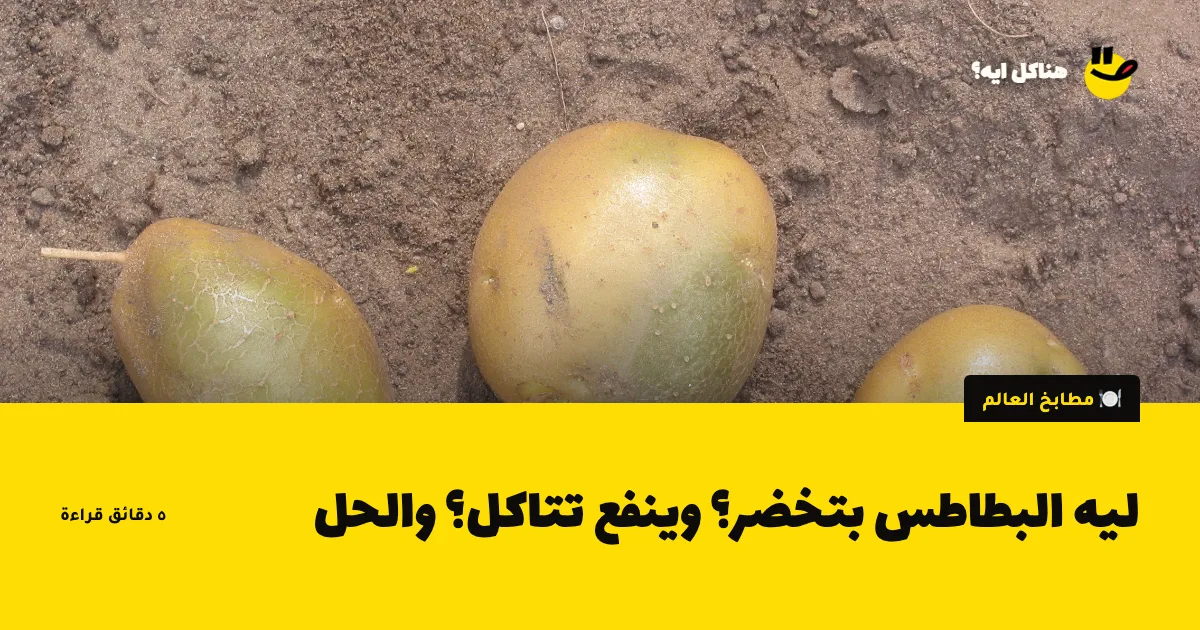
Photo: Wikimedia Commons — CC BY-SA 3.0 · Wikimedia Commons
You open a bag of potatoes and find one with a green patch under the skin, or sprouts growing out of it. Do you throw it away? Throw the whole bag away? Or just peel it and move on? The short answer: usually peel and cut generously — but there are cases where you must throw them away without a second thought, and the difference is easy to spot.
What Makes Potatoes Turn Green?
A potato is not a root; it is an underground stem used to living in the dark. The moment it is exposed to light — sunlight, store lights, or a kitchen window — it acts as if it has come above ground and starts forming chlorophyll in the layer right under the skin, which is the same green pigment found in spinach and mallow.
Greening can appear in a few days of exposure to light, and it shows more clearly in light-skinned potatoes. Red-skinned potatoes turn green too, but the red color hides the green — so scrape a small bit of the skin if you are in doubt.
Greening can even start before the potatoes reach you: tubers that poked out of the soil in the field get sunlight and turn green, and those displayed under strong store lights finish the process. That is why you might find a green potato in a bag straight from the market.
The Green Isn’t the Problem… Solanine Is
Chlorophyll itself is completely harmless. The problem is that those exact conditions — light, bruising and cuts, and sprouting — cause the potato to increase production of compounds called glycoalkaloids, most notably solanine. These are natural defense chemicals that protect the plant from insects and diseases, they taste bitter, and in large amounts they can make a person sick.
The two processes are separate, but they go hand in hand, so the green color is a warning sign that solanine has likely increased in that area. Its concentration spots are well known: the skin, the eyes, the sprouts, the green parts, and around bruises. As for the healthy potato flesh inside, it contains very tiny amounts that do no harm.
What Happens If You Eat It?
High amounts of solanine can cause stomach and digestive symptoms: nausea, vomiting, diarrhea, cramps, and sometimes headaches — usually appearing hours after eating. Severe poisoning is rare and linked to eating large amounts of very green or bitter potatoes. Children are more affected because they weigh less. And if someone eats a bitter potato and shows severe symptoms, they must see a doctor.
There is also a natural alarm bell: potatoes with high solanine taste bitter, and sometimes cause a tingling or burning sensation in the mouth. If you notice this, stop eating.
Cooking Doesn't Fix the Problem
Solanine is heat-tolerant. Boiling, baking, and microwaving do not break it down reliably, and even regular frying only reduces a small part of it, nor does it dissolve into boiling water in any meaningful way. This means the only solution is to remove it with a knife before cooking, rather than relying on the heat.
When to Peel and When to Toss?
In a healthy potato, most of the solanine is in the skin and the thin layer right underneath it, so regular peeling removes most of it. However, in the green area, the concentration is higher and goes deeper into the flesh, which is why cutting there must be deeper than regular peeling. The practical rule:
- A small green spot or light smudge on the skin: Peel the potato, and cut away the green part generously — keep going until you reach clean yellow color, and remove an extra bit beyond that.
- Eyes or small sprouts while the potato is still firm and tight: Remove the sprouts and eyes with the tip of a knife along with a bit of the flesh around them, and cook the rest normally.
- Green covers a large part of the potato, or goes deep into the flesh: Throw it away.
- The potato has shriveled, softened, and has long sprouts: Throw it away.
- It tastes bitter after being cooked: Do not continue eating, and throw away the rest of the same dish.
For children's meals, be stricter: any questionable potato does not make the cut.
In skin-on recipes — baked jacket potatoes, potato wedges, and small boiled potatoes eaten with their skins on — the rule is stricter, because the skin is where most of the solanine is and it will enter the whole dish. Choose potatoes with completely intact skins free of any green smudges or sprouting eyes, and any tuber with green must be peeled and sent to another dish. Same goes for crispy potato skins made from the peels alone.
How to Keep Potatoes from Turning Green in the First Place?
When buying: Look closely at the skin under the light, and leave behind any potato with a green smudge, sprouts, or softness. Potatoes displayed in sunlight or under strong lights for days are more prone. Buy an amount that lasts one to two weeks only.
At home:
- Darkness is key: A cardboard box, paper bag, cloth bag, or a closed cupboard. Not a clear plastic bag, and not next to the window.
- A cool, ventilated place: Ideally around 7–10 °C, and away from the stove, oven, and water heater — warmth speeds up sprouting.
- Not in the fridge if you plan to fry them: The cold turns part of the starch into sugar, so the potatoes sweeten and darken quickly in the oil.
- Do not wash them before storing: Moisture causes them to rot.
- Best kept away from onions, because the moisture they release encourages sprouting.
- Sort them every week, use the ones starting to sprout first after removing their sprouts, and throw away any that have softened or rotted.
What About Sweet Potatoes?
Sweet potatoes belong to a completely different plant family and do not form solanine, so none of this applies to them. The warning here is for regular potatoes of all colors: white, yellow, and red.
The Bottom Line
Potatoes turn green from light, and the green itself is not harmful, but it is a sign that bitter solanine has increased in that area — and cooking does not remove it. Peel and cut away the green parts, eyes, and sprouts generously, and throw the potato away if the green is large or deep or the taste is bitter. Store potatoes in the dark in a cool, ventilated place, and you will save yourself the question in the first place — whether you are making Egyptian meat potato casserole or oven-roasted herb potatoes.
FAQ
Are green potatoes toxic?
The green itself is chlorophyll and harmless, but it signals that the bitter solanine compound has increased in that area, and large amounts can cause nausea, vomiting, and diarrhea. Small spots can be cut away generously, while very green or bitter potatoes should be discarded.
Are green potatoes safe if I peel them?
If the green is light and on the skin, peeling and cutting away the green part generously along with eyes and sprouts removes most of the solanine. However, if the green covers a large area or goes deep into the flesh, or the taste is bitter after cooking, throw it away.
Does boiling or frying remove solanine?
No. Solanine is heat-tolerant; boiling, baking, and microwaving do not break it down reliably, and frying only reduces a tiny part. The only solution is to cut away the green part with a knife before cooking.
Can sprouted potatoes be eaten?
If the potato is still firm and tight and the sprouts are small, remove the sprouts and eyes with a bit of the surrounding flesh and the rest is fine. If it has shriveled, softened, and has long sprouts, throw it away.
Where should I store potatoes so they don't turn green?
In the dark: a cardboard box, paper bag, or cloth bag, in a cool, ventilated place around 7–10 °C, away from light, the oven, and onions, and without washing. Do not put them in the fridge if you are going to fry them.

Comments
Cooked it? Tell us how it went, or ask a question — we read every comment.