
Egyptian Rice with Vermicelli
The correct amount of water for rice with vermicelli: 1 and a quarter cups of boiling water for every cup of washed and drained rice, and a quarter cup extra for every half cup of vermicelli. Rice turns out fluffy if it is not stirred at all after the water goes in: let it boil uncovered until the water level drops to the rice and small holes appear on the surface, then cover it on the lowest heat for 20 minutes without opening the lid.
- Prep
- 15 min
- Cook
- 35 min
- Total
- 60 min
- Calories
- 330
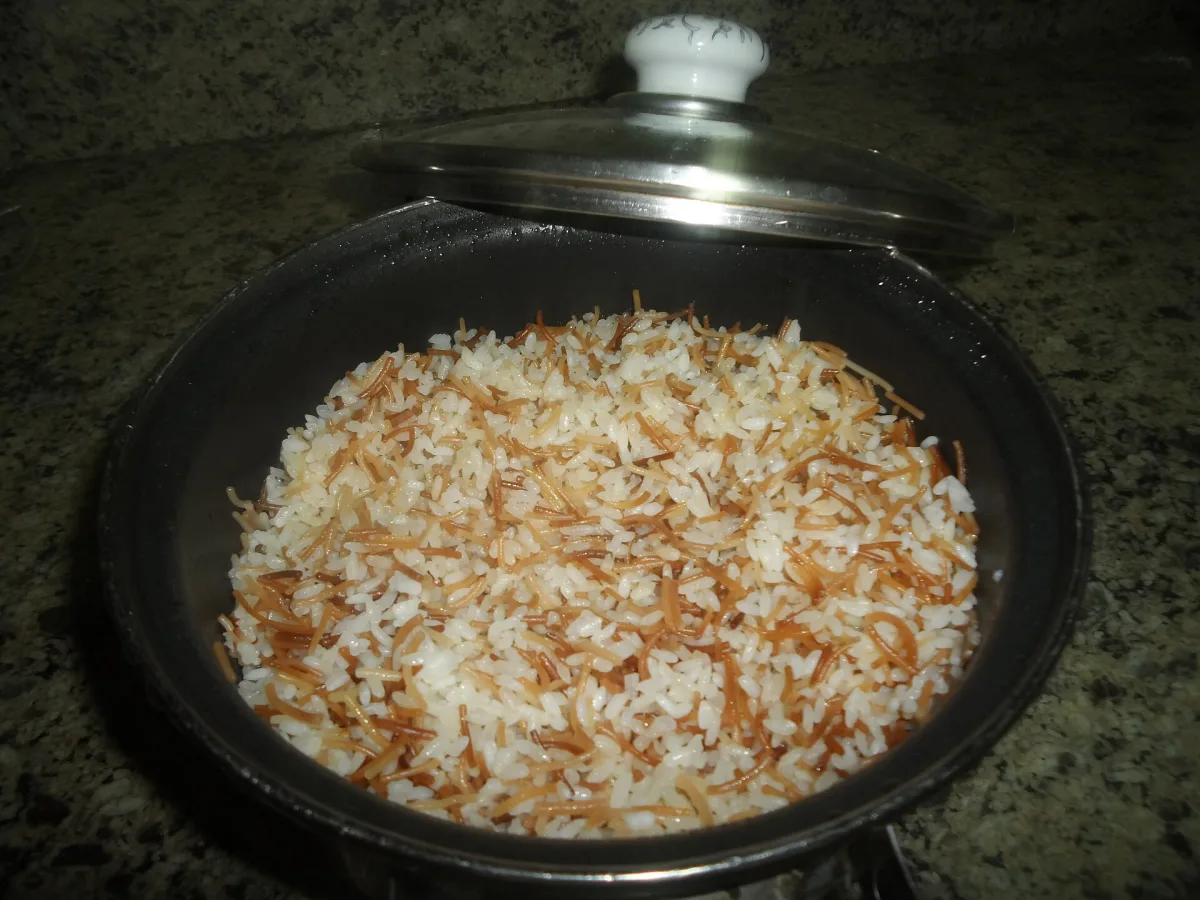
Photo: Showshow777 / Wikimedia Commons · CC BY-SA 4.0 · https://commons.wikimedia.org/wiki/File:Egyptian_Rice.JPG
Rice with vermicelli is practically on every Egyptian dining table, alongside molokhia, okra, vegetables, and chicken. It has only four ingredients — rice, vermicelli, ghee, and water — but the difference between fluffy rice where every grain is separate and sticky, mushy rice is the amount of water and how you handle it after the water goes in.
Method
-
1
Washing the rice
Wash the rice in cold water 3–4 times while gently rubbing it with your hand until the water is almost clear. This cloudy water is starch on the surface of the grain — it is what makes the rice stick together.
⏱ 3 min -
2
Draining well
Strain the rice in a colander and leave it for 10 minutes until it stops dripping. Wet rice introduces extra water into the measurements, and that alone is enough to make it mushy.
⏱ 10 min -
3
Browning the vermicelli
In a heavy-bottomed pot, heat the ghee and oil over medium heat, and brown the vermicelli while stirring constantly for 3–4 minutes until it is an even dark golden color. This color is the flavor of the whole dish — but be careful, vermicelli goes from golden to burnt in seconds, and burnt vermicelli makes the rice bitter.
⏱ 4 min -
4
Sautéing the rice
Add the rice to the vermicelli and stir for 2–3 minutes until every grain is coated with ghee and you hear a light crackling sound. The fat around the grain prevents it from sticking to the neighboring grains.
⏱ 3 min -
5
Boiling water
Pour in 2 and three-quarters cups of boiling water, add the salt, and stir once only to distribute it. The water must be boiling — cold water stops the cooking and softens the surface of the grain before the inside, causing it to break apart.
⏱ 1 min -
6
Boiling uncovered
Let it boil over high heat uncovered without stirring for 5–7 minutes, until the water drops to the level of the rice and holes (small vents) appear on the surface. This means the free water is gone, and the rest will finish cooking on steam.
⏱ 7 min -
7
Steaming
Lower the heat to the lowest setting, cover the pot tightly with a tight-fitting lid (if the lid does not seal well, put a clean towel or foil under it), and leave it for 20 minutes without opening or stirring. Every time you open it, you let out the steam that cooks the top grains.
⏱ 20 min -
8
Resting and fluffing
Turn off the heat and leave it covered for 10 minutes, then gently fluff it from the bottom up using a fork or a wooden spoon. Resting distributes the moisture evenly between the bottom and top grains, so there are no undercooked or mushy grains.
⏱ 10 min
Cooked it? Rate it
Your rating tells the next cook whether this recipe is worth their time.
✓ Thanks — your rating is in.
Tips that actually matter
- Measure the rice and water with the same cup — the ratio is what matters, not the size of the cup.
- Want a richer flavor? Use hot chicken or meat broth instead of water in the same amount, and reduce the salt because the broth is already salted.
- Use a heavy-bottomed pot that fits the quantity — a thin pot will burn the bottom before the top cooks, and a very wide pot will evaporate the water too quickly.
- Love a lot of vermicelli? For every extra half cup of vermicelli, add a quarter cup of water extra.
People also ask
Why does rice with vermicelli turn out mushy?
Common reasons: more water than the measurement, or the rice wasn't washed and drained well, or it was stirred after the water went in, or the lid was opened multiple times. Also, new rice (from the current year's harvest) absorbs less water — if you are using a new bag of rice, start with 1 cup of water per cup of rice, and older rice might need up to 1 and a half cups.
Why is the rice uncooked on top and cooked or stuck at the bottom?
The heat was too high during the covering stage, or the lid wasn't tight so the steam escaped. The fix: sprinkle a quarter cup of boiling water on top, cover with foil and then the lid, and leave it on the lowest heat for another 10 minutes. If the bottom always sticks, put a heat diffuser or an empty pan under the pot to lower the heat.
Should I soak the rice or not? Does the water amount change?
Egyptian rice doesn't need soaking — washing and draining is enough. If you soak it for 20–30 minutes, reduce the water to 1 cup of water per cup of rice because it absorbed some while soaking, and the cooking time will be slightly shorter.
How do I store and reheat rice with vermicelli?
Put it in the fridge within an hour of cooking in a closed container — cooked rice left out spoils faster than many foods — and it lasts for 3 days. Reheat it in a pot over low heat with two tablespoons of water and covered, or in the microwave covered. It freezes for up to a month in flattened bags, and can be reheated directly without thawing.
Cook mode
Egyptian Rice with Vermicelli
-
1
Washing the rice
Wash the rice in cold water 3–4 times while gently rubbing it with your hand until the water is almost clear. This cloudy water is starch on the surface of the grain — it is what makes the rice stick together.
-
2
Draining well
Strain the rice in a colander and leave it for 10 minutes until it stops dripping. Wet rice introduces extra water into the measurements, and that alone is enough to make it mushy.
-
3
Browning the vermicelli
In a heavy-bottomed pot, heat the ghee and oil over medium heat, and brown the vermicelli while stirring constantly for 3–4 minutes until it is an even dark golden color. This color is the flavor of the whole dish — but be careful, vermicelli goes from golden to burnt in seconds, and burnt vermicelli makes the rice bitter.
-
4
Sautéing the rice
Add the rice to the vermicelli and stir for 2–3 minutes until every grain is coated with ghee and you hear a light crackling sound. The fat around the grain prevents it from sticking to the neighboring grains.
-
5
Boiling water
Pour in 2 and three-quarters cups of boiling water, add the salt, and stir once only to distribute it. The water must be boiling — cold water stops the cooking and softens the surface of the grain before the inside, causing it to break apart.
-
6
Boiling uncovered
Let it boil over high heat uncovered without stirring for 5–7 minutes, until the water drops to the level of the rice and holes (small vents) appear on the surface. This means the free water is gone, and the rest will finish cooking on steam.
-
7
Steaming
Lower the heat to the lowest setting, cover the pot tightly with a tight-fitting lid (if the lid does not seal well, put a clean towel or foil under it), and leave it for 20 minutes without opening or stirring. Every time you open it, you let out the steam that cooks the top grains.
-
8
Resting and fluffing
Turn off the heat and leave it covered for 10 minutes, then gently fluff it from the bottom up using a fork or a wooden spoon. Resting distributes the moisture evenly between the bottom and top grains, so there are no undercooked or mushy grains.




Comments
Cooked it? Tell us how it went, or ask a question — we read every comment.