
Fluffy Basmati Rice
Basmati rice does not use Egyptian rice measurements: after washing it until the water runs clear and soaking for 20–30 minutes, it takes 1.5 cups of water for each cup of rice — not 2 cups. The extra water is the most famous reason basmati gets mushy, and washing removes the starch on the surface of the grain so it doesn't stick together.
- Prep
- 10 min
- Cook
- 20 min
- Total
- 65 min
- Calories
- 310
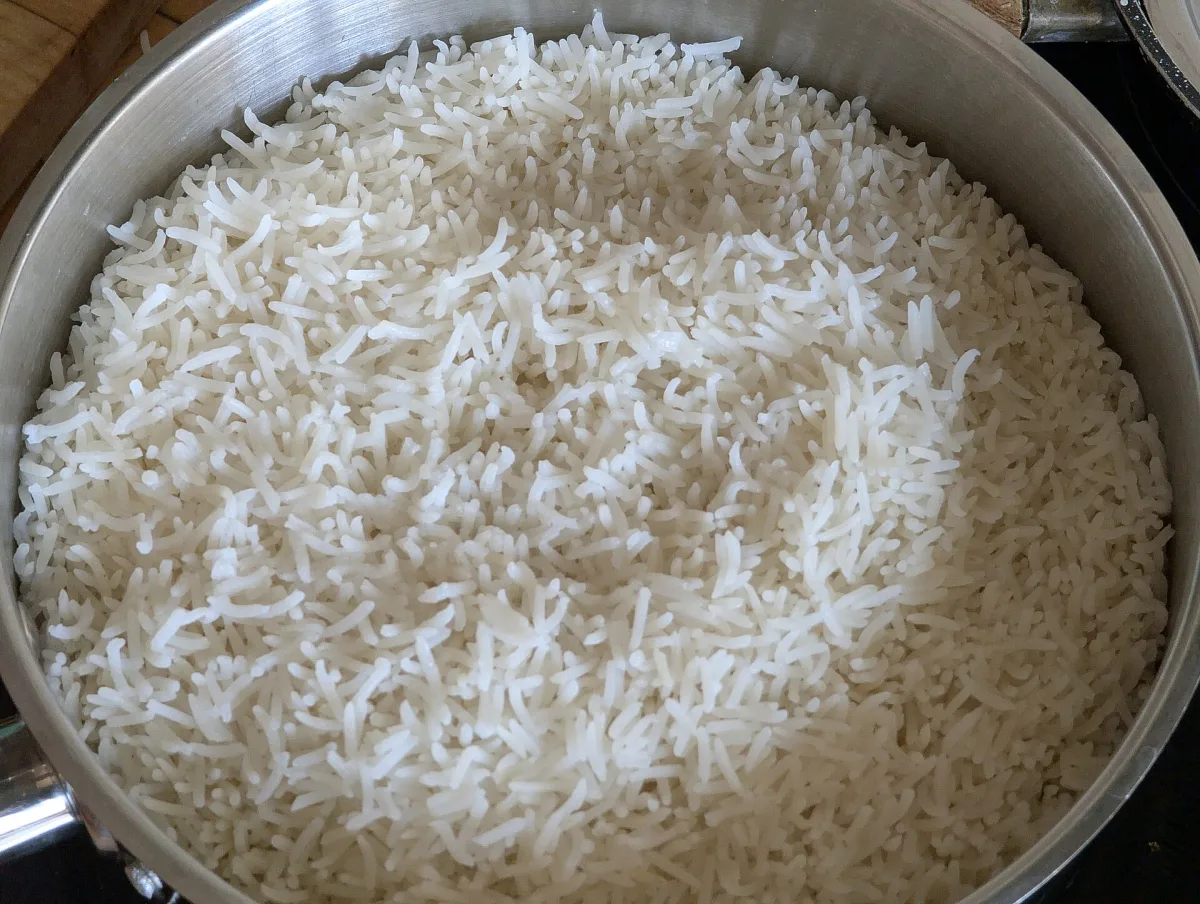
Photo: Anselm Schüler / Wikimedia Commons · CC BY-SA 4.0 · https://commons.wikimedia.org/wiki/File:Basmati_rice_in_pot.jpg
Basmati rice has a long, thin grain and a distinct aroma, and it is the rice served alongside grilled fish, chicken, and Kabsa. But anyone who treats it like Egyptian rice — the same water and the same stirring — will find it turns out mushy or broken. The whole difference is in 3 things: washing, soaking, and the water ratio.
Method
-
1
Washing
Put the rice in a wide bowl with cold water, and stir it with your fingers gently without rubbing — the basmati grain is long and breaks easily. Drain the cloudy water and repeat 3–4 times until the water comes out nearly clear. This white water is starch, and if it stays on the grain, it glues the rice together.
⏱ 5 min -
2
Soaking
Cover the rice with cold water and leave it for 20–30 minutes — no more than an hour. The grain absorbs water from the inside, so it lengthens as it cooks instead of breaking, and the center doesn't stay raw.
⏱ 25 min -
3
Draining
Drain the rice in a colander and leave it for 5 minutes to drain well. Any leftover water on the rice counts as extra to the measurements and makes it mushy.
⏱ 5 min -
4
Boiling the Water
Boil 3 cups of water with salt and lemon juice. The water must be boiling when it goes over the rice, so all the grains start cooking at once. And the lemon preserves the whiteness of the rice and keeps the grain firm.
⏱ 5 min -
5
Sautéing
In a heavy-bottomed pot, heat the oil and ghee and add the cardamom and bay leaf for half a minute, then the drained rice. Stir gently with a wooden spoon for 2–3 minutes over medium heat until the grain shines and its color turns opaque white — the fat coats each grain so it turns out fluffy.
⏱ 3 min -
6
Water and Boiling
Pour the boiling water over the rice, and stir only once so the rice distributes, and let it boil on high heat uncovered for 3–4 minutes until the water drops to the level of the rice and small holes appear on the surface. Any stirring after that breaks the grain and releases the starch.
⏱ 4 min -
7
Cooking on Low
Lower the heat to the lowest setting, and cover the pot tightly — you can put a clean towel under the lid to absorb the steam, but fold its edges upward away from the fire. Leave it for 12 minutes without opening the lid at all; the trapped steam is what finishes cooking the grain, and every lid opening lets it out.
⏱ 12 min -
8
Resting and Fluffing
Turn off the heat and leave the pot closed for 10 minutes, then fluff the rice with a fork from the sides to the center to separate the grains without mashing them. The spoon presses on the rice while it's hot and makes it mushy.
⏱ 10 min
Cooked it? Rate it
Your rating tells the next cook whether this recipe is worth their time.
✓ Thanks — your rating is in.
Tips that actually matter
- Want it yellow next to fish? Add half a teaspoon of turmeric while sautéing. Want it brown? Fry sliced onions in the fat until they darken before adding the rice.
- If you are making one cup of rice: 1.5 cups of water and the same time, but in a small pot — a wide pot evaporates the water quickly so the rice dries out.
- Older (aged) basmati absorbs more water than new. If its grain turns out a bit dry, add a quarter cup of water next time.
- Broth instead of water gives a richer taste next to chicken — but reduce the salt, because the broth is already salted.
People also ask
Why does basmati rice turn out mushy?
The most common reasons: extra water (2 cups for every cup like Egyptian rice), or stirring after the water goes in, or the rice not being washed well so starch stayed on it. Also opening the lid a lot while it cooks, or stirring with a spoon while it's hot.
The rice turned out dry or the grain is half raw — what should I do?
Sprinkle a quarter cup of boiling water over the surface of the rice, cover it well, and leave it on the lowest heat for 5–7 minutes. This happens when the lid isn't tight or the heat is high, so the water evaporates before the rice absorbs it.
Can I make basmati rice without soaking?
You can if you are in a rush: increase the water to 1 and three-quarters cups for each cup of rice, and keep the low-heat cooking for 15 minutes. But the grain will turn out a bit shorter, and the broken grains will be more.
How many servings does a cup of basmati rice make?
A cup of raw basmati rice yields about 3 cups of cooked rice, meaning it serves 2–3 individuals as a side dish next to fish or chicken. And if it's the main dish, calculate half a cup raw per person.
Cook mode
Fluffy Basmati Rice
-
1
Washing
Put the rice in a wide bowl with cold water, and stir it with your fingers gently without rubbing — the basmati grain is long and breaks easily. Drain the cloudy water and repeat 3–4 times until the water comes out nearly clear. This white water is starch, and if it stays on the grain, it glues the rice together.
-
2
Soaking
Cover the rice with cold water and leave it for 20–30 minutes — no more than an hour. The grain absorbs water from the inside, so it lengthens as it cooks instead of breaking, and the center doesn't stay raw.
-
3
Draining
Drain the rice in a colander and leave it for 5 minutes to drain well. Any leftover water on the rice counts as extra to the measurements and makes it mushy.
-
4
Boiling the Water
Boil 3 cups of water with salt and lemon juice. The water must be boiling when it goes over the rice, so all the grains start cooking at once. And the lemon preserves the whiteness of the rice and keeps the grain firm.
-
5
Sautéing
In a heavy-bottomed pot, heat the oil and ghee and add the cardamom and bay leaf for half a minute, then the drained rice. Stir gently with a wooden spoon for 2–3 minutes over medium heat until the grain shines and its color turns opaque white — the fat coats each grain so it turns out fluffy.
-
6
Water and Boiling
Pour the boiling water over the rice, and stir only once so the rice distributes, and let it boil on high heat uncovered for 3–4 minutes until the water drops to the level of the rice and small holes appear on the surface. Any stirring after that breaks the grain and releases the starch.
-
7
Cooking on Low
Lower the heat to the lowest setting, and cover the pot tightly — you can put a clean towel under the lid to absorb the steam, but fold its edges upward away from the fire. Leave it for 12 minutes without opening the lid at all; the trapped steam is what finishes cooking the grain, and every lid opening lets it out.
-
8
Resting and Fluffing
Turn off the heat and leave the pot closed for 10 minutes, then fluff the rice with a fork from the sides to the center to separate the grains without mashing them. The spoon presses on the rice while it's hot and makes it mushy.




Comments
Cooked it? Tell us how it went, or ask a question — we read every comment.