
Orange Cake
The secret to orange cake is that the flavor comes from the zest not just the juice: rub 2 tbsp of grated orange zest into the sugar before the eggs so its aromatic oils release, and grate only the orange layer without the white part underneath because that is what makes the cake bitter. The juice must be fresh and strained, not powdered.
- Prep
- 20 min
- Cook
- 45 min
- Total
- 65 min
- Calories
- 345
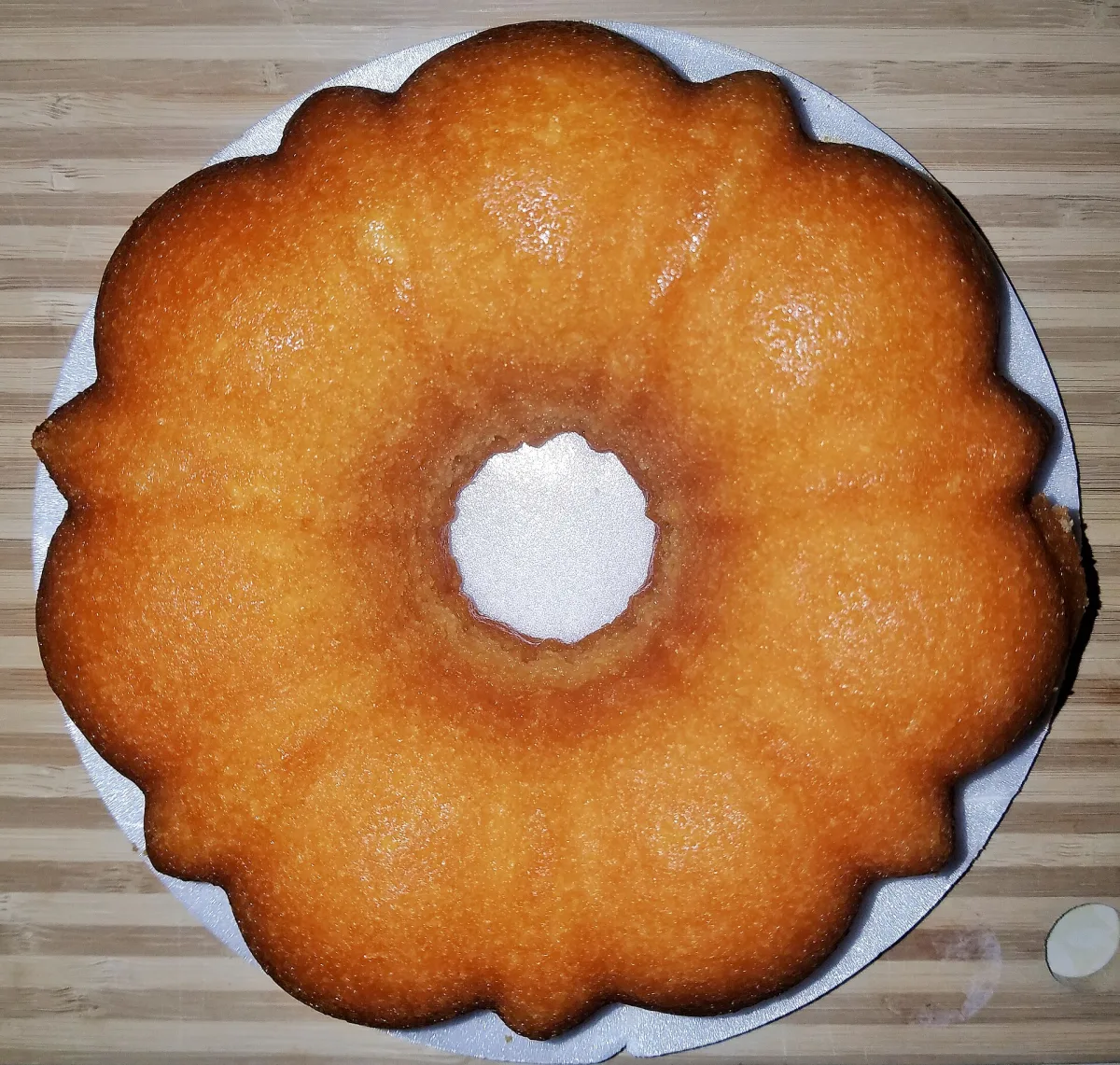
Photo: Daderot / Wikimedia Commons · CC0 · https://commons.wikimedia.org/wiki/File:Orange_cake_-_Massachusetts.jpg
Orange cake is one of the most common cakes made in Egyptian homes in the winter during orange season: its smell fills the house, its measurements are by the cup, and it comes out moist without butter. The difference between it and any plain cake with orange flavor is the zest rubbed in the sugar, and the orange syrup brushed on top while warm.
Method
-
1
Preheating the Oven and Pan
Preheat the oven to 180 °C, and grease the fluted tube pan (24 cm) with butter in all the crevices, dust with flour, and tap out the excess. Inadequate greasing is the most common reason the cake breaks when you invert it.
⏱ 10 min -
2
Zesting and Juicing the Oranges
Wash and dry the oranges, and grate only the orange peel on the fine side of the grater until you get 2 tbsp, stopping as soon as the white layer shows because it is bitter. Juice 1.5 cups of juice and strain it: 1 cup for the cake and half a cup for the syrup.
⏱ 8 min -
3
Rubbing the Zest in Sugar
Put the sugar and zest in a bowl and rub them with your fingers for 1 minute until the sugar is damp, yellow, and strong-smelling. The friction extracts the orange oil from the zest into the sugar, which gives the cake a real orange flavor.
⏱ 2 min -
4
Beating the Eggs
Add the eggs to the orange sugar and beat for 5 minutes on high speed until the mixture is pale and thick. Then lower the speed and pour in the oil in a thin stream along with the vanilla, so the oil incorporates without deflating the air.
⏱ 6 min -
5
Alternating Flour and Juice
Sift the flour, baking powder, baking soda, and salt, and add them in 3 additions alternating with 1 cup of juice, mixing on the lowest speed just until the flour disappears. The baking soda neutralizes the acidity of the juice, so the cake rises and browns properly.
⏱ 4 min -
6
Baking
Pour the batter into the pan and tap it lightly a couple of times on the counter, and bake on the middle rack for 40–45 minutes until a skewer comes out clean. Do not open the oven for the first 30 minutes — the cold air will deflate the cake before it sets.
⏱ 45 min -
7
Orange Syrup
While you wait, boil half a cup of juice with a quarter cup of sugar for 3 minutes over medium heat until it becomes a light syrup. This syrup is what makes the surface glossy and the cake moist until the next day.
⏱ 4 min -
8
Inverting and Brushing
Let the cake sit in the pan for 10 minutes, invert it onto a serving plate, and brush the syrup on while warm over the top and sides until it absorbs it. A warm cake absorbs the syrup, while a cold one leaves it sitting on top and sticky.
⏱ 12 min
Cooked it? Rate it
Your rating tells the next cook whether this recipe is worth their time.
✓ Thanks — your rating is in.
Tips that actually matter
- Navel orange zest has the strongest aroma, but take the juice from baladi or Valencia oranges — navel juice turns bitter when heated or left standing.
- If you don't have baking soda, make the baking powder 1 and a quarter tablespoons — it will rise but the color will be lighter.
- Want it chocolate? Add half a cup of chocolate chips tossed in a tablespoon of flour so they don't sink to the bottom.
- No fluted tube pan? Use a 24 cm round pan and increase the baking time by 5–10 minutes, because the center takes longer.
People also ask
Why does orange cake turn out bitter?
The reason is usually the white pith under the zest if it was grated along with it, or juice extracted with heavy pressure which releases the bitterness of the membranes, or sour oranges. Grate only the orange layer, juice gently, and use the juice while it is freshly squeezed.
Can I use store-bought or powdered orange juice?
Store-bought juice works if you don't have fresh, but the flavor will be weaker — compensate with grated zest as it is the main source of aroma. As for powder, it won't work: it contains sugar, starch, and colors that alter the cake's texture and color.
How do I remove the cake from the tube pan without breaking it?
Grease all the crevices with soft butter using a brush, dust with flour, tap out the excess, and let the cake rest for only 10 minutes after the oven before inverting. If you let it cool completely in the pan, the sugar sticks to it and it will break.
How many days does orange cake stay moist?
Covered, it stays good outside the fridge for 3 days, and remains moist thanks to the oil and orange syrup. You can also freeze tightly wrapped slices for up to a month, and thaw them at room temperature.
Cook mode
Orange Cake
-
1
Preheating the Oven and Pan
Preheat the oven to 180 °C, and grease the fluted tube pan (24 cm) with butter in all the crevices, dust with flour, and tap out the excess. Inadequate greasing is the most common reason the cake breaks when you invert it.
-
2
Zesting and Juicing the Oranges
Wash and dry the oranges, and grate only the orange peel on the fine side of the grater until you get 2 tbsp, stopping as soon as the white layer shows because it is bitter. Juice 1.5 cups of juice and strain it: 1 cup for the cake and half a cup for the syrup.
-
3
Rubbing the Zest in Sugar
Put the sugar and zest in a bowl and rub them with your fingers for 1 minute until the sugar is damp, yellow, and strong-smelling. The friction extracts the orange oil from the zest into the sugar, which gives the cake a real orange flavor.
-
4
Beating the Eggs
Add the eggs to the orange sugar and beat for 5 minutes on high speed until the mixture is pale and thick. Then lower the speed and pour in the oil in a thin stream along with the vanilla, so the oil incorporates without deflating the air.
-
5
Alternating Flour and Juice
Sift the flour, baking powder, baking soda, and salt, and add them in 3 additions alternating with 1 cup of juice, mixing on the lowest speed just until the flour disappears. The baking soda neutralizes the acidity of the juice, so the cake rises and browns properly.
-
6
Baking
Pour the batter into the pan and tap it lightly a couple of times on the counter, and bake on the middle rack for 40–45 minutes until a skewer comes out clean. Do not open the oven for the first 30 minutes — the cold air will deflate the cake before it sets.
-
7
Orange Syrup
While you wait, boil half a cup of juice with a quarter cup of sugar for 3 minutes over medium heat until it becomes a light syrup. This syrup is what makes the surface glossy and the cake moist until the next day.
-
8
Inverting and Brushing
Let the cake sit in the pan for 10 minutes, invert it onto a serving plate, and brush the syrup on while warm over the top and sides until it absorbs it. A warm cake absorbs the syrup, while a cold one leaves it sitting on top and sticky.


Comments
Cooked it? Tell us how it went, or ask a question — we read every comment.