
French Apple Tarte Tatin
Tarte tatin is an upside-down apple tart: the apples caramelise in butter and sugar in the pan, the pastry goes on top and into the oven, and at the end the pan is flipped onto a plate so the apples end up on top. The most important thing is firm apples that don’t turn to mush.
- Prep
- 30 min
- Cook
- 50 min
- Total
- 80 min
- Calories
- 390
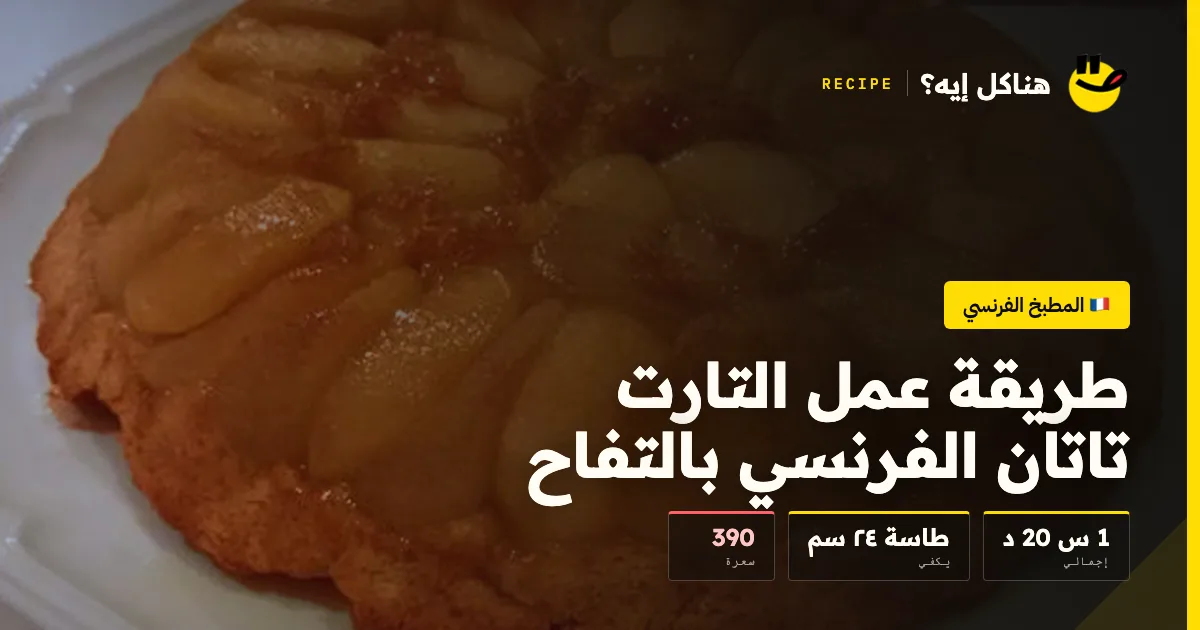
Photo: Franck Chicot from Nantes, France — CC BY-SA 2.0 · Wikimedia Commons
Tarte tatin was born by mistake in 1880, when one of the Tatin sisters forgot the pastry and the apples caught in the pan, so she laid the pastry on top and flipped the tart after baking. The mistake became one of France’s most famous desserts.
Method
-
1
Preparing the apples
Peel the apples, cut them into quarters and remove the cores, then sprinkle them with lemon juice so they don’t brown. Firm apples are essential — soft apples turn into sauce in the caramel and ruin the dish.
-
2
Caramel in the pan
In an ovenproof cast-iron pan (24 cm), spread the sugar evenly over medium heat without stirring. When it starts to melt and colour, only swirl the pan itself. When it turns golden honey-coloured, add the cold butter and the pinch of salt and whisk.
-
3
Arranging the apples
Arrange the apple quarters upright and packed very tightly in a circle, curved side down. Fill every gap with small pieces — the apples shrink in the oven, and a tight arrangement prevents holes in the finished tart.
-
4
Cooking the apples on the hob
Cook over medium heat for 20–25 minutes uncovered, tilting the pan now and then so the caramel spreads. The apples will release water and the caramel will thicken again. It must reach a deep amber colour before it goes into the oven.
-
5
Pastry on top
Roll the pastry into a circle 2 cm larger than the pan, lay it over the apples and tuck the edges in between the apples and the side of the pan. Prick the pastry 5–6 times with a fork so steam can escape.
-
6
Baking
Bake at 190°C for 25–30 minutes until the pastry puffs and turns golden. If the caramel bubbles up the sides, that’s good — it means it is concentrating.
-
7
Flipping
Leave the pan for exactly 10 minutes — any less and the caramel will run, any more and it will set and stick. Put a plate over the pan and flip it in one decisive movement, wearing an oven glove. Put back any apple that falls, using a spoon.
Cooked it? Rate it
Your rating tells the next cook whether this recipe is worth their time.
✓ Thanks — your rating is in.
Tips that actually matter
- Firm apples only — soft ones turn into sauce.
- Don’t stir the sugar while it caramelises; just swirl the pan so it doesn’t crystallise.
- Pack the apples very tightly; they shrink in the oven.
- Flip it after exactly 10 minutes — the timing is critical.
- If an apple sticks, warm the base of the pan on the hob for 30 seconds and try again.
People also ask
Which apples should I use?
Firm, tart apples such as Granny Smith, or Golden Delicious. The acidity balances the caramel and the firmness keeps their shape. Avoid soft, sweet apples such as Fuji — they break down completely.
My caramel turned bitter — why?
It burned. Sugar goes from golden to burnt in seconds. Turn off the heat at honey colour exactly and add the cold butter at once — it stops the cooking. A heavy cast-iron pan gives you better control.
Can I use ordinary tart pastry?
Yes, and the French use both. Puff pastry gives crisp layers, while shortcrust (brisée) gives a sturdier base that holds the apples better when you flip it. The choice is a matter of taste.
Is it served hot or cold?
Warm — 20–30 minutes after flipping. Very hot, it is runny; cold, the caramel hardens. Serve it with a scoop of vanilla ice cream or whipped cream, the classic French way.
Cook mode
French Apple Tarte Tatin
-
1
Preparing the apples
Peel the apples, cut them into quarters and remove the cores, then sprinkle them with lemon juice so they don’t brown. Firm apples are essential — soft apples turn into sauce in the caramel and ruin the dish.
-
2
Caramel in the pan
In an ovenproof cast-iron pan (24 cm), spread the sugar evenly over medium heat without stirring. When it starts to melt and colour, only swirl the pan itself. When it turns golden honey-coloured, add the cold butter and the pinch of salt and whisk.
-
3
Arranging the apples
Arrange the apple quarters upright and packed very tightly in a circle, curved side down. Fill every gap with small pieces — the apples shrink in the oven, and a tight arrangement prevents holes in the finished tart.
-
4
Cooking the apples on the hob
Cook over medium heat for 20–25 minutes uncovered, tilting the pan now and then so the caramel spreads. The apples will release water and the caramel will thicken again. It must reach a deep amber colour before it goes into the oven.
-
5
Pastry on top
Roll the pastry into a circle 2 cm larger than the pan, lay it over the apples and tuck the edges in between the apples and the side of the pan. Prick the pastry 5–6 times with a fork so steam can escape.
-
6
Baking
Bake at 190°C for 25–30 minutes until the pastry puffs and turns golden. If the caramel bubbles up the sides, that’s good — it means it is concentrating.
-
7
Flipping
Leave the pan for exactly 10 minutes — any less and the caramel will run, any more and it will set and stick. Put a plate over the pan and flip it in one decisive movement, wearing an oven glove. Put back any apple that falls, using a spoon.



Comments
Cooked it? Tell us how it went, or ask a question — we read every comment.