
Italian Aubergine Parmigiana
Parmigiana is an Italian bake of layered aubergine, fried or roasted, with tomato sauce, mozzarella, Parmesan and basil. The two key steps are salting the aubergine to draw out its water, and a thick sauce, not a runny one — together they stop the dish turning out watery.
- Prep
- 45 min
- Cook
- 50 min
- Total
- 95 min
- Calories
- 390
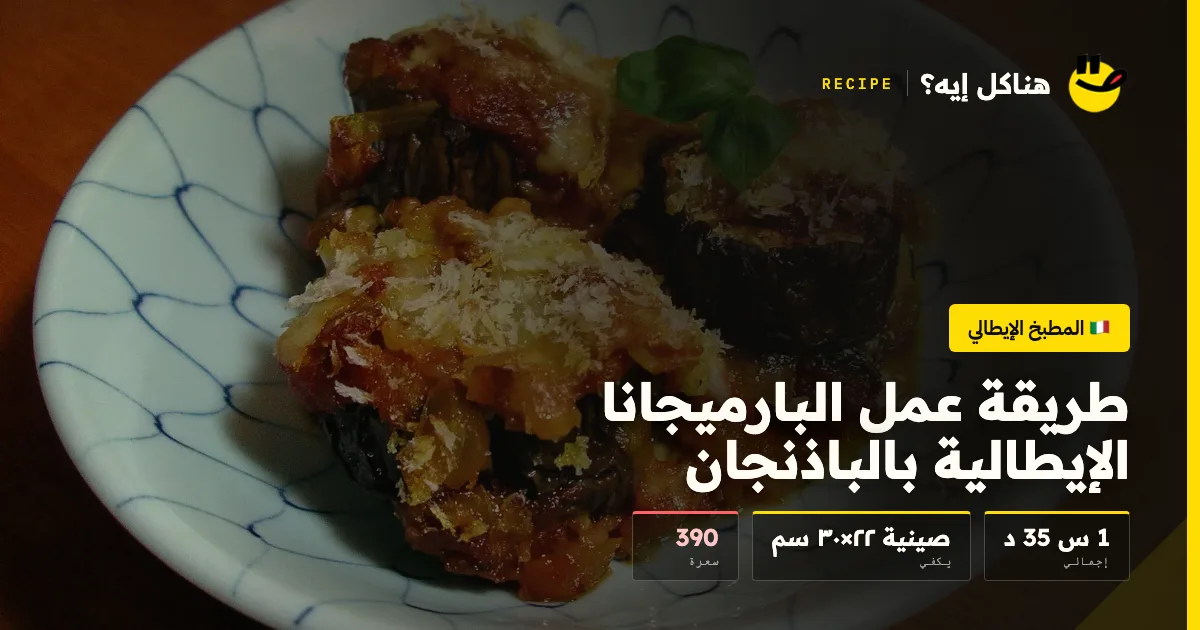
Photo: CNEcija12345 — CC BY-SA 4.0 · Wikimedia Commons
Parmigiana is one of southern Italy’s best-known dishes, and the name has nothing to do with the city of Parma, as people often think — it most likely comes from a Sicilian word for the overlapping arrangement of the slices, like the slats of a shutter.
Method
-
1
Salting the aubergine
Layer the aubergine slices in a colander, sprinkling salt between the layers, put a weight on top and leave them for an hour. You will find dark liquid has drained out. Pat every slice dry with kitchen paper — every drop of water left here becomes a puddle in the dish.
-
2
The tomato sauce
Soften the onion in the olive oil for 8 minutes, add the garlic for a minute, then the crushed tomatoes, sugar, salt and pepper. Simmer over low heat for 30 minutes until thick, like jam. Stir in half the basil.
-
3
Cooking the aubergine
Roast the slices on an oiled tray at 220°C for 20 minutes, turning them halfway (or fry them in oil until golden). They must be completely cooked and soft before assembling — the oven won’t cook them through afterwards.
-
4
Drying the mozzarella
Slice the mozzarella and leave it on kitchen paper for 30 minutes. Buffalo mozzarella holds a great deal of water, and low-moisture mozzarella (if you can find it) is better for baking. That water is the most common reason for a dish swimming in liquid.
-
5
Assembling
In an oiled dish: a thin ladle of sauce on the bottom, then a layer of aubergine, edge to edge, then sauce, then mozzarella, then Parmesan and basil. Repeat for 3 layers, and finish the top with sauce and Parmesan only (no mozzarella, so it doesn’t turn leathery).
-
6
Baking
Bake at 180°C for 35 minutes covered with foil, then 15 minutes uncovered until the top is golden and bubbling. Covering it at first lets the heat reach the middle, and uncovering it at the end browns the top.
-
7
Resting — the essential step
Let the dish rest for at least 30 minutes before cutting, ideally an hour. Parmigiana is eaten warm, not hot — and that isn’t a detail: resting lets the layers firm up and gives clean squares.
Cooked it? Rate it
Your rating tells the next cook whether this recipe is worth their time.
✓ Thanks — your rating is in.
Tips that actually matter
- Salt the aubergine for an hour and dry it well — the most important step in the recipe.
- The sauce must be as thick as jam, not runny.
- Dry the mozzarella on kitchen paper for 30 minutes.
- Top with sauce and Parmesan only — no mozzarella, so it doesn’t turn leathery.
- Resting for 30–60 minutes before cutting is not optional.
People also ask
The dish came out watery — why?
There are three sources of water: the aubergine (salt it for an hour and dry it), the sauce (simmer it until it is as thick as jam) and the mozzarella (dry it on kitchen paper). Deal with all three together — one on its own won’t be enough.
Should I fry or roast the aubergine?
Frying is traditional and gives a richer flavour, while roasting in the oven is much lighter and the result is very close. If you fry, dust the slices lightly with flour first — it cuts down how much oil they absorb and gives a thin coating.
Can I make it a day ahead?
Yes, and it actually tastes better. Assemble it completely and keep it covered in the fridge for up to two days, adding 15 minutes to the baking time because it goes in cold. It can also be frozen before baking for up to 3 months.
Can I add meat?
The original is entirely vegetarian. But some versions add minced meat simmered in the sauce, or slices of mortadella between the layers. Make it the way you like — but try the original once: it is lighter, and the aubergine comes through more.
Cook mode
Italian Aubergine Parmigiana
-
1
Salting the aubergine
Layer the aubergine slices in a colander, sprinkling salt between the layers, put a weight on top and leave them for an hour. You will find dark liquid has drained out. Pat every slice dry with kitchen paper — every drop of water left here becomes a puddle in the dish.
-
2
The tomato sauce
Soften the onion in the olive oil for 8 minutes, add the garlic for a minute, then the crushed tomatoes, sugar, salt and pepper. Simmer over low heat for 30 minutes until thick, like jam. Stir in half the basil.
-
3
Cooking the aubergine
Roast the slices on an oiled tray at 220°C for 20 minutes, turning them halfway (or fry them in oil until golden). They must be completely cooked and soft before assembling — the oven won’t cook them through afterwards.
-
4
Drying the mozzarella
Slice the mozzarella and leave it on kitchen paper for 30 minutes. Buffalo mozzarella holds a great deal of water, and low-moisture mozzarella (if you can find it) is better for baking. That water is the most common reason for a dish swimming in liquid.
-
5
Assembling
In an oiled dish: a thin ladle of sauce on the bottom, then a layer of aubergine, edge to edge, then sauce, then mozzarella, then Parmesan and basil. Repeat for 3 layers, and finish the top with sauce and Parmesan only (no mozzarella, so it doesn’t turn leathery).
-
6
Baking
Bake at 180°C for 35 minutes covered with foil, then 15 minutes uncovered until the top is golden and bubbling. Covering it at first lets the heat reach the middle, and uncovering it at the end browns the top.
-
7
Resting — the essential step
Let the dish rest for at least 30 minutes before cutting, ideally an hour. Parmigiana is eaten warm, not hot — and that isn’t a detail: resting lets the layers firm up and gives clean squares.



Comments
Cooked it? Tell us how it went, or ask a question — we read every comment.