
Japanese Dorayaki Filled with Sweet Red Bean Paste
Dorayaki consists of two Japanese pancakes sandwiching sweet red bean paste. What sets it apart is its smooth, evenly golden surface, and the secret lies in honey in the batter and a pan over low heat wiped with a paper towel before each pancake.
- Prep
- 20 min
- Cook
- 20 min
- Total
- 40 min
- Calories
- 250
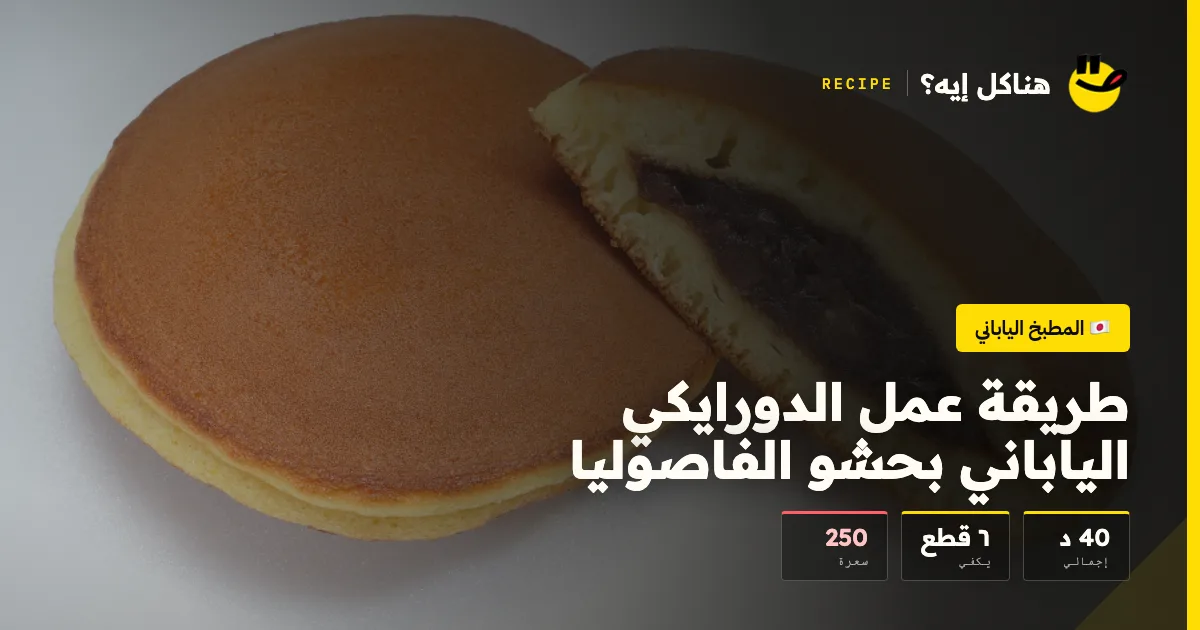
Photo: Ocdp — CC BY-SA 3.0 · Wikimedia Commons
Dorayaki is world-famous as the favorite snack of the anime character Doraemon. It is the easiest Japanese sweet to make at home—its ingredients are in every pantry, except for the red bean filling.
Method
-
1
Whisking the Eggs
Whisk the eggs with the sugar and honey for 3-4 minutes until the mixture lightens in color and thickens slightly. Honey isn't just for sweetness—it is what provides the even golden color and keeps the texture moist for days.
-
2
Adding the Flour
Sift the flour and baking powder over the mixture and fold just until combined. Cover the batter and let it rest for 20 minutes—resting allows the flour to absorb the liquid and ensures a silky-smooth surface.
-
3
Adjusting Consistency
Gradually add the water until the batter falls from the ladle in a slow, continuous ribbon. It should be thicker than crepe batter and thinner than standard pancake batter. This consistency is what allows the pancake to spread naturally into a perfect circle.
-
4
Preparing the Pan
Heat a non-stick pan over low heat, lightly grease it with oil, then wipe it off with a paper towel. The goal is an extremely thin film—excess oil creates irregular splotches on the surface, whereas dorayaki should have an even color.
-
5
Pouring the Pancake
Pour a small ladleful from a fixed height into one single spot and let the batter spread on its own—do not spread it with the ladle. A circle that forms naturally will turn out perfectly round.
-
6
Timing and Flipping
Cook for 2-3 minutes until bubbles appear on the surface and the edges dry out, then flip and continue cooking for 1.5 minutes. Wipe the pan with a paper towel between each pancake—burnt crumbs will ruin the appearance of subsequent ones.
-
7
Covered Cooling
Stack the cooked pancakes and cover them with a damp, wrung-out towel as they cool. This traps the steam, prevents them from drying out, and preserves their softness.
-
8
Assembly
Place two tablespoons of bean paste in the center of a pancake (lighter side facing inward), top with a second pancake, and gently press the edges together. Keep the paste centered so the sandwich is thick in the middle and thin at the rims—the classic dorayaki shape.
Cooked it? Rate it
Your rating tells the next cook whether this recipe is worth their time.
✓ Thanks — your rating is in.
Tips that actually matter
- Honey in the batter is the secret to an even, rich golden color.
- Wipe excess oil off with a paper towel—pooling oil creates mottled spots.
- Pour from a steady height into a single central point and let the batter spread naturally.
- Wipe the skillet clean with a paper towel between every single pancake.
- Cover the pancakes with a damp towel while cooling so they never dry out.
People also ask
Why did my pancakes come out with uneven spots?
Too much oil in the pan, heat that is too high, or failing to wipe the pan between pancakes. Oil the pan and wipe it off with a paper towel, keep the flame low, and wipe the surface after every pancake.
What other fillings can be used in dorayaki?
Whipped cream, Nutella, custard cream, strawberry cream cheese, or chestnut paste. A popular modern version in Japan combines whipped cream and red bean paste together.
How long does dorayaki keep?
It keeps for 3 days in an airtight container at room temperature thanks to the honey retaining moisture. Unfilled pancakes can be frozen for 1 month separated by parchment paper—thaw at room temperature and fill before serving.
Can I make dorayaki without sweet red bean paste?
Yes—use whatever filling you enjoy. However, for an authentic Japanese taste, canned paste is widely available in Asian specialty stores, or you can make it from scratch using adzuki beans soaked, simmered, and mashed with sugar.
Cook mode
Japanese Dorayaki Filled with Sweet Red Bean Paste
-
1
Whisking the Eggs
Whisk the eggs with the sugar and honey for 3-4 minutes until the mixture lightens in color and thickens slightly. Honey isn't just for sweetness—it is what provides the even golden color and keeps the texture moist for days.
-
2
Adding the Flour
Sift the flour and baking powder over the mixture and fold just until combined. Cover the batter and let it rest for 20 minutes—resting allows the flour to absorb the liquid and ensures a silky-smooth surface.
-
3
Adjusting Consistency
Gradually add the water until the batter falls from the ladle in a slow, continuous ribbon. It should be thicker than crepe batter and thinner than standard pancake batter. This consistency is what allows the pancake to spread naturally into a perfect circle.
-
4
Preparing the Pan
Heat a non-stick pan over low heat, lightly grease it with oil, then wipe it off with a paper towel. The goal is an extremely thin film—excess oil creates irregular splotches on the surface, whereas dorayaki should have an even color.
-
5
Pouring the Pancake
Pour a small ladleful from a fixed height into one single spot and let the batter spread on its own—do not spread it with the ladle. A circle that forms naturally will turn out perfectly round.
-
6
Timing and Flipping
Cook for 2-3 minutes until bubbles appear on the surface and the edges dry out, then flip and continue cooking for 1.5 minutes. Wipe the pan with a paper towel between each pancake—burnt crumbs will ruin the appearance of subsequent ones.
-
7
Covered Cooling
Stack the cooked pancakes and cover them with a damp, wrung-out towel as they cool. This traps the steam, prevents them from drying out, and preserves their softness.
-
8
Assembly
Place two tablespoons of bean paste in the center of a pancake (lighter side facing inward), top with a second pancake, and gently press the edges together. Keep the paste centered so the sandwich is thick in the middle and thin at the rims—the classic dorayaki shape.


Comments
Cooked it? Tell us how it went, or ask a question — we read every comment.