
Lebanese Potato Kibbeh
The secret to potato kibbeh is that potatoes are boiled in their skins and mashed while hot, and fine bulgur is soaked for just 10 minutes and squeezed hard, at a ratio of one cup of bulgur per kilo of potatoes. After kneading, let it rest for 15 minutes so the bulgur absorbs the potato's moisture; if shaped immediately, it will stick to your hands and crumble.
- Prep
- 25 min
- Cook
- 30 min
- Total
- 80 min
- Calories
- 345
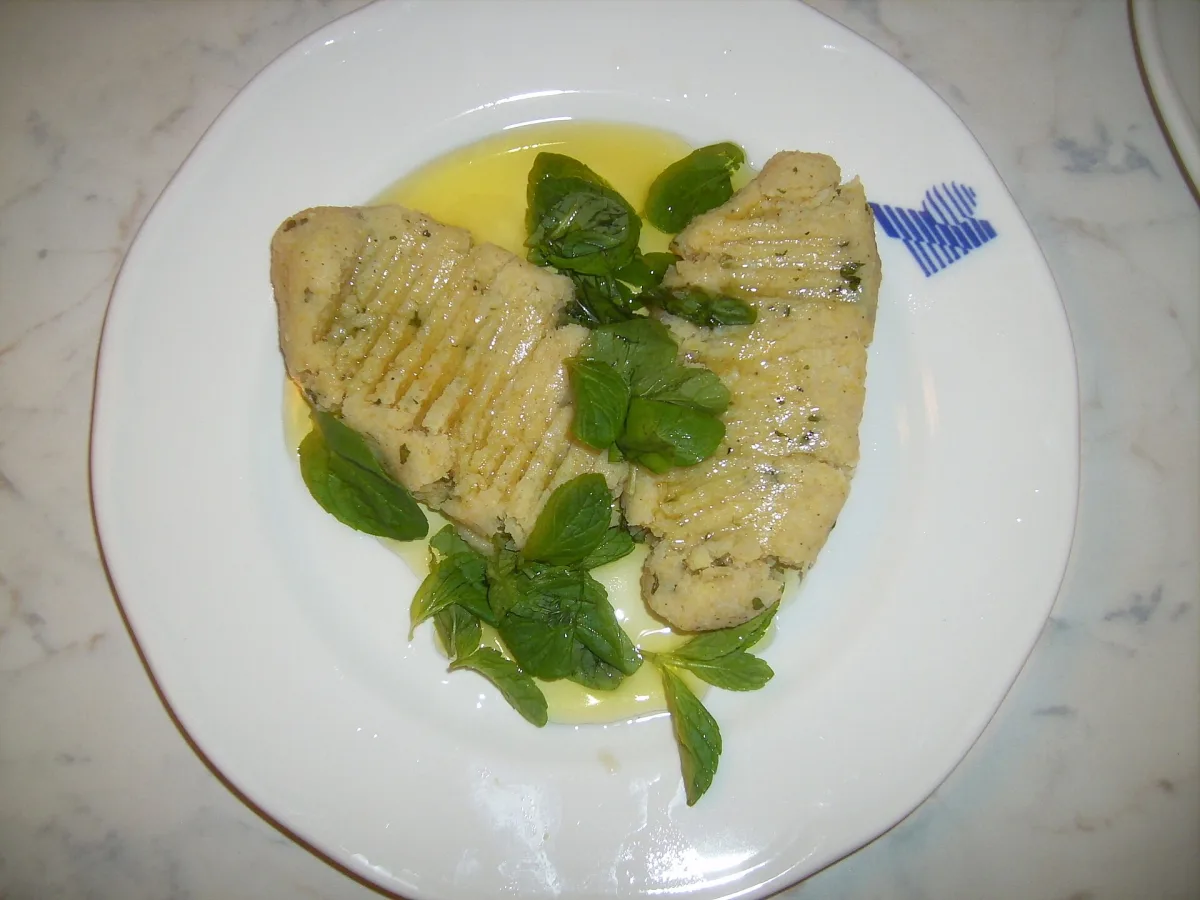
Photo: Deed89 at English Wikipedia / Wikimedia Commons · CC BY-SA 3.0 · https://commons.wikimedia.org/wiki/File:Kibbetbatata.JPG
Potato kibbeh is a vegan Lebanese mezze without meat: mashed potatoes kneaded with fine bulgur, onions, mint, and spices, spread on a plate, scored with a fork, drenched in olive oil, and eaten with bread alongside radishes and green onions. The same dough can be formed into discs and fried, or baked in a dish in the oven. An economical and entirely plant-based meal.
Method
-
1
Boiling the Potatoes in Their Skins
Wash the potatoes and place them in their skins in a pot of salted cold water. Let them boil for 25–30 minutes until a knife inserts easily. The skin prevents the potatoes from absorbing water, keeping the dough from becoming soft and sticky.
⏱ 30 min -
2
Soaking the Bulgur
While waiting for the potatoes, wash the bulgur in a fine sieve, soak it in barely enough water to cover it for 10 minutes, then squeeze it firmly with your hands until no water drips out.
⏱ 10 min -
3
Peeling and Mashing
Drain the potatoes and peel them while hot, holding them with a towel. Mash them with a fork or masher until smooth without lumps. Do not use a blender — it makes the potatoes gummy and sticky.
⏱ 10 min -
4
Preparing Onions and Herbs
Grate the onion on a fine grater and squeeze out its juice with your hands. Finely chop the mint, parsley, and green onions. Leaving onion juice in will soften the dough.
⏱ 5 min -
5
Kneading
Add to the warm potatoes the bulgur, onion, herbs, cumin, seven spices, marjoram, paprika, salt, and pepper. Knead with your hands for 3–4 minutes until the dough comes together, feels cohesive, and has an even color.
⏱ 5 min -
6
Resting
Cover the bowl and let the dough rest for 15 minutes; the bulgur absorbs the potato's moisture so the dough firms up and doesn't stick. Taste a piece and adjust salt and spices.
⏱ 15 min -
7
Spreading and Scoring
Spread the dough in a serving dish to a thickness of about 2 cm, smoothing the top with a wet hand. Use the tip of a fork or knife to draw intersecting lines or a leaf pattern across the entire top — these lines hold the olive oil.
⏱ 5 min -
8
Serving
Drench the top with olive oil, garnish with mint leaves, and serve at room temperature with Arabic bread, radishes, green onions, and olives.
⏱ 2 min
Cooked it? Rate it
Your rating tells the next cook whether this recipe is worth their time.
✓ Thanks — your rating is in.
Tips that actually matter
- Shape the dough into balls or fingers. You can place a piece of cheese in the center of each, and fry them in oil at 175 °C for 4–5 minutes until golden.
- Spread it in an oil-greased baking dish, score it into squares with a knife, brush the top with oil, and bake at 200 °C for 25–30 minutes until the top browns.
- Choose starchy potatoes that mash smoothly, not new small potatoes with high water content; those yield a soft dough.
- It keeps in the fridge for 3 days covered. Take it out half an hour before eating and add a fresh drizzle of olive oil.
People also ask
Why does potato kibbeh crumble or break apart when frying?
Either the dough is too soft from potato or onion moisture, or the bulgur wasn't soaked so it remains dry and cracks the balls. Let the dough rest for 15 minutes, and if it's still soft, add two tablespoons of bulgur or one tablespoon of flour. Do not fry in oil that isn't hot enough.
Can I use coarse bulgur for potato kibbeh?
Fine bulgur no. 1 is best because it melts into the dough and gives it the kibbeh texture. Coarse bulgur turns out grainy and cracks the discs. If you have nothing else, soak it for 20 minutes, squeeze it, and pulse it in a food processor briefly.
Is potato kibbeh eaten hot or cold?
Potato kibbeh spread on a plate is eaten at room temperature or cold, with olive oil and bread like any mezze. However, the fried balls or baked dish are eaten hot or warm.
Can I freeze potato kibbeh?
Shaped balls freeze well: arrange them on a tray in the freezer until solid, then transfer to bags for up to two months. Fry them straight from the freezer in slightly cooler oil (165 °C). Kibbeh spread on a plate should not be frozen because its texture becomes mushy after thawing.
Cook mode
Lebanese Potato Kibbeh
-
1
Boiling the Potatoes in Their Skins
Wash the potatoes and place them in their skins in a pot of salted cold water. Let them boil for 25–30 minutes until a knife inserts easily. The skin prevents the potatoes from absorbing water, keeping the dough from becoming soft and sticky.
-
2
Soaking the Bulgur
While waiting for the potatoes, wash the bulgur in a fine sieve, soak it in barely enough water to cover it for 10 minutes, then squeeze it firmly with your hands until no water drips out.
-
3
Peeling and Mashing
Drain the potatoes and peel them while hot, holding them with a towel. Mash them with a fork or masher until smooth without lumps. Do not use a blender — it makes the potatoes gummy and sticky.
-
4
Preparing Onions and Herbs
Grate the onion on a fine grater and squeeze out its juice with your hands. Finely chop the mint, parsley, and green onions. Leaving onion juice in will soften the dough.
-
5
Kneading
Add to the warm potatoes the bulgur, onion, herbs, cumin, seven spices, marjoram, paprika, salt, and pepper. Knead with your hands for 3–4 minutes until the dough comes together, feels cohesive, and has an even color.
-
6
Resting
Cover the bowl and let the dough rest for 15 minutes; the bulgur absorbs the potato's moisture so the dough firms up and doesn't stick. Taste a piece and adjust salt and spices.
-
7
Spreading and Scoring
Spread the dough in a serving dish to a thickness of about 2 cm, smoothing the top with a wet hand. Use the tip of a fork or knife to draw intersecting lines or a leaf pattern across the entire top — these lines hold the olive oil.
-
8
Serving
Drench the top with olive oil, garnish with mint leaves, and serve at room temperature with Arabic bread, radishes, green onions, and olives.




Comments
Cooked it? Tell us how it went, or ask a question — we read every comment.