
Lebanese Turnip Pickles with Beetroot
The secret to crunchy turnip pickles is that the brine should be 3 cups of water to 1 cup of vinegar, and 3 tablespoons of coarse salt without iodine — meaning about 5% salt — and keeping all the turnips submerged under the brine. One piece of beetroot is enough for the pink color, and the jar should be left for 5 to 7 days out of the sun before eating.
- Prep
- 30 min
- Cook
- 5 min
- Total
- 5 days
- Calories
- 32
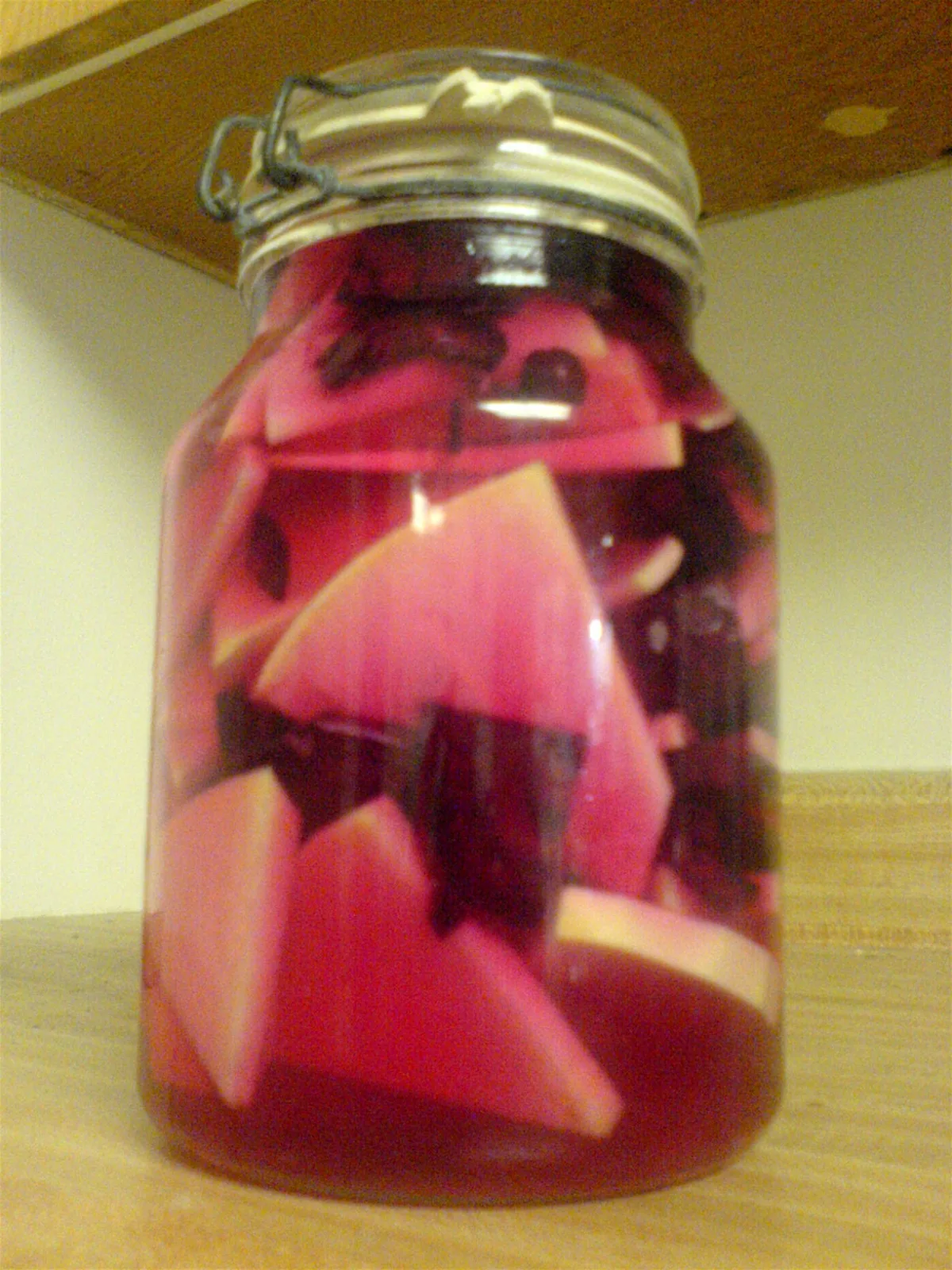
Photo: Zak Greant / Wikimedia Commons · CC BY 2.0 · https://commons.wikimedia.org/wiki/File:Lebanese-style_Pickled_Turnips.jpg
Lebanese turnip pickles, known as Kabis Lift, are the bright pink pickles served with shawarma, falafel, and every mezze spread in Lebanon. Their color comes from a single piece of beetroot with no artificial dyes, and their flavor is sour, salty, and garlicky, staying crunchy for weeks in the fridge. There are five ingredients, it takes fifteen minutes of work, and the rest is up to time.
Method
-
1
Cleaning the Jar
Wash a 2-liter glass jar with hot water and soap, rinse it with boiling water, and let it dry upside down on a clean towel. Any oils or residue in the jar will cloud the brine and spoil the pickles.
⏱ 10 min -
2
Preparing the Turnips
Wash the turnips well, cut off the top and tail, and peel them lightly. Cut each piece into 1 cm thick sticks or half-moons; uniform cutting allows the salt and color to penetrate at the same speed.
⏱ 10 min -
3
Cutting the Beetroot
Peel the beetroot and cut it into thick slices. One piece is enough for a kilo — if you add more, the color will turn dark purple instead of pink, and it will taste too sweet.
⏱ 5 min -
4
Making the Brine
Heat one cup of water and dissolve all the coarse salt in it, then add the remaining cold water and the cup of vinegar and stir. The brine must be cold or lukewarm before pouring — hot brine softens the turnips.
⏱ 5 min -
5
Packing the Jar
Layer the jar with a layer of beetroot slices and two garlic cloves, then a layer of turnips, and repeat until you reach 3 fingers below the rim, placing the hot pepper in the middle. Press the turnips down with your hand so there are no large gaps.
⏱ 10 min -
6
Pouring the Brine
Pour the brine until it covers the turnips by 2 cm, and place a folded cabbage leaf or a small plate on top to weigh them down, so no piece rises above the brine. If the brine is not enough, make a half portion extra using the same ratio.
⏱ 3 min -
7
Pickling
Close the jar and leave it on the kitchen counter away from the sun for 5–7 days — in summer 4–5 days is enough. From the second day, you will find the beetroot color seeping in and dyeing the turnips pink from the outside in.
⏱ 2 min -
8
When It is Ready and Storage
Taste a stick on day 5: if it is tangy, crunchy, and the color has reached halfway through, transfer it to the fridge to slow down the pickling and keep it crunchy, storing it for up to two months. Always take them out using a clean, dry spoon or fork.
⏱ 2 min
Cooked it? Rate it
Your rating tells the next cook whether this recipe is worth their time.
✓ Thanks — your rating is in.
Tips that actually matter
- Choose small, firm turnips that feel heavy in the hand with smooth skin; large turnips contain fibers and turn spongy after pickling.
- Regular table salt contains iodine and anti-caking agents that cloud the brine and darken the color — use coarse salt or non-iodized sea salt.
- Want it less sour? Make the brine 4 waters to 1 cup of vinegar with the same amount of salt per 4 cups.
- A light white layer on top might appear — remove it with a clean spoon. However, if the smell becomes bad or the turnips become mushy, throw them away.
People also ask
Why do turnip pickles turn out soft instead of crunchy?
The most common reasons: large old turnips, hot brine poured over them, too little salt, or leaving them out of the fridge for too long. Use small fresh turnips, cold brine with 3 tablespoons of coarse salt per 4 cups, and refrigerate them as soon as the flavor is right.
Why did the pickling brine become cloudy?
Slight cloudiness in the first few days is normal from the pickling process. However, heavy cloudiness is caused by iodized salt, an unclean jar, or pieces of turnip floating above the brine. Use non-iodized salt, clean the jar with boiling water, and weigh down the turnips to keep them submerged.
Can I make turnip pickles without beetroot?
Yes, and they will turn out white with almost the same taste and crunch, because the beetroot here is just for color. If you want the pink color without beetroot, two red cabbage leaves give a similar color. Do not use artificial food coloring.
Is this the same pickled turnip served with shawarma and falafel?
Yes, this is the pink Lebanese pickle put in shawarma and falafel sandwiches and served on the mezze plate. Its secret is the vinegar and salt in this ratio and garlic, with the color from the beetroot. Cut them into thin sticks if they are going into sandwiches.
Cook mode
Lebanese Turnip Pickles with Beetroot
-
1
Cleaning the Jar
Wash a 2-liter glass jar with hot water and soap, rinse it with boiling water, and let it dry upside down on a clean towel. Any oils or residue in the jar will cloud the brine and spoil the pickles.
-
2
Preparing the Turnips
Wash the turnips well, cut off the top and tail, and peel them lightly. Cut each piece into 1 cm thick sticks or half-moons; uniform cutting allows the salt and color to penetrate at the same speed.
-
3
Cutting the Beetroot
Peel the beetroot and cut it into thick slices. One piece is enough for a kilo — if you add more, the color will turn dark purple instead of pink, and it will taste too sweet.
-
4
Making the Brine
Heat one cup of water and dissolve all the coarse salt in it, then add the remaining cold water and the cup of vinegar and stir. The brine must be cold or lukewarm before pouring — hot brine softens the turnips.
-
5
Packing the Jar
Layer the jar with a layer of beetroot slices and two garlic cloves, then a layer of turnips, and repeat until you reach 3 fingers below the rim, placing the hot pepper in the middle. Press the turnips down with your hand so there are no large gaps.
-
6
Pouring the Brine
Pour the brine until it covers the turnips by 2 cm, and place a folded cabbage leaf or a small plate on top to weigh them down, so no piece rises above the brine. If the brine is not enough, make a half portion extra using the same ratio.
-
7
Pickling
Close the jar and leave it on the kitchen counter away from the sun for 5–7 days — in summer 4–5 days is enough. From the second day, you will find the beetroot color seeping in and dyeing the turnips pink from the outside in.
-
8
When It is Ready and Storage
Taste a stick on day 5: if it is tangy, crunchy, and the color has reached halfway through, transfer it to the fridge to slow down the pickling and keep it crunchy, storing it for up to two months. Always take them out using a clean, dry spoon or fork.



Comments
Cooked it? Tell us how it went, or ask a question — we read every comment.