
Moroccan Bissara with Split Fava Beans
Bissara is a thick Moroccan soup of soaked split, peeled fava beans, simmered with plenty of garlic and blended until velvety. It is served piping hot, topped with olive oil, cumin and paprika, with Moroccan bread for dipping and lemon wedges on the side.
- Prep
- 10 min
- Cook
- 60 min
- Total
- 70 min
- Calories
- 290
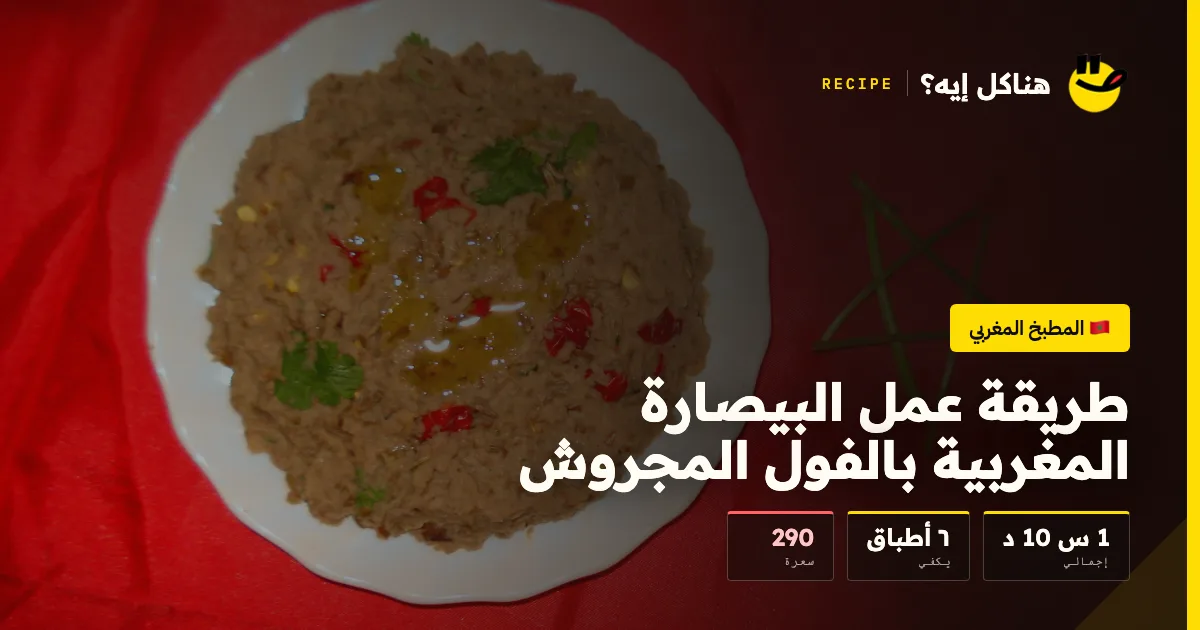
Photo: Miansari66 — CC0 · Wikimedia Commons
Bissara is a winter breakfast in Morocco, sold on the streets from early morning. Its ingredients are as cheap as they come, but it is so filling and tasty that it is one of the best-loved dishes there.
Method
-
1
Soaking
Wash the split fava beans well and soak them in plenty of water for 4–6 hours, changing the water once halfway. Soaking halves the cooking time and makes them easier to digest too.
-
2
Simmering
Drain the beans and put them in a pot with the water, the whole garlic cloves and half the olive oil. Bring to the boil, then skim off the foam that rises to the top. Cover and leave over low heat for 45–60 minutes until the beans fall apart completely.
-
3
Salting late
Add the salt only in the last 15 minutes. Salting pulses early toughens them and makes the cooking take much longer — the most common reason for beans that never soften.
-
4
Blending
Blend the mixture with a stick blender until it is completely velvety, with no grains at all. That is what gives bissara its distinctive texture. If it gets too thick, add hot water gradually.
-
5
Seasoning
Add the cumin and black pepper and the rest of the salt, stir and leave it for 5 more minutes over low heat. Taste — bissara needs more cumin than you would imagine; it is the main flavour.
-
6
Serving
Pour it piping hot into a deep bowl, make a well in the middle and pour olive oil into it, then sprinkle paprika and cumin on top. Serve it with Moroccan bread and lemon wedges.
Cooked it? Rate it
Your rating tells the next cook whether this recipe is worth their time.
✓ Thanks — your rating is in.
Tips that actually matter
- Salt in the last 15 minutes — salting early stops the beans softening.
- Simmer the garlic whole with the beans; it turns sweet and its flavour spreads through.
- Blend it until completely smooth — the velvety texture is its identity.
- Don’t hold back on the cumin and olive oil on top.
- It thickens as it cools, so leave it a little thinner when you turn off the heat.
People also ask
Can I use ordinary unpeeled fava beans?
You can, but you will need to pass it through a sieve after blending to remove the skins. Split peeled fava beans are best, because they give the velvety texture directly, without extra steps.
Why didn’t the beans soften?
Either the salt went in too early, the beans were very old, or you didn’t soak them. Soaking for 4–6 hours and salting at the end solve the problem. Very old beans may need an hour and a half of simmering.
When is it eaten?
In Morocco it is eaten for breakfast in winter, and also as a light meal at any time. It is served piping hot because it thickens and sets as it cools. Reheat it with a splash of water if it has been in the fridge.
How is it different from sprouted fava beans or ful medames?
Bissara is split peeled fava beans blended completely, so it becomes a creamy soup. Ful medames are whole beans in their skins that keep their shape. Both are fava beans, but the variety, preparation and texture are completely different.
Cook mode
Moroccan Bissara with Split Fava Beans
-
1
Soaking
Wash the split fava beans well and soak them in plenty of water for 4–6 hours, changing the water once halfway. Soaking halves the cooking time and makes them easier to digest too.
-
2
Simmering
Drain the beans and put them in a pot with the water, the whole garlic cloves and half the olive oil. Bring to the boil, then skim off the foam that rises to the top. Cover and leave over low heat for 45–60 minutes until the beans fall apart completely.
-
3
Salting late
Add the salt only in the last 15 minutes. Salting pulses early toughens them and makes the cooking take much longer — the most common reason for beans that never soften.
-
4
Blending
Blend the mixture with a stick blender until it is completely velvety, with no grains at all. That is what gives bissara its distinctive texture. If it gets too thick, add hot water gradually.
-
5
Seasoning
Add the cumin and black pepper and the rest of the salt, stir and leave it for 5 more minutes over low heat. Taste — bissara needs more cumin than you would imagine; it is the main flavour.
-
6
Serving
Pour it piping hot into a deep bowl, make a well in the middle and pour olive oil into it, then sprinkle paprika and cumin on top. Serve it with Moroccan bread and lemon wedges.





Comments
Cooked it? Tell us how it went, or ask a question — we read every comment.