
Moroccan Harcha with Semolina and Butter
Harcha are Moroccan coarse semolina discs cooked in a skillet without yeast or an oven. The secret is letting the dough rest for 15 minutes after mixing so the semolina absorbs the milk — without this rest, it turns out sandy and crumbly.
- Prep
- 20 min
- Cook
- 20 min
- Total
- 40 min
- Calories
- 270
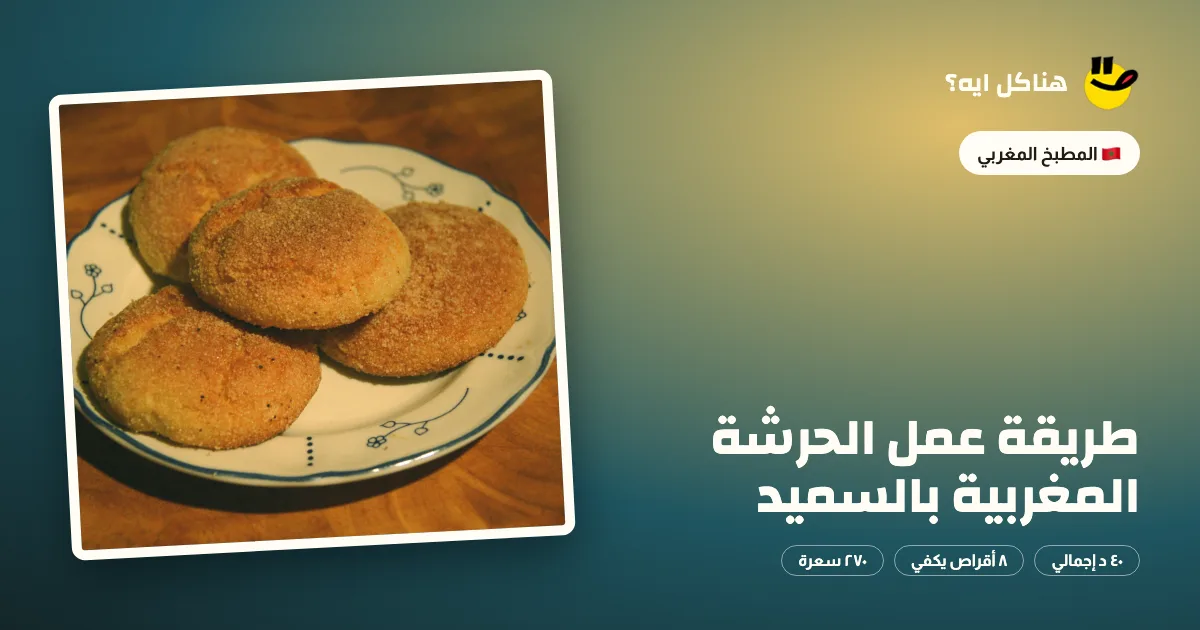
Harcha is a classic Moroccan breakfast, served hot with honey, butter, or cheese. The most surprising thing about it is that it has only 4 ingredients and takes less than half an hour.
Method
-
1
Rubbing the butter into the semolina
Mix the semolina, sugar, salt, and baking powder, add the softened butter, and rub it into the semolina with your fingertips for 5 minutes until the mixture looks like wet sand. This rubbing coats the semolina grains with fat so the harcha turns out flaky.
-
2
Adding the milk
Pour in the warm milk gradually and mix with your hand until a cohesive but not soft dough forms. Do not knead — just mix until it comes together. Kneading makes the harcha tough.
-
3
Resting — The crucial step
Cover the dough and let it sit for 15-20 minutes. The semolina needs this time to absorb the milk and swell. If you shape it immediately, the semolina will stay dry inside and the harcha will crumble when you flip it.
-
4
Shaping
Dust your work surface with semolina, roll out the dough to a thickness of 1.5 cm, and cut into circles with a glass or cutter. Or take balls in your hand and press them. Coat both sides with extra semolina — this is what gives it that signature crispy crust.
-
5
Cooking
Heat a dry non-stick skillet over medium-low heat (completely without oil). Place the discs in and cook them for 5-7 minutes per side until golden brown with golden patches. High heat burns the surface while the inside stays raw.
-
6
Doneness test
Properly cooked harcha makes a hollow sound when you tap it, and its edges look dry rather than shiny. If you are unsure, open one up — it should be tender and cohesive, not gummy.
-
7
Serving
Serve hot, split in half and filled with honey, butter, cheese, or jam. Harcha is best in the first hour — after that it firms up, but you can revive it by reheating it in the skillet for a minute.
Cooked it? Rate it
Your rating tells the next cook whether this recipe is worth their time.
✓ Thanks — your rating is in.
Tips that actually matter
- Rub the butter thoroughly into the semolina before adding the milk — this ensures flakiness.
- The 15-minute rest is mandatory for the semolina to absorb the milk.
- Do not knead the dough; just mix until it comes together.
- Use a dry skillet without oil over medium-low heat.
- Coat both sides in extra semolina for a crispy crust.
People also ask
Why is the harcha crumbling?
You probably didn't let it rest long enough for the semolina to absorb the milk, or there wasn't enough milk. Let it rest for 15-20 minutes after mixing, and if it's still crumbly, add two tablespoons of warm milk and let it sit for another 5 minutes.
Which semolina should I use?
Medium-coarse semolina is ideal — fine semolina gives a texture closer to cake, and very coarse semolina feels sandy. If you only have fine semolina, mix it with a little flour and expect a slightly different texture.
Can I bake it in the oven instead of a skillet?
You can bake it at 180°C for 15-18 minutes, but the skillet is better — the crispy crust comes from direct contact with the hot surface. The oven yields a harcha closer to a biscuit.
How long does it keep?
It's best on the day it's made. It keeps for two days in an airtight bag and can be revived by reheating it in a dry skillet for a minute per side. You can also freeze it after cooking for up to a month — reheat straight from the freezer on the skillet.
Cook mode
Moroccan Harcha with Semolina and Butter
-
1
Rubbing the butter into the semolina
Mix the semolina, sugar, salt, and baking powder, add the softened butter, and rub it into the semolina with your fingertips for 5 minutes until the mixture looks like wet sand. This rubbing coats the semolina grains with fat so the harcha turns out flaky.
-
2
Adding the milk
Pour in the warm milk gradually and mix with your hand until a cohesive but not soft dough forms. Do not knead — just mix until it comes together. Kneading makes the harcha tough.
-
3
Resting — The crucial step
Cover the dough and let it sit for 15-20 minutes. The semolina needs this time to absorb the milk and swell. If you shape it immediately, the semolina will stay dry inside and the harcha will crumble when you flip it.
-
4
Shaping
Dust your work surface with semolina, roll out the dough to a thickness of 1.5 cm, and cut into circles with a glass or cutter. Or take balls in your hand and press them. Coat both sides with extra semolina — this is what gives it that signature crispy crust.
-
5
Cooking
Heat a dry non-stick skillet over medium-low heat (completely without oil). Place the discs in and cook them for 5-7 minutes per side until golden brown with golden patches. High heat burns the surface while the inside stays raw.
-
6
Doneness test
Properly cooked harcha makes a hollow sound when you tap it, and its edges look dry rather than shiny. If you are unsure, open one up — it should be tender and cohesive, not gummy.
-
7
Serving
Serve hot, split in half and filled with honey, butter, cheese, or jam. Harcha is best in the first hour — after that it firms up, but you can revive it by reheating it in the skillet for a minute.




Comments
Cooked it? Tell us how it went, or ask a question — we read every comment.