
Levantine Mutabbal with Charred Aubergine
Mutabbal is aubergine charred over an open flame until the skin blackens, then peeled and mashed with tahini, garlic, lemon and yoghurt. Grilling over a bare flame is where the smoky taste comes from — the oven gives cooked aubergine with no smoke.
- Prep
- 15 min
- Cook
- 25 min
- Total
- 40 min
- Calories
- 160
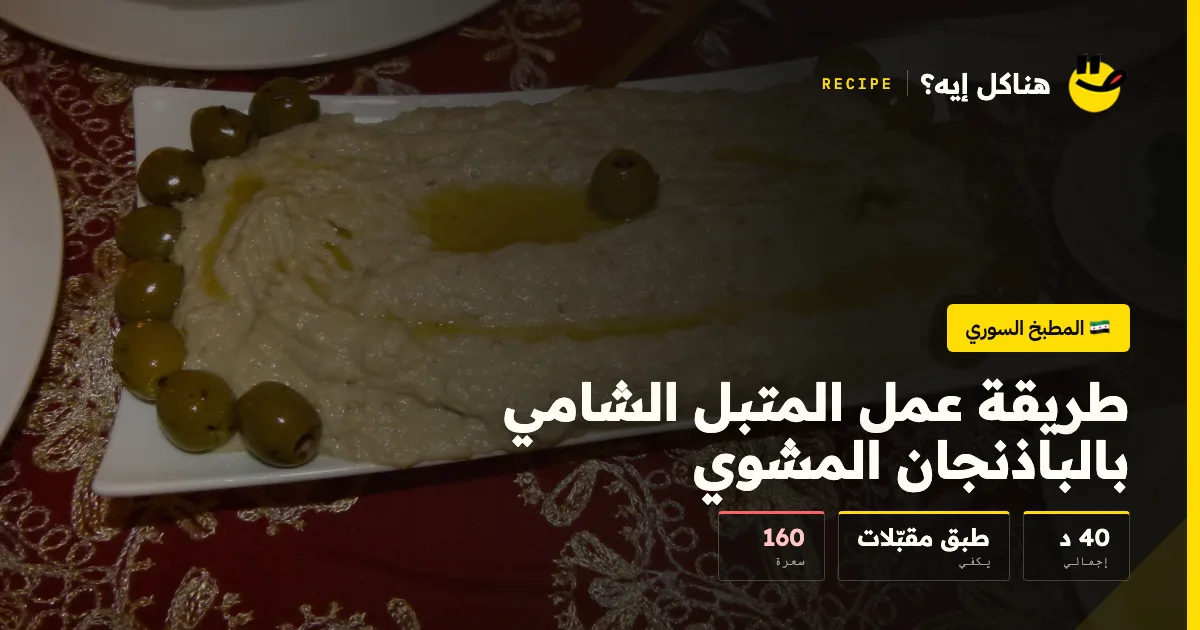
Photo: Elmer Centeno Guevarra — CC BY-SA 4.0 · Wikimedia Commons
Mutabbal is a very simple starter in its ingredients, and all the difference lies in one step: charring the aubergine directly over the flame. Without that smoke, it is just mashed aubergine.
Method
-
1
Charring the aubergine
Prick the aubergines 5–6 times with a fork so steam can escape, and put them directly on the gas flame or on a charcoal grill. Turn them every 5 minutes until the skin is completely charred on all sides — 20–25 minutes. They must be completely soft inside.
-
2
Steaming and peeling
Put the hot aubergines in a bag or a covered bowl for 10 minutes — the steam separates the skin from the flesh. Peel them by hand and remove every trace of burnt skin. Never rinse them under water — rinsing washes away the smoke and all the flavour.
-
3
Draining
Put the flesh in a colander for 20–30 minutes so the bitter water drains away. This step makes a big difference — mutabbal with water in it is runny and diluted, while drained mutabbal is thick and concentrated.
-
4
Mashing
Mash the aubergine with a fork or a knife, not in a blender. A blender turns it into a smooth paste with no texture — authentic mutabbal should have pieces of aubergine you can feel.
-
5
Seasoning
Crush the garlic with a pinch of salt into a paste and add it to the aubergine with the tahini, yoghurt and lemon. Stir while tasting — tahini and lemon balance each other, so add more of one if the other dominates.
-
6
Resting and serving
Leave the mutabbal in the fridge for 30 minutes so the flavours blend. Spread it on a plate in a circular motion with the back of a spoon, pour olive oil into the hollow and sprinkle with parsley and pomegranate seeds or olives.
Cooked it? Rate it
Your rating tells the next cook whether this recipe is worth their time.
✓ Thanks — your rating is in.
Tips that actually matter
- Prick the aubergine before charring so it doesn’t burst.
- Don’t rinse the aubergine after peeling — rinsing wipes off the smoke.
- Drain away the bitter water for 20 minutes before seasoning.
- Mash with a fork, not a blender, to keep the texture.
- Taste and adjust the balance of tahini and lemon — that is the soul of the recipe.
People also ask
What is the difference between mutabbal and baba ganoush?
Mutabbal has tahini and yoghurt, so it is creamy and pale. Traditional baba ganoush has tomato, pepper and onion with little or no tahini, and it is closer to a salad. Restaurants often use the two names interchangeably.
Can I roast the aubergine in the oven?
Yes, at 240°C for 40 minutes under the grill, but the smoky taste will be much weaker. If you have to, roast it in the oven and then pass it over the gas flame for two minutes to pick up the smoke.
Why did my mutabbal turn out bitter?
Usually the water wasn’t drained from the aubergine, or the aubergine was old and full of seeds. Choose aubergines that feel heavy for their size with tight, shiny skin, and drain the flesh for 20–30 minutes before seasoning.
How long does it keep?
3 days in the fridge in an airtight container. Take it out half an hour before serving so the olive oil turns liquid and the flavours open up, and add a squeeze of fresh lemon and a drizzle of oil before serving.
Cook mode
Levantine Mutabbal with Charred Aubergine
-
1
Charring the aubergine
Prick the aubergines 5–6 times with a fork so steam can escape, and put them directly on the gas flame or on a charcoal grill. Turn them every 5 minutes until the skin is completely charred on all sides — 20–25 minutes. They must be completely soft inside.
-
2
Steaming and peeling
Put the hot aubergines in a bag or a covered bowl for 10 minutes — the steam separates the skin from the flesh. Peel them by hand and remove every trace of burnt skin. Never rinse them under water — rinsing washes away the smoke and all the flavour.
-
3
Draining
Put the flesh in a colander for 20–30 minutes so the bitter water drains away. This step makes a big difference — mutabbal with water in it is runny and diluted, while drained mutabbal is thick and concentrated.
-
4
Mashing
Mash the aubergine with a fork or a knife, not in a blender. A blender turns it into a smooth paste with no texture — authentic mutabbal should have pieces of aubergine you can feel.
-
5
Seasoning
Crush the garlic with a pinch of salt into a paste and add it to the aubergine with the tahini, yoghurt and lemon. Stir while tasting — tahini and lemon balance each other, so add more of one if the other dominates.
-
6
Resting and serving
Leave the mutabbal in the fridge for 30 minutes so the flavours blend. Spread it on a plate in a circular motion with the back of a spoon, pour olive oil into the hollow and sprinkle with parsley and pomegranate seeds or olives.


Comments
Cooked it? Tell us how it went, or ask a question — we read every comment.