
Classic American Meatloaf with Tomato Glaze
Meatloaf is a loaf of ground meat bound with a panade (bread soaked in milk), baked in the oven with a layer of sweet tomato sauce on top. This panade is the secret to moisture—the starch locks in the juices so the loaf never dries out.
- Prep
- 25 min
- Cook
- 60 min
- Total
- 85 min
- Calories
- 380
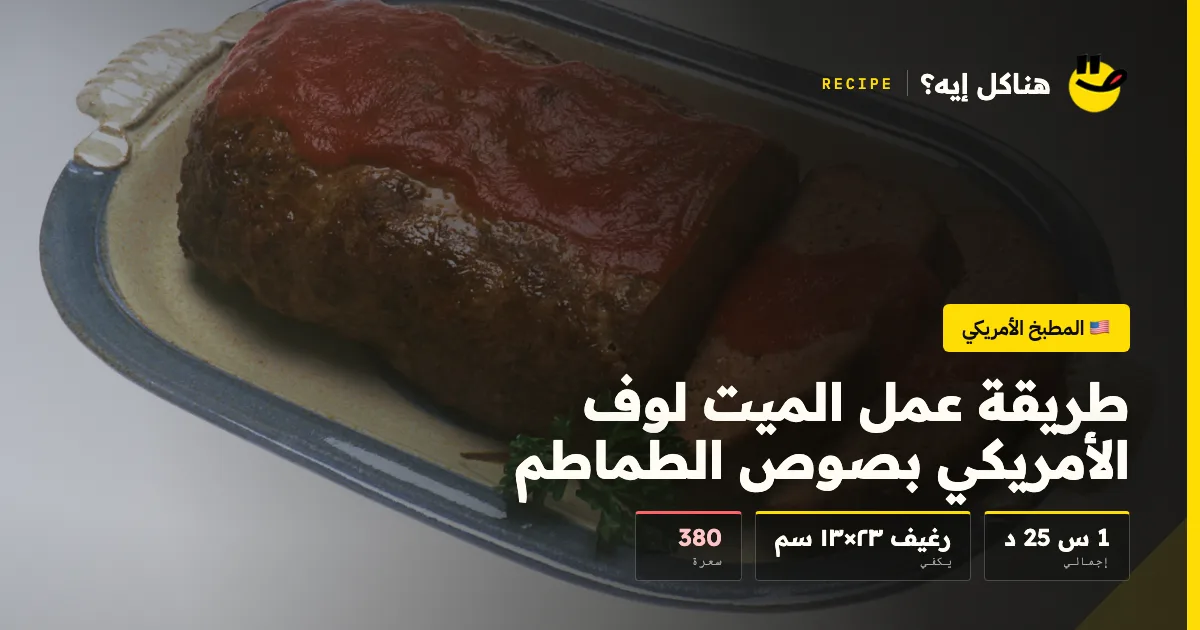
Photo: Renee Comet (Photographer) — Public domain · Wikimedia Commons
Meatloaf is a classic American family dinner, and its bad reputation (dry and crumbly) comes down to one common mistake: overworking the meat. This recipe avoids that entirely.
Method
-
1
The Panade
Tear the bread and soak it in the milk for 10 minutes, then mash it with a fork until it forms a paste. This mixture is called a panade, and the bread's starch traps the meat juices during baking—which is the difference between a juicy loaf and a dry one.
-
2
Sautéing the Vegetables
Sauté the onion, garlic, and grated carrot in oil for 8 minutes until softened and sweet, then let them cool completely. Raw vegetables release water into the loaf and make its texture inconsistent.
-
3
Gentle Mixing — The Golden Rule
Combine the meat with the panade, cooled vegetables, eggs, Worcestershire sauce, parsley, thyme, salt, and pepper, and mix with your fingertips just until combined. Do not knead—kneading develops the protein myosin, making the loaf rubbery like sausage.
-
4
Taste Test
Fry 1 teaspoon of the mixture in a skillet and taste it before shaping the loaf. This is the surest way to check that the salt and seasonings are balanced—you can't taste the raw meat.
-
5
Shaping
Shape the mixture into a free-form loaf on a lined baking sheet instead of pressing it into a loaf pan. A free-form loaf browns on all sides and drains excess fat, whereas a loaf pan boils it in its own grease, leaving it pale and soggy.
-
6
The Sauce
Whisk together the ketchup, brown sugar, and apple cider vinegar, and brush half of the amount over the loaf. The sugar will caramelize and the vinegar balances the sweetness, resulting in a rich, glossy glaze.
-
7
Baking
Bake at 175°C for 45 minutes, then brush with the remaining sauce and continue baking for 15 minutes until the internal temperature reaches 70°C. Brushing in two stages prevents the glaze from burning.
-
8
Mandatory Resting
Let the loaf rest for 15 minutes before slicing. The juices redistribute and the proteins set—slicing immediately spills all the juices onto the pan and causes the slices to crumble.
Cooked it? Rate it
Your rating tells the next cook whether this recipe is worth their time.
✓ Thanks — your rating is in.
Tips that actually matter
- The panade (bread soaked in milk) is the secret to moisture.
- Do not knead the meat—mix gently with your fingertips just until combined.
- Fry a spoonful and taste it before shaping.
- Shape it as a free-form loaf on a baking sheet, not in a loaf pan.
- Resting for 15 minutes before slicing is mandatory.
People also ask
Why does the meatloaf crumble when sliced?
Either you didn't let it rest for 15 minutes, or there wasn't enough egg and panade. The two eggs and the soaked bread are what bind the loaf together. Also, slice it using a sharp serrated knife with a gentle sawing motion, without pressing down.
Why did it turn out rubbery like sausage?
You overmixed the meat. Vigorous mixing releases the protein myosin, which creates a rubbery texture—desirable in sausages and kofta, but not here. Mix gently with your fingertips just until combined.
Can I make it with ground chicken or turkey?
Yes, but they are leaner, so the loaf dries out faster. Add 2 tablespoons of olive oil or finely chopped mushrooms for moisture, reduce the baking time by 10 minutes, and pull it out when the internal temperature reaches 74°C.
Can I freeze it?
Yes, in two ways: freeze it raw and shaped, tightly wrapped (thaw in the refrigerator overnight before baking), or freeze it already baked and sliced. Frozen slices reheat in the oven in 15 minutes. It keeps well for up to 3 months.
Cook mode
Classic American Meatloaf with Tomato Glaze
-
1
The Panade
Tear the bread and soak it in the milk for 10 minutes, then mash it with a fork until it forms a paste. This mixture is called a panade, and the bread's starch traps the meat juices during baking—which is the difference between a juicy loaf and a dry one.
-
2
Sautéing the Vegetables
Sauté the onion, garlic, and grated carrot in oil for 8 minutes until softened and sweet, then let them cool completely. Raw vegetables release water into the loaf and make its texture inconsistent.
-
3
Gentle Mixing — The Golden Rule
Combine the meat with the panade, cooled vegetables, eggs, Worcestershire sauce, parsley, thyme, salt, and pepper, and mix with your fingertips just until combined. Do not knead—kneading develops the protein myosin, making the loaf rubbery like sausage.
-
4
Taste Test
Fry 1 teaspoon of the mixture in a skillet and taste it before shaping the loaf. This is the surest way to check that the salt and seasonings are balanced—you can't taste the raw meat.
-
5
Shaping
Shape the mixture into a free-form loaf on a lined baking sheet instead of pressing it into a loaf pan. A free-form loaf browns on all sides and drains excess fat, whereas a loaf pan boils it in its own grease, leaving it pale and soggy.
-
6
The Sauce
Whisk together the ketchup, brown sugar, and apple cider vinegar, and brush half of the amount over the loaf. The sugar will caramelize and the vinegar balances the sweetness, resulting in a rich, glossy glaze.
-
7
Baking
Bake at 175°C for 45 minutes, then brush with the remaining sauce and continue baking for 15 minutes until the internal temperature reaches 70°C. Brushing in two stages prevents the glaze from burning.
-
8
Mandatory Resting
Let the loaf rest for 15 minutes before slicing. The juices redistribute and the proteins set—slicing immediately spills all the juices onto the pan and causes the slices to crumble.





Comments
Cooked it? Tell us how it went, or ask a question — we read every comment.