
The Best Cutting Board in Egypt: Wood, Bamboo, or Plastic?
The Bottom Line: Most homes need at least two boards: a plastic board for raw chicken and meat that withstands hot water, and a wood or bamboo board for vegetables and bread. If you want one practical board, the large Joseph Joseph folding one is great. If you cut a lot of meat, a thick beechwood board. If you want a color for each type of food, a set of colored boards. Avoid glass boards because they dull your knife.
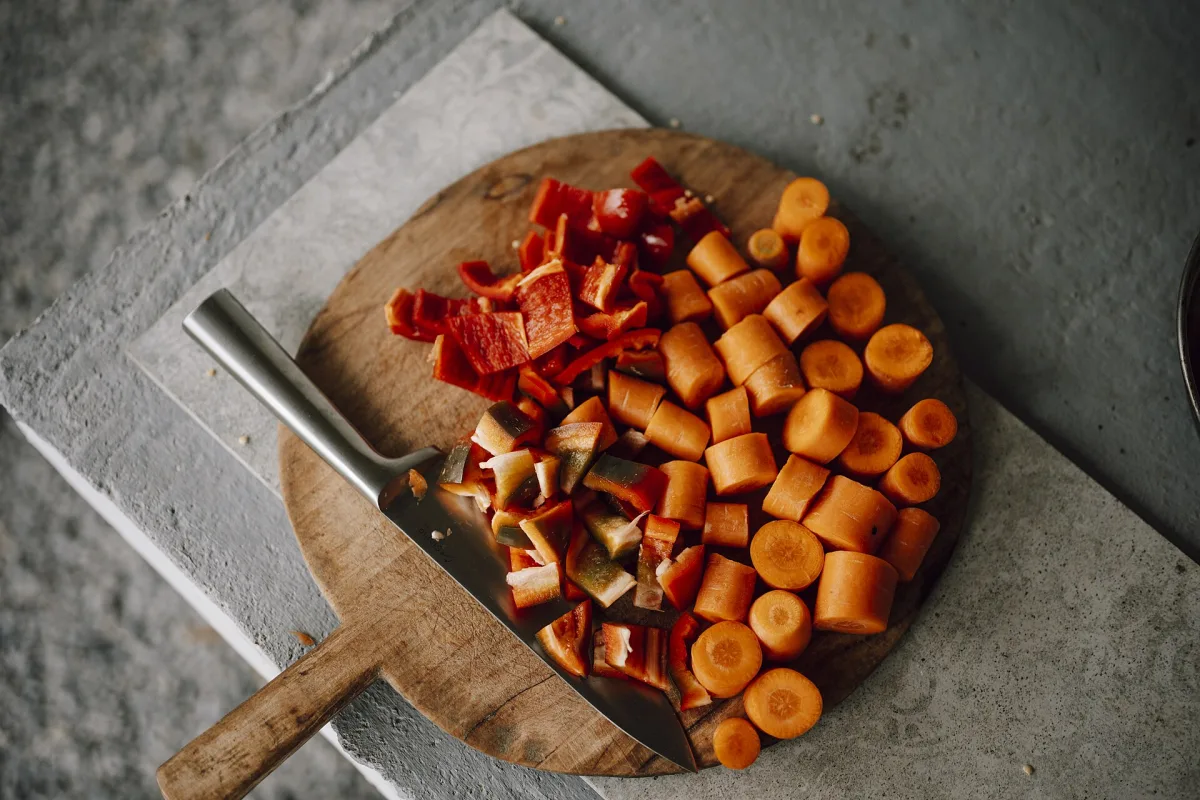
Photo: Shixart1985 — CC BY 2.0 · Wikimedia Commons
Wood, bamboo, plastic, or glass?
- Wood (like beech): The kindest on a knife's edge, heavy and stable, and small scratches heal over time. Its downside is that it's not dishwasher safe, shouldn't be left in the sink, and needs to be oiled periodically.
- Bamboo: Lightweight and looks nice, but harder than most wood, so the knife dulls a bit faster. Most of them are glued strips, so heavy water can make them come apart.
- Plastic: Lightweight, cheap, withstands hot water and soap, and many are dishwasher safe depending on the product page. Its downside is that it gets scratched, and deep scratches trap food residue that is hard to get out.
- Glass and marble: They look clean, but their surface is harder than the knife's edge, so every strike bends the thin edge and dulls it. Also, the knife slips on them, which is dangerous for your fingers. Leave them for serving or under hot pots.
How many boards do you actually need?
The Egyptian kitchen cuts a lot: onions and tomatoes every day, baladi salad, chicken, meat, and bread. That's why one board is rarely enough. The practical division for most homes:
- A large plastic board for raw chicken, meat, and fish.
- A large wood or bamboo board for vegetables and salad.
- A small board for garlic, lemons, bread, and quick things.
And if the family is large or cooks every day, a set of colored boards saves you from thinking every time.
A board for meat and a board for vegetables
Raw chicken, meat, and fish can transfer bacteria to salad or vegetables that won't be cooked if cut on the same board. The simplest solution: a plastic board for raw items only, and another wood or bamboo board for vegetables, bread, and fruit. If you want a clearer system, get a set of colored boards like restaurant kitchens: red for raw meat, blue for fish, and green for vegetables and fruit. And during Eid when there's a lot of meat, keep a large board specifically just for meat.
Size and thickness
- A main board about 30 x 40 cm is enough for most homes: an onion, a tomato, and a pepper without anything falling on the counter.
- Weight: A heavy board is stable, but hard to carry to the sink every little while, so if your kitchen is small, a medium board is more comfortable.
- Thickness: A thick wood board is more stable and doesn't warp easily, while a very thin plastic board moves and gets scratched faster.
- Juice groove around the edge is useful for meat, tomatoes, and watermelon.
- If the board slips, put a wet towel under it or get a board with feet or non-slip edges.
Washing and care
- Wash the board after every use with hot water and soap, and dry it standing up so the air reaches both sides.
- Wood and bamboo: Do not soak them in water and do not put them in the dishwasher, because water and heat crack them. Periodically apply a thin layer of oil made for wooden cutting boards.
- Smell of garlic, onion, and fish: Rub the board with coarse salt and half a lemon, then rinse and dry it.
- Plastic: If it has deep scratches or is stained and won't go back to normal, replace it.
- If the wood board cracks or retains a smell after washing, its time is up.
Check before you buy
- The size in centimeters on the page, because pictures make boards look bigger than reality.
- The material in the details, not just in the name: some pages are called "bamboo" and the material written underneath is plastic.
- If it's a set: the number of boards, the size of each, and whether it comes with a stand.
- As soon as it arrives: look at the wooden board carefully, and if there is a crack or moisture smell, return it.
FAQ
Are wooden or plastic boards cleaner?
Both work well if washed properly and dried. Plastic is easier to wash with hot water and many are dishwasher safe, making it better for raw meat and chicken. Wood is kinder to knives and heavier, suitable for vegetables and bread. The important thing is not to leave any board wet or with deep scratches.
Why is a glass board bad for knives?
The glass surface is harder than the knife's steel, so every strike bends its thin edge and dulls it quickly. Also, the knife slips on it easily. Use it for serving or as a base for hot pots, not for cutting.
Does a bamboo board ruin the knife?
Bamboo is harder than most wood, so it dulls the edge a bit faster than a beechwood board, but it is much kinder than glass and marble. If you use it every day, run the knife over the sharpener every few days.
How often should I change my cutting board?
There is no fixed time. Replace the plastic board when the scratches become deep and won't come clean or its color changes, and replace the wood board if it cracks or retains an odor after washing.

Comments
Cooked it? Tell us how it went, or ask a question — we read every comment.