
Best Kitchen Thermometer in Egypt: For Oil, Syrup, Meat, and Oven
Summary: For most homes, a fast folding-probe digital thermometer like the ThermoPro TP03B is enough for meat, oil, and sugar syrup. If you make syrup, candy, or deep fry often, get one with a pot clip that attaches to the pot like the TP509, or the CDN analog if you don't want batteries. And if your oven burns food or lacks temperature markings, add an oven thermometer like Wenko.
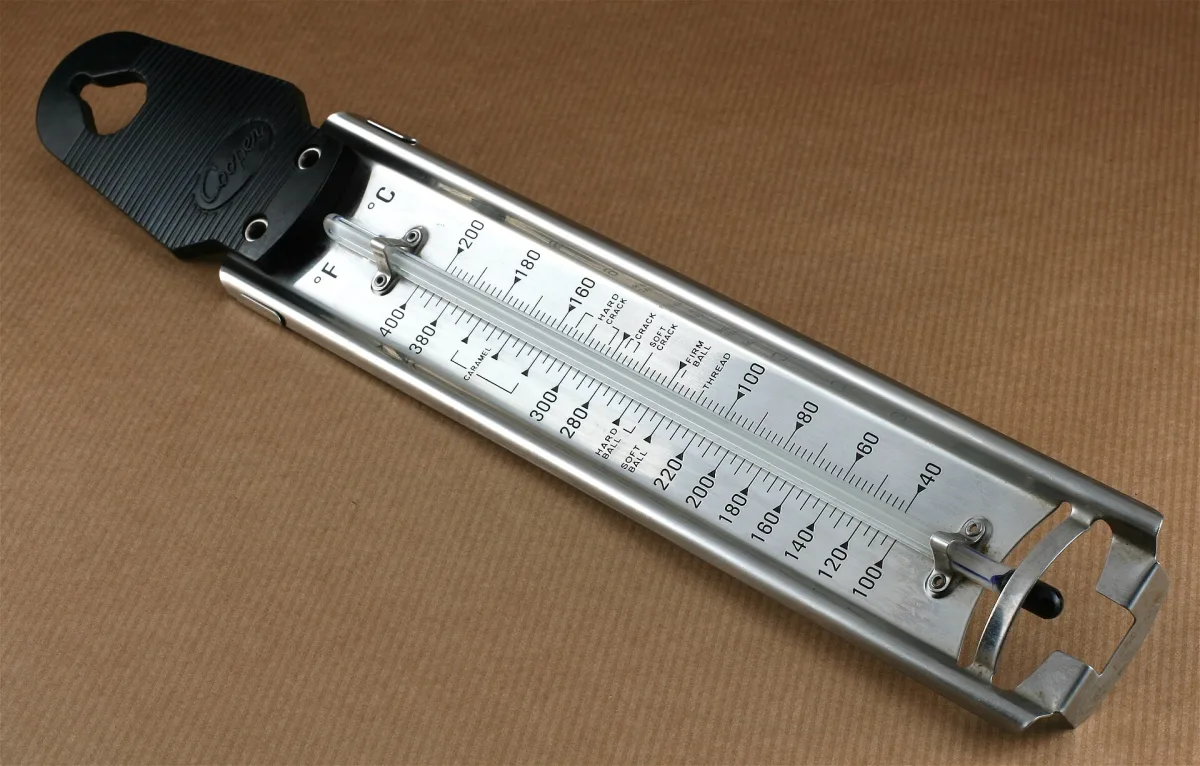
Photo: Steven Jackson from USA — CC BY 2.0 · Wikimedia Commons
Which type do you need?
- Instant-read digital: A thin probe you insert into food or dip into oil, with the reading appearing in seconds. This is the most useful type for most homes because it measures meat, chicken, oil, and syrup.
- Pot-clip: Attaches to the edge of the pot and stays in the oil or syrup throughout cooking, letting you monitor the temperature hands-free. This is best for sugar confectionery and heavy deep frying.
- Oven thermometer: A dial that sits or hangs inside the oven to tell you the true oven temperature, because the number on the dial knob can be far from reality.
- Infrared (Laser): Measures only the surface from a distance, like the surface of a pan or baking sheet. It cannot measure inside a piece of meat or the depth of oil.
Temperatures that matter in the Egyptian kitchen
- Frying oil: An oil thermometer sales page suggests around 160° for low heat, 180° for medium, and 190° for high. Oil colder than that makes taameya and potatoes absorb oil, while oil that is too hot burns the outside before the inside cooks.
- Syrup and sugar: Thread stage is around 106 to 112°, which is thick syrup. Soft ball is around 112 to 116° for fudge and fondant. Hard crack is around 149 to 154° for simsimiyya and fouliyya. Caramel is from around 160° when the sugar starts to golden. References vary by a degree or two, so consider them approximate numbers.
- Meat and chicken: According to the USDA, steaks and roasts should be 63° then rest for 3 minutes, ground meat like kofta and burgers 71°, and all chicken 74°. Meat color alone is not proof that it is done.
Range, accuracy, and speed
A thermometer with a range up to 200° is enough for oil and syrup, and up to 300° covers almost everything in the kitchen. Accuracy within about one degree is enough for home cooking. Speed matters with hot oil: 3 to 5 seconds is much more comfortable than a thermometer that takes 15 seconds while your hand is over the pot. To make sure your thermometer is accurate, put it in a cup of ice and water; it should read about zero. You can also check with boiling water: in most Egyptian cities close to sea level, water boils at approximately 100°.
How to measure correctly
- For meat and chicken: Insert the probe into the thickest part, without touching the bone.
- For a whole chicken: Measure in the thigh and breast, and rely on the lower number.
- For oil and syrup: Keep the tip of the probe in the middle of the liquid, not touching the bottom of the pot because the bottom is hotter.
- Wait until the number stabilizes before reading, and stir the syrup before measuring if the pot is large.
- Do not leave the digital thermometer inside the oven or over steam unless its page says it is heat-resistant.
Care and batteries
Wipe the probe after every use with a cloth dampened with soap and water, especially after raw meat. If the thermometer is labeled waterproof (IPX6 or IPX5) you can wash it under the tap; otherwise, do not submerge the plastic body. Store it in its cover or fold it so the probe doesn't bend, and keep a spare battery of the same type listed on the page.
Check before you buy
- There is a button to switch to Celsius (°C), because many recipes use Fahrenheit.
- The range is specified and reaches at least 200° if you are measuring oil or syrup.
- The probe length is suitable for the depth of the pot you are frying in.
- Who the seller is, and whether the thermometer works as soon as it arrives: test it in hot water and a cup of ice.
FAQ
How do I calibrate my kitchen thermometer?
Fill a cup with crushed ice and cold water, let it sit for a minute, and place the probe in the center without touching the bottom. It should read approximately zero. If there is a difference, models with a Calibration feature allow you to adjust it; otherwise, remember the difference when reading.
Can I leave the digital thermometer inside the oven?
No, most folding digital thermometers are made to measure quickly and be removed, and the plastic body cannot withstand oven heat. For the oven, use an analog oven thermometer that stays inside, or a probe thermometer with a wire specified to go into the oven.
How do I know if the oil is hot enough without a thermometer?
An approximate method: put the tip of a wooden spoon in the oil; if many small bubbles form around it, the oil is ready for frying. If the oil is smoking, it is too hot. But a thermometer is more accurate, especially for taameya and potatoes.
Is an infrared thermometer good for food?
It only measures the surface, so you can use it to know the temperature of a pan or baking sheet before putting food in. It cannot measure inside a piece of meat or the temperature of oil beneath the surface, so use a probe thermometer for meat and chicken.

Comments
Cooked it? Tell us how it went, or ask a question — we read every comment.