
Falafel Versus Taameya — And Which Is the Original
The essential difference is the pulse: Egyptian taameya is made from split dried broad beans, and Levantine falafel from chickpeas (sometimes a mix of both). That makes taameya greener inside and softer, and falafel paler in colour and firmer.
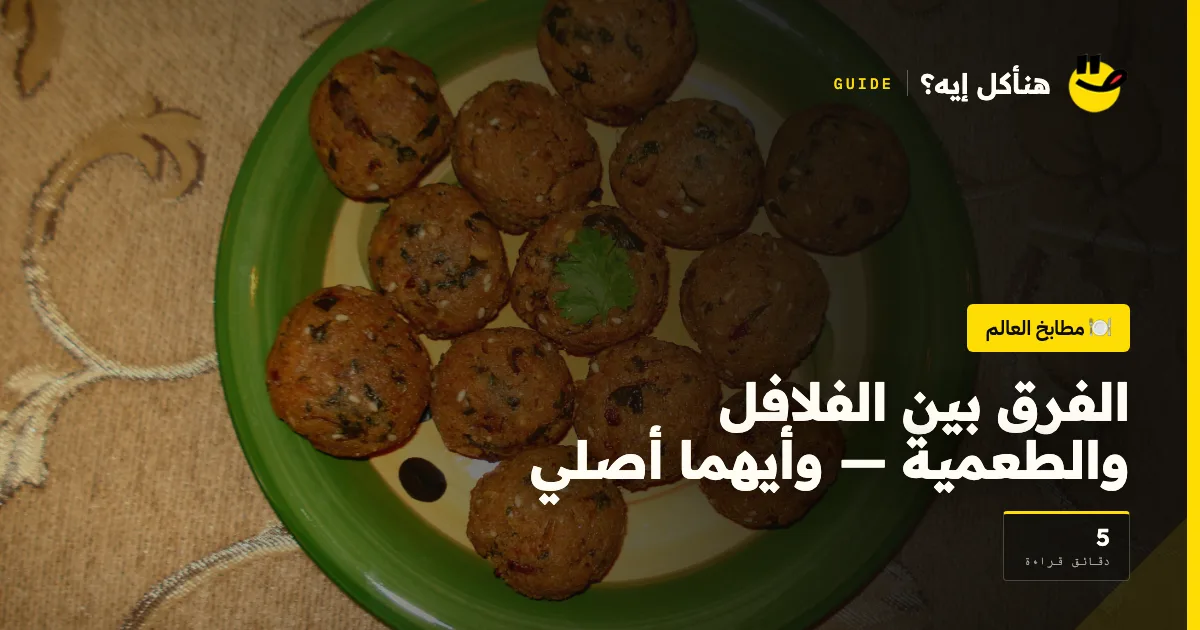
This argument resurfaces on social media regularly, and usually turns into a fight about identity rather than a simple technical difference. The truth is that the two are genuinely different dishes — not the same thing under two names.
The difference in the base ingredient
This is the one real difference, and everything else follows from it:
- Egyptian taameya: soaked split dried broad beans (skinned and cracked).
- Levantine falafel: soaked dried chickpeas.
- Mixed versions: in Palestine and Lebanon a mixture of chickpeas and broad beans in varying proportions is used.
And both are soaked, not boiled — the one shared rule that either version fails without.
The difference in colour
Taameya comes out clearly green inside, and falafel a beige-yellow.
And the reason is not only the herbs — the broad bean itself gives a paler, slightly greener colour, and taameya is made with a far larger quantity of parsley, coriander and dill than falafel.
The proportion of herbs in taameya can reach a third of the mixture, and in falafel it is much lower.
The difference in texture
Taameya is softer and lighter inside, and crumbles more easily. Split broad beans absorb more water and give a spongy texture.
Falafel is firmer and denser, and chickpeas are higher in starch so they bind better.
Which is why falafel is usually shaped into balls and taameya into flattened patties — flat patties cook faster and reduce the risk of falling apart.
The difference in seasoning
Taameya: ground coriander, cumin, dill and spring onion, plus a pinch of bicarbonate so it puffs.
Falafel: cumin, coriander and garlic, and sometimes cardamom and cinnamon in some regions.
Falafel usually has more garlic, and taameya more herbs.
Sesame: a distinguishing mark
Egyptian taameya is coated in sesame seeds on the outside before frying — an essential part of its identity that gives crunch and a distinctive flavour.
Levantine falafel is usually without sesame, or with sesame on one side only in some regions.
They are served differently too
Taameya is eaten in baladi bread with ful, pickled aubergine, tahini and green salad — part of a full Egyptian breakfast.
Falafel is wrapped in saj bread with tahini, pickled vegetables, parsley and tomato — closer to a standalone sandwich.
The origin of the dish
Historically, the origin is most likely Egyptian. Broad beans were — and remain — the cheapest and most widespread pulse in Egypt, and chickpeas arrived in the region later.
And there is an account linking it to Egypt's Copts, who sought a protein substitute during long fasts, with the name 'taameya' coming from the Arabic for food.
But chickpea falafel spread internationally far more widely — through the Levant and then through migrants to Europe and America. So the name 'falafel' is the one known globally, even if the origin is Egyptian.
There is no conclusive evidence, and the academic dispute continues.
The rule that governs both
Whatever the pulse, one rule determines success: the pulses must be soaked raw, not boiled.
Boiled pulses give a sticky paste that falls apart in the oil whatever binders you add. Soaking hydrates the pulse without cooking it, so it grinds to a sandy texture that holds together.
And the soak is at least 12 hours for either of them.
Mistakes that ruin both
- Boiled pulses: the result is a paste that collapses — by far the commonest mistake.
- A wet mixture: drain the pulses well and dry them before grinding.
- Bicarbonate added early: it loses its power if it sits — it goes in right before shaping.
- Cold oil: they soak up fat and fall apart. The oil should be at 170-180°C.
- An unchilled mixture: an hour in the fridge prevents crumbling.
- Grinding too fine: you want a sandy texture, not a paste.
The sauces served with them
The sauce is part of the dish rather than an addition, and it differs between the two versions:
- With taameya: plain tahini or tahini with lemon, tahini salad, pickled aubergine, and pickled lemon and carrot.
- With falafel: a thicker tahini, toum (garlic whipped with oil), pickled cucumber and red turnip, and parsley and tomato.
And pickled red turnip in particular is the signature of a Levantine falafel sandwich — coloured with beetroot, it gives a sharp acidity that cuts the richness.
Nutritional value
Both are a good source of plant protein, and the difference is slight:
- Broad beans are slightly higher in protein and fibre, and lower in calories.
- Chickpeas are higher in healthy fats and iron.
But the frying is what really determines the calories, not the pulse — a fried patty can absorb enough fat to double its calories. The oven version reduces that considerably.
And both are naturally gluten-free if there is no flour in the mixture — which makes them a good option for anyone with an intolerance.
The names in different countries
- Egypt: taameya (though falafel is also said in Alexandria).
- The Levant: falafel.
- Sudan: taameya as well, made with broad beans.
- The Gulf: falafel, influenced by the Levantine version.
The pattern is that the name usually follows the ingredient: countries that use broad beans say taameya, and those that use chickpeas say falafel.
The healthy oven version
Both work in the oven on the same principle: a 220°C oven with the tray preheated inside, the patties brushed with oil on both sides, and 15 minutes then a flip then 10.
The crispness is less than fried but the calories drop to a third. And the patties must be flat and thin so they cook through.
Freezing
Both freeze raw after shaping: spread on a tray for two hours, then into a bag.
And they fry straight from the freezer with an extra minute — without thawing, because thawing makes them release water and fall apart.
They keep 3 months.
FAQ
إيه الفرق الأساسي بين الفلافل والطعمية؟
البقول. الطعمية المصرية بتتعمل من الفول المدشوش، والفلافل الشامية من الحمص. وده بيخلّي الطعمية خضرا من جوّه وأطرى، والفلافل أفتح لونًا وأكتر تماسكًا.
أنهي واحدة الأصل؟
الأرجح تاريخيًا إن الأصل مصري بالفول، لأن الفول كان أرخص وأكتر انتشارًا في مصر والحمص دخل المنطقة لاحقًا. لكن الفلافل بالحمص انتشرت عالميًا أكتر، ومفيش دليل قاطع.
ليه بتتفتّت في الزيت؟
غالبًا لأن البقول اتسلقت بدل ما تتنقع نيّة — دي أشهر غلطة. والأسباب التانية: خليط مبلول، أو ما اتبرّدش ساعة قبل التشكيل، أو زيت مش سخن كفاية.
ينفع أعملها بالفرن؟
ينفع: فرن ٢٢٠ درجة مع صينية مسخّنة جوّاه، والأقراص مدهونة زيت من الوشّين، ١٥ دقيقة ثم قلب ثم ١٠. القرمشة أقل بس السعرات بتقلّ للتلت.
Comments
Cooked it? Tell us how it went, or ask a question — we read every comment.