
Persian Cuisine: Rice, Saffron, Tahdig and the Best-Known Dishes
Persian cooking revolves entirely around rice, and the most important thing in it is tahdig — the golden crust that forms in the base of the pot. The rice is only half-boiled, then steamed over low heat for forty minutes under a lid wrapped in a cloth that absorbs the steam.
Persian cooking is among the oldest documented cuisines in the world, and it influenced Indian, Turkish and Arab cooking alike. What distinguishes it most: a precise balance between sweet and sour, the use of fresh herbs in large quantities, and exceptional care with rice.
The core dishes
1. Tahdig — the golden base
The crisp crust at the bottom of the rice pot, and so prized by Iranians that it is divided carefully among guests. It is made with different layers: rice with saffron and yogurt, slices of potato, or lavash bread.
The rule: enough fat in the base, low heat, and a long time. Rushing gives you either a burnt base or a raw one.
2. Tahchin
Rice mixed with yogurt, egg yolk and saffron, baked in a dish and turned out like a cake with a complete golden crust. The fat and protein are what bind the grains together.
3. Zereshk polo
Saffron rice with sour red barberries and chicken. Barberries burn in seconds: soak them in cold water for ten minutes, then toss them in butter off the heat for thirty seconds only.
4. Koobideh kebab
Minced meat with grated onion that has been squeezed completely dry, kneaded for ten minutes until tacky, and rested for an hour in the fridge before it goes on the skewer.
Those three steps are what stop the meat falling off the skewer — and the fat content must reach at least twenty per cent.
5. Ash reshteh
A thick soup of pulses, herbs and noodles, crowned with kashk, crisp fried onion and fried mint. The noodles go in for the last ten minutes only, because their starch is what thickens the soup.
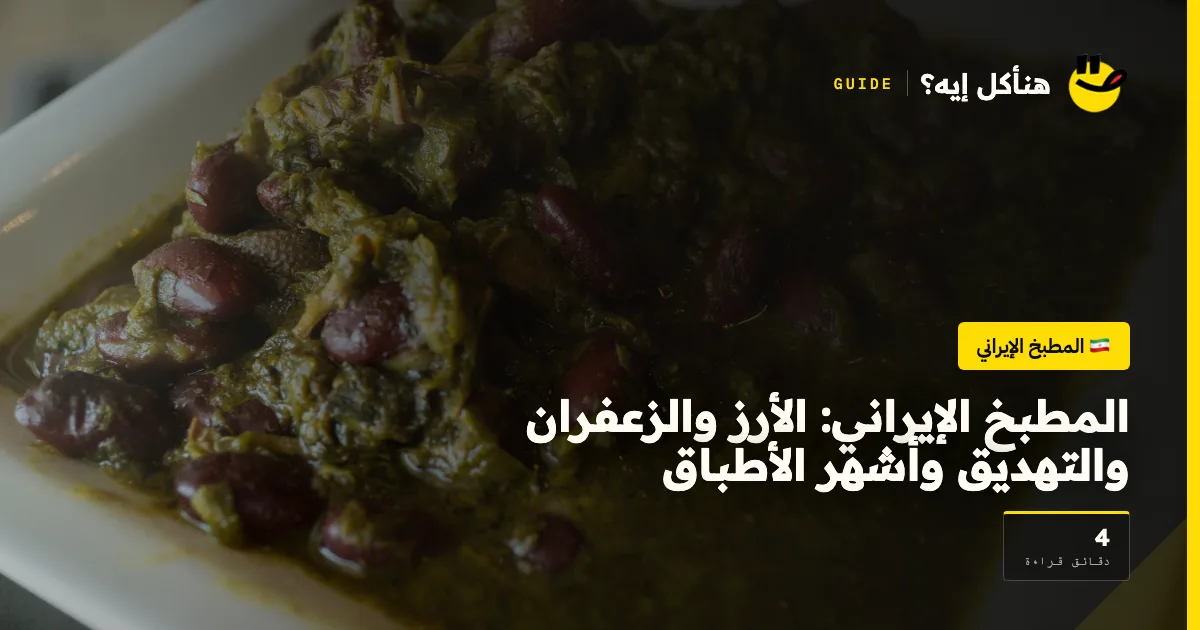
6. Ghormeh sabzi
A sour herb stew with meat, beans and dried lime. The herbs — parsley, coriander, leek and fenugreek — are fried for a long time until the colour darkens, and that is the step that gives the dish its depth.
Saffron
Iran is the world's largest saffron producer, and it is a core ingredient in its cooking rather than a luxury. The correct use: grind it fine and dissolve it in hot water for ten minutes before use.
Whole threads give neither full colour nor full flavour. A quarter-teaspoon ground is enough for a whole dish — more brings bitterness.
Persian sourness
Persian cooking draws on a distinctive range of sour ingredients: dried lime, barberries (zereshk), pomegranate molasses, sour plums (aloocheh), and tamarind in the south.
Each has its role: dried lime for heavy dishes, barberries for rice, pomegranate molasses for fesenjan.
Fresh herbs
Iranians eat herbs by the handful rather than as a garnish. Sabzi khordan — a plate of fresh herbs with mint, basil, tarragon, coriander, radish and cheese — is set on the table with almost every meal.
And in dishes like ghormeh sabzi and kuku sabzi, the herbs are the main ingredient rather than an addition.
Ingredients worth buying
- Saffron: expensive, but the quantities are tiny.
- Dried lime (limoo omani): for the heavier dishes.
- Barberries (zereshk): for rice, from Iranian grocers.
- Long-grain basmati rice: the basis of everything.
- Kashk: dried fermented whey, for ash.
How a meal is ordered
A Persian meal is served all at once: rice in the centre, surrounded by the stew, the kebab, the fresh herbs, yogurt, pickles (torshi) and bread.
Yogurt is not a side dish — it is a fundamental counterweight to the sour and rich dishes. It is served plain, or with cucumber and mint.
Common mistakes
- Boiling the rice fully before steaming: it turns pasty.
- Using saffron as whole threads: neither colour nor flavour.
- Frying barberries longer than thirty seconds: they blacken and turn bitter.
- Not squeezing the onion for koobideh: the meat falls off the skewer.
- Adding the noodles early to ash: they disintegrate and the soup turns pasty.
Where to start
Ash reshteh is the easiest entry despite how it looks — a soup of pulses and herbs with simple steps. Then zereshk polo, which teaches you steaming and saffron.
After those, ghormeh sabzi and koobideh. Tahchin comes last, because turning it out takes confidence.
Tea and sweets
Persian tea is drunk without sugar in the glass — you put a sugar cube or a piece of rock candy in your mouth and drink the tea over it. It is served in a small glass, an estekan.
Persian sweets are lighter than Arab ones: sholeh zard (saffron rice pudding), Persian baklava (with almond, cardamom and rose water), and faloodeh (frozen vermicelli with rose water and lime).
Faloodeh is one of the oldest documented frozen desserts in history — made in Iran before the common era using ice brought down from the mountains and stored in purpose-built structures called yakhchals.
Nowruz and its food
The Persian new year, Nowruz, falls at the start of spring and has its own dishes: sabzi polo ba mahi (herb rice with fish) on new year's eve, kuku sabzi (a herb omelette) and ash reshteh, which symbolises good fortune.
Green is the colour of this festival — herbs and sprouted wheat (sabzeh) are symbols of renewal. Which explains why the Nowruz dishes are all green.
FAQ
إيه هو التهديق؟
القشرة الذهبية المقرمشة اللي بتتكوّن في قاع حلة الأرز الإيراني. بتتعمل بدهن كافي في القاع ونار هادية ووقت طويل، وهي أحلى جزء عند الإيرانيين وبتتقسّم على الضيوف بعناية.
إزاي أستخدم الزعفران صح؟
اطحنيه ناعم (بهاون أو بين ورقتين) وحلّيه في ٣-٤ ملاعق ماية سخنة وسيبيه ١٠ دقايق لحد ما لونه يطلع قوي. الحبّات الصحيحة ما بتديش لون كامل، وربع ملعقة صغيرة كفاية لطبق.
ليه الأرز الإيراني بيتسلق نص سلقة؟
لأنه بيكمّل نضجه بالتبخير على نار هادية ٤٠ دقيقة. السلق الكامل قبل التبخير بيدّي أرز متعجّن، والنص سلقة بتخلّي الحبّات تفضل مفصولة وطويلة.
Comments
Cooked it? Tell us how it went, or ask a question — we read every comment.