
Syrian Cuisine: Kibbeh, Shawarma, Mujaddara and the Dishes of Damascus
Syrian cooking inherits the Umayyad and Ottoman kitchens, and two things set it apart within the Levant: kibbeh in dozens of forms (fried, tray-baked, in yogurt, raw), and cooked yogurt, which enters many dishes and is the hardest technique here because yogurt splits so easily.
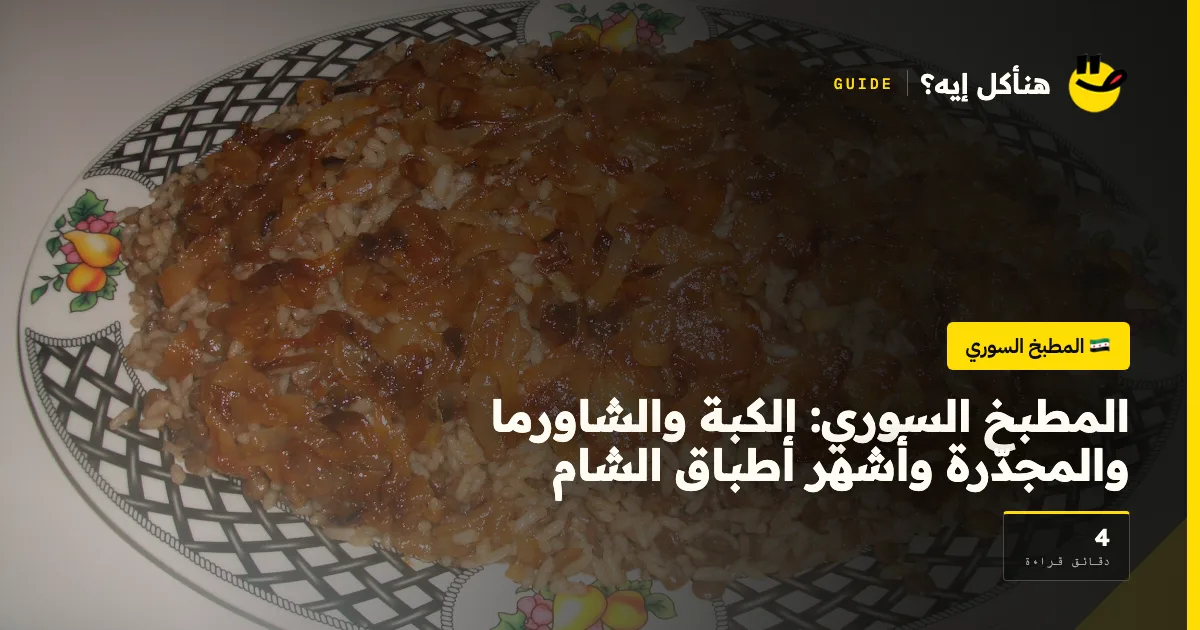
Damascus and Aleppo are among the oldest continuously inhabited cities on earth, and Syrian cooking has inherited layer upon layer: Umayyad, Ottoman, Armenian (especially in Aleppo) and Kurdish in the north-east. Aleppo in particular is regarded as the food capital of the entire Levant.
Kibbeh — a family, not a dish
Kibbeh in Syria is not one thing. There is fried kibbeh (stuffed torpedoes, deep-fried), tray kibbeh (two layers with filling between, baked), kibbeh labaniyeh (kibbeh cooked in yogurt), kibbeh safarjaliyeh (with quince and pomegranate, in Aleppo) and dozens more.
The rule governing the shell: fine bulgur and meat at roughly one to one, kneaded with iced water. Cold water holds the shell together; warm water makes it disintegrate in the fryer.
Cooked yogurt — the hardest technique
Shish barak, kibbeh labaniyeh and fatteh all depend on cooked yogurt. Yogurt splits over heat because its protein coagulates. The traditional Syrian solution:
- Cornflour and egg whisked into the yogurt while it is cold (added hot, they form lumps).
- Continuous stirring in one direction with a wooden spoon until it boils.
- Once it has boiled it is stable and can be left alone.
Stop stirring before it boils and the yogurt splits, with no way back.
The core dishes
Syrian shawarma
The Syrian marinade is lighter than the Turkish: vinegar, lemon and spices without much yogurt. It is served in thin markouk bread rolled with toumieh, pickles and fried potatoes.
Mujaddara
Lentils, bulgur and onion. The whole dish rests on the quantity of onion and how far it is browned — to deep brown, not black. Burnt onion turns the entire dish bitter.
Toumieh
Garlic, oil and lemon emulsified into a thick white cream with no egg. The secret is that the oil goes in drop by drop at the start — any impatience and the emulsion breaks.
The difference between Syrian and Lebanese
The two cuisines overlap heavily, but the differences are clear: Syrian leans more towards kibbeh, stuffed things and cooked yogurt, while Lebanese leans towards cold mezze and salads. Aleppo in particular uses crushed red pepper (Aleppo pepper) and pomegranate molasses far more heavily than Lebanon does.
The sweets of Damascus
Barazek (sesame and pistachio biscuits), maamoul, harissa, and Damascene baklava with pistachio. The rule across Levantine sweets: the syrup is lighter than the Egyptian or Turkish equivalent, and scented with orange blossom more than rose water.
Where to start
Mujaddara is the easiest entry point — cheap ingredients and clear steps. Then toumieh (simple technique but it demands patience), then shawarma. Leave kibbeh and shish barak until last, because they need manual skill and time.
Ingredients worth buying
- Aleppo pepper: coarsely crushed red pepper, medium heat, fruity and smoky.
- Pomegranate molasses: a dense sourness that goes into kibbeh, fattoush and stuffed vegetables.
- Fine bulgur: for kibbeh and tabbouleh (the coarse grade is for pilaf).
- Orange blossom water: for sweets and drinks.
How a Damascene table is ordered
A Syrian meal begins with cold mezze — hummus, mutabbal, muhammara, makdous, labneh — then the hot mezze (fried kibbeh, sambousek, pastries), then the main course, usually a single dish with rice or bulgur. Dessert is fruit or muhallabia.
Makdous deserves a mention of its own: small aubergines stuffed with walnut, pepper and garlic and preserved in olive oil, made in autumn and eaten through the winter. It is among the best known of the mouneh — the seasonal preserves Syrian households put up.
Common mistakes in Syrian cooking
- Kibbeh: kneading the shell with warm water instead of iced — it falls apart in the fryer.
- Yogurt: stopping the stirring before it boils means it splits permanently.
- Mujaddara: burning the onion instead of browning it — it turns the whole dish bitter.
- Toumieh: pouring the oil too fast at the start — the emulsion fails.
- Vine leaves: too much filling — the rice doubles and the leaf splits.
Aleppo: the food capital
Aleppo is recognised internationally as a UNESCO city of gastronomy, and the reason is the range of its cooking: more than twenty kinds of kibbeh, dishes built on sour cherries (kebab bil karaz), and muhammara (red pepper, walnut and pomegranate molasses). The Armenian influence on Aleppan cooking is very clear, particularly in the use of crushed red pepper.
Where to begin with Syrian cooking
If this cuisine is new to you, start with mujaddara: lentils, bulgur and onion, ingredients any kitchen has, and the result shows on the first attempt. Then toumieh — a simple technique that teaches you emulsification, a skill that carries over to mayonnaise and every sauce built the same way.
Once you have both, move on to shawarma (a marinade and ordinary grilling) and then fried kibbeh. Leave shish barak and kibbeh labaniyeh until last, because they require mastery of cooked yogurt, which is the hardest thing in Levantine cooking.
One practical closing note: kibbeh freezes raw beautifully. Shape a large batch at once, freeze it on a tray, then transfer it to a bag — and fry it straight from frozen.
FAQ
ليه اللبن بيفصل في الشيش برك؟
التقليب وقف قبل الغليان، أو النشا والبيضة ما اتخفقوش في الزبادي وهو بارد، أو الزبادي كان لايت. التلاتة لازم يتظبطوا مع بعض.
إيه الفرق بين المطبخ السوري واللبناني؟
متداخلين جدًا، لكن السوري بيميل للكبة والحشوات واللبن المطبوخ، واللبناني للمازة الباردة والسلطات. وحلب بتستخدم الفلفل الأحمر المجروش ودبس الرمان بكثافة أكبر.
إزاي أعمل تومية ما تفصلش؟
الثوم بيتهرس مع الملح الأول، وبعدين الزيت بينزل قطرة قطرة في البداية مع الخفق المستمر. أي استعجال في أول ربع كوب زيت والخليط بيفصل.
Comments
Cooked it? Tell us how it went, or ask a question — we read every comment.