
Why Does Eggplant Taste Bitter? 6 Causes and How to Fix It
Eggplant usually tastes bitter because it is overripe: a large eggplant with dull skin and dark brown seeds contains more bitter compounds than a small, fresh one. Other reasons include not cooking it enough, storing it in the cold, getting burnt skin into the baba ganoush, or using old frying oil. The solution starts at the market—choose a small, shiny, and heavy eggplant—along with a half-hour salting for larger ones and full cooking.
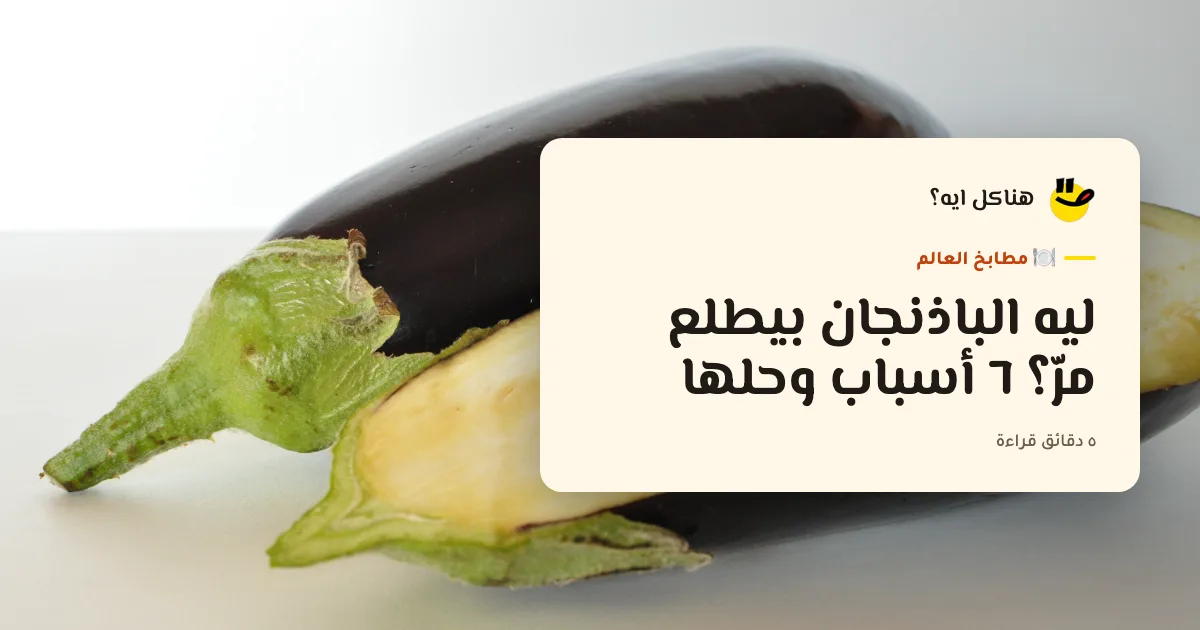
Photo: Frédérique Voisin-Demery — CC BY 2.0 · Wikimedia Commons
The exact same moussaka recipe, and the exact same hands—yet one time it turns out delicious, and the next time a bitter taste lingers in the mouth that won't go away. This bitterness isn't an accident; it has 6 clear reasons, most of which are decided at the market and on the stove, not in the recipe itself. (Now, if your problem is that the eggplant absorbs too much oil, that's a whole different story with its own article.)
Where Does the Bitterness Actually Come From?
Eggplant belongs to the same family as potatoes and tomatoes, and it naturally contains bitter compounds: most notably glycoalkaloids, along with phenolic compounds, which are the same ones that cause its flesh to turn brown when cut. Modern varieties have been developed to have lower bitterness, but the amount increases with over-ripening, storage, and difficult growing conditions like drought and intense heat. In regular eggplant, this bitterness is simply a matter of taste and not a sign of spoilage.
1. The Eggplant is Overripe
What happens: A large eggplant with dull, non-shiny skin, which when you cut it open reveals lots of dark brown seeds.
Why: The larger the fruit gets and the longer it passes its harvest time, the more the seeds continue to grow and darken, and the bitter compounds increase with them.
The solution: Choose small to medium eggplants with shiny, tight skin that feel heavy in your hand for their size, with a fresh green stem. If you must use a large one, cut it open and remove the dark seed core if there is a lot of it, especially for baba ganoush and mutabbal.
And the idea of a "male and female eggplant" determined by the shape of the dimple on its bottom has no scientific basis: the fruit itself has no gender, and the shape of the dimple varies depending on the variety. What actually makes a difference in bitterness and seed quantity is size, shine, and weight.
2. Stored Too Long or in Too Much Cold
What happens: Eggplant that was fine on the day of purchase, but after a week became soft, had sunken spots on the skin, and a changed flavor.
Why: Eggplant is sensitive to the cold; below about 10°C for a few days, it suffers from "chilling injury": spots on the skin, pithiness in the seeds and flesh, and a strange taste. Long storage in general causes it to lose moisture and flavor.
The solution: Buy the amount you will cook within two to three days, and store it in the coolest place in the kitchen, or wrapped in the vegetable drawer for a short period.
3. Not Cooked Enough
What happens: The eggplant tastes bitter and astringent, with a spongy texture that squeaks under the teeth.
Why: Raw or half-cooked eggplant has very noticeable bitterness and astringency; full cooking breaks down the cells, so the texture becomes creamy and the flavor sweetens and calms down.
The solution: Fried slices should be browned on both sides until the center softens completely. A whole eggplant in the oven at 220°C for about 40–50 minutes until it collapses and softens completely, and over direct flame for 15–20 minutes with turning. In moussaka, the eggplant goes into the baking dish cooked, not raw.
4. Burnt Skin and Dark Liquid in Baba Ganoush
What happens: The baba ganoush or mutabbal turns out bitter with a burnt taste.
Why: Roasting over an open flame burns the skin—which is necessary for the smoky flavor—but bits of charred skin that get mixed into the flesh are bitter, and the brown liquid that drips from the eggplant after roasting carries a large portion of the bitterness.
The solution: After roasting, cover the eggplant for 10 minutes so the skin peels off easily, and peel it carefully without scraping too hard near the skin. Then place the flesh in a strainer for 10–15 minutes and let the dark liquid drain out. Tahini, lemon, and garlic balance out whatever remains.
5. Frying Oil is Burnt or Reused Too Often
What happens: Fried eggplant tastes bitter with the smell of old oil.
Why: Eggplant absorbs more oil than any other vegetable, so any flavor in the oil is transferred to it. Oil that has been heated to the smoking point or used for frying many times breaks down into compounds that taste bitter and sharp. Also, browning until dark brown creates bitterness on its own.
The solution: Clean oil at about 180°C, stop when it reaches golden, and change the oil after 2–3 uses or if it darkens or its smell changes.
6. Thick Skin and Eggplant Variety
What happens: The bitterness is more apparent in the skin than in the flesh.
Why: The skin of large eggplants is thicker and tougher, and contains a higher concentration of phenolic compounds.
The solution: For frying and moussaka, peel the eggplant in stripes (one stripe of skin left, one peeled), and for mashed dishes, peel it completely. Varieties like white eggplant and long, slender ones are usually milder in taste than the large black ones.
And Why Does Pickled Eggplant Turn Out Bitter?
In pickled eggplant stuffed with garlic and peppers, the bitterness is usually due to two reasons: large eggplant with lots of seeds, or under-boiling. Choose small, slender eggplants for pickling (Baladi or white), and boil them in salted water until a knife easily inserts into them without getting mushy—about 10–15 minutes depending on size—then gently press them under a weight to squeeze out excess water before stuffing.
Salting: When Does It Make a Difference and When Doesn't It?
Salting works in two ways: salt draws out liquid from the eggplant along with some of the bitter compounds, and the salt itself masks the sensation of bitterness on the tongue. Its real benefit is with large, overripe eggplants; whereas small, fresh ones usually don't need it because the bitterness is minimal.
- With dry salt: Slices about 1 cm thick, with 1 teaspoon of salt per half kilo, in a strainer for 30–45 minutes, followed by a quick rinse and thorough drying with a towel.
- In salted water: 1 tablespoon of salt per liter of water, 20–30 minutes—and it also prevents the slices from turning brown. Afterwards, dry completely before frying so the oil doesn't splatter.
In cooking itself, acidity and fat balance out any remaining bitterness: tomato sauce in Egyptian moussaka, tahini and lemon in baba ganoush, and garlic yogurt with fried eggplant.
Conclusion
Eggplant tastes bitter mainly when it is overripe and has dark seeds, when it is stored too long or in the cold, when it is not cooked enough, or when its burnt skin or old frying oil gets into the dish. Choose a small, shiny, and heavy eggplant, cook it until it becomes creamy, and salt the large ones for half an hour—and the bitterness will disappear from your food.
FAQ
Why does eggplant taste bitter?
The most common reason is that it is overripe: large with dull skin and dark brown seeds, as bitter compounds increase with maturity. Other reasons include long or cold storage, undercooking, burnt skin, and old frying oil.
How do I remove bitterness from eggplant?
Choose small, shiny, and heavy eggplants, remove the dark seed core if there is a lot of it, salt the slices (1 teaspoon per half kilo) for 30–45 minutes then rinse and dry, and cook it until completely creamy.
Does salting actually remove eggplant bitterness?
It reduces it: salt draws out liquid containing some bitter compounds and masks the sensation of bitterness on the tongue. Its greatest benefit is with large, overripe eggplants; fresh, small ones usually don't need it.
Why does baba ganoush taste bitter?
Bits of charred skin mixed into the flesh, and the brown liquid that drips out after roasting. Cover the eggplant for 10 minutes after roasting, peel it carefully, and strain the flesh for 10–15 minutes before adding tahini and lemon.
How do I choose non-bitter eggplant?
Small to medium, with shiny and tight skin, heavy in the hand, and a fresh green stem. Avoid large, dull, or soft ones, and cook them within two to three days of purchase.

Comments
Cooked it? Tell us how it went, or ask a question — we read every comment.