
Why French Fries Absorb Oil and Don't Get Crispy? 7 Reasons and Solutions
Fries absorb oil when they go into not hot enough oil or a large batch cools it down, so they stay in it longer without their surface sealing. They don't get crispy because starch and water on their surface weren't removed and because they were fried only once. The solution: wash, soak, and dry them well, and fry them twice: 160°C and then 190°C.
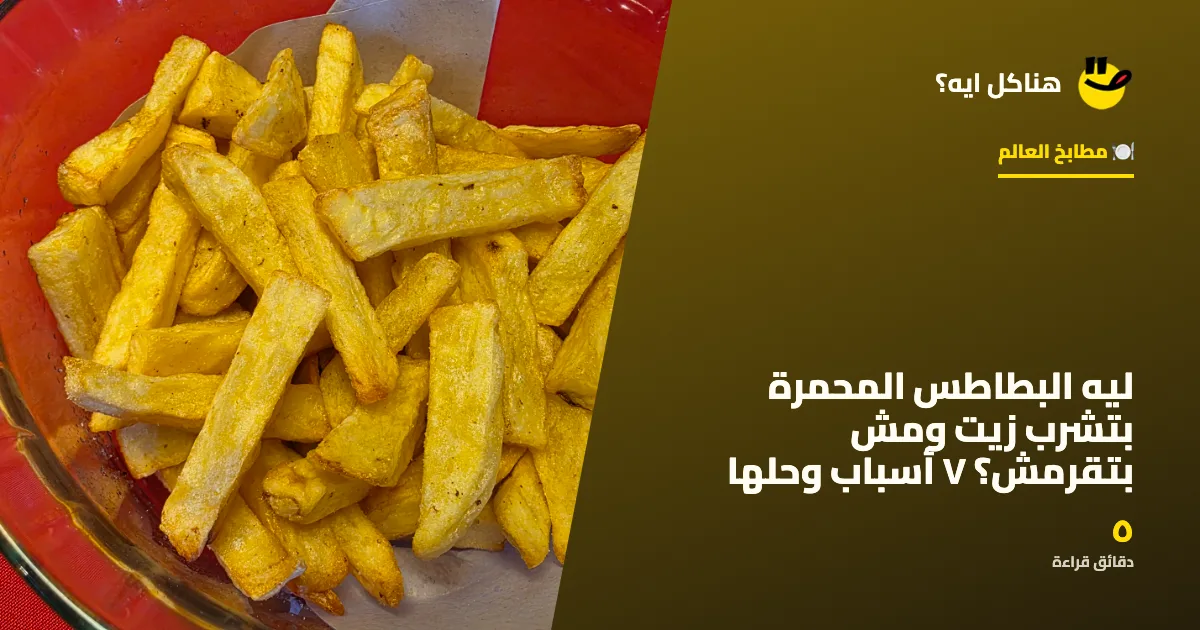
Photo: Horacio Cambeiro — CC BY 3.0 · Wikimedia Commons
The same potatoes, the same oil, and the same pot — and sometimes french fries turn out golden and crispy, while other times they turn out soft, soaked in oil, and stuck together. The difference isn't luck: there are 7 details that happen before, during, and after frying, and if you get them right, the result is consistent every time.
1. The oil is not hot enough
What happens: The fries go into the oil and sit quietly, the bubbles around them are weak, and after a quarter of an hour they come out pale and full of oil.
Why: In hot oil, the water on the surface of the potatoes turns into steam that escapes forcefully and pushes the oil out; in lukewarm oil, the steam is weak, so the oil leaks to the surface, and frying takes longer, so absorption increases.
The solution: The first fry at 150–160°C and the second at 180–190°C. Without a thermometer: drop in a single potato stick — if bubbles rise around it vigorously immediately, the oil is ready, and if it sinks to the bottom and stays quiet, wait. And don't reach the smoking point; smoking oil breaks down and gives a bitter taste.
2. The batch is too large for the amount of oil
What happens: You put the whole plate of potatoes in all at once, and the oil that was bubbling calms down in a second.
Why: A kilo of cold, wet potatoes draws heat from the oil by dozens of degrees all at once, and the oil takes minutes to recover — and those exact minutes are when the potatoes absorb oil.
The solution: Fry in batches: about 200 grams of potatoes per liter of oil at a time, and the sticks must float freely without crowding. Between each batch and the next, wait two minutes until the oil returns to its temperature.
3. The starch on the surface wasn't washed off
What happens: The sticks stick to each other and to the bottom of the pot, their color darkens in patches before the inside is cooked, and they quickly get soggy after coming out.
Why: The knife opens the potato cells, releasing free starch and some sugars onto the surface; the starch makes a sticky layer like glue, and the sugar browns and darkens quickly.
The solution: After cutting, wash the sticks under the tap until the water runs clear, then soak them in cold water for half an hour to two hours (or overnight in the fridge). Soaking has another benefit: it reduces the sugars that form acrylamide when potatoes are fried dark, which is why food safety guidelines advise stopping at the golden color rather than brown.
4. The potatoes go into the oil wet
What happens: The oil splatters badly, calms down, and the potatoes boil in the steam instead of frying.
Why: Every single drop of water must evaporate first, which draws heat from the oil, and the steam that forms around the surface softens the crust that is supposed to form.
The solution: Drain the potatoes in a colander, spread them on a clean kitchen towel, and dry them from above as well until the surface feels dry in your hand. And do not salt before frying — salt draws water from the inside out while you are still drying.
5. One fry instead of two
What happens: The potatoes come out of the oil crispy, and after 5 minutes on the plate, they become soft and limp.
Why: In a single long fry, the surface browns before the moisture inside has time to escape, and after coming out, this steam creeps to the crust and softens it. Frying twice solves this: the first cooks the inside and makes a thin starch layer on the surface, the resting period lets the steam out, and the second dries that layer and turns it into a crispy crust.
The solution:
- Cut the sticks to a thickness of about 1 cm and evenly, so they all cook at the same time.
- The first fry: 150–160°C for 5–7 minutes, until the stick is soft when you press it and its color is still light.
- The rest: On a wire rack for at least 15 minutes — and they can be frozen at this stage, which is exactly the secret of frozen french fries like store-bought ones.
- The second fry: 180–190°C for 2–4 minutes until golden brown.
6. Potato variety or storage method
What happens: The potatoes darken quickly and taste sweet while still soft, or they remain waxy and watery inside no matter how much you fry.
Why: Potatoes stored in the fridge or in severe cold have part of their starch converted into sugar, and sugar darkens in the oil before the crust gets crispy. New potatoes with thin skins that peel with a fingernail contain more water and less starch, so they turn out soft.
The solution: For frying, choose mature potatoes with firm skins, heavy in the hand, free of any green spots or sprouts, and store them in a dark, cool, and ventilated place outside the fridge. And if there are no other potatoes than ones coming out of the fridge, lengthen the soaking time and watch the color closely in the second fry.
7. What happens after frying
What happens: Potatoes that were crispy in the pot get soggy on the dining table.
Why: Hot potatoes are still releasing steam; if they are piled on top of each other, on a paper towel, or covered, the steam gets trapped underneath and returns to the crust.
The solution: Drain them on a wire rack or colander in a single layer, salt them immediately while hot so the salt sticks, and serve them uncovered. If you are going to wait a bit, keep them in a low oven (about 100°C) with the door ajar.
And why do potatoes stick to the pan?
Sticking has three combined reasons: starch on the surface acting like glue, oil not being hot enough so the potatoes sit on the metal before their crust forms, and stirring too early while they are still soft so they break and stick.
- Wash, soak, and dry them well as explained above.
- The oil must cover the potatoes; frying in a thin layer of oil in a pan makes them touch the bottom immediately.
- Leave them for the first minute without stirring until their surface sets, then gently move them with a slotted spoon or shake the pot.
- If you are frying in a shallow pan, heat the pan first, then the oil, and then the potatoes.
Summary
Potatoes absorb oil when the oil cools down — from low heat, a large batch, or wet potatoes. And they don't get crispy when starch and moisture remain on the surface or when they are fried only once. Wash, soak, dry, fry in batches and twice (160 then 190), drain on a wire rack and salt immediately — and you'll find the french fry recipe turns out like restaurants every time.
FAQ
Why do french fries absorb oil?
Because the oil isn't hot enough or the batch was too large, cooling it down. Hot oil turns surface water into steam that pushes oil out, while lukewarm oil doesn't. Fry at 150–160°C then 180–190°C, and use about 200 grams of potatoes per liter of oil per batch.
Why do french fries get soggy after coming out of the oil?
The moisture inside escapes and softens the crust, especially if they were fried only once, piled on a paper towel, or covered. Fry them twice with a 15-minute rest in between, and drain them on an uncovered wire rack.
How long should I soak potatoes in water before frying?
From half an hour to two hours in cold water after washing them until the water runs clear, and overnight in the fridge is possible. Soaking removes surface starch and sugar, and must be followed by complete drying with a towel.
Why do potatoes stick to the pan?
Surface starch, oil that isn't hot enough, and stirring too early. Wash, soak, and dry them, make sure the oil covers the potatoes, and leave them for the first minute without stirring until the surface sets.
Why do potatoes darken quickly on the outside while still soft inside?
They were likely stored in the fridge or in severe cold, so part of their starch converted into sugar which browns quickly in the oil. Store frying potatoes outside the fridge in a dark, ventilated place, lengthen the soaking time, and stop at the golden color.

Comments
Cooked it? Tell us how it went, or ask a question — we read every comment.