Read
Food writing
In-depth guides, comparisons and kitchen stories — not recipes, but the things that make a recipe work.

The difference between rice varieties comes down to **the ratio of two starches**: amylose gives separate grains, amylopectin gives cohesion and stickiness. Long-grain rice is high in amylose so it stays separate; short-grain is high in amylopectin so it binds.
4 min read

The two most reliable signs of freshness in any protein are **smell and texture** — not colour. Colour changes for many reasons unrelated to spoilage, but a sour or sharp smell and a slimy texture are certain signs.
4 min read

The commonest cause of a failed rise is **water that was too hot**. Yeast is a living thing and dies above **50°C**, and water that feels hot on your hand is usually above that. The right water is **lukewarm, 35-40°C** — warm to the touch but not hot.
4 min read

**A cup is a unit of volume, not weight**, so its weight changes with the ingredient: a cup of flour is 120 g, a cup of sugar 200 g, and a cup of water 240 g. Which is why precise recipes — especially baking — are written in grams rather than cups.
5 min read

All four are rice and meat, and the whole difference is in **how the heat is delivered**: kabsa cooks in a pot on the stove, mandi in a pit with embers below and the tray suspended, madhbi on an open hot stone, and zarb in a pit sealed completely with earth.
5 min read

The two most important rules in storing produce: **moisture is the enemy, not dryness** — leaves wilt because they are wet, not because they are dry; and **some fruit releases ethylene gas** that speeds the ripening of its neighbours, so it must be kept apart.
4 min read

Meat turns tough for three reasons: **the wrong cut for the wrong method** (shin cooked fast or fillet cooked slow), **a hard boil instead of a gentle simmer**, which contracts the protein, and **slicing with the grain** rather than against it.
4 min read

Rice turns gluey for specific reasons: **surface starch that was not washed off**, **more water than needed**, **stirring during cooking** which breaks the grains and releases extra starch, and **no rest after the heat goes off**.
4 min read

Oil temperature decides everything about frying: **too low** and the food absorbs oil and turns greasy, **too high** and it browns outside while staying raw inside. The practical test: a cube of bread that browns in **60 seconds** means the oil is at 170–180.
5 min read

A guide to Brazilian cooking: feijoada, pão de queijo, coxinha and brigadeiro — black beans, tapioca flour, and the rules that matter.
4 min read
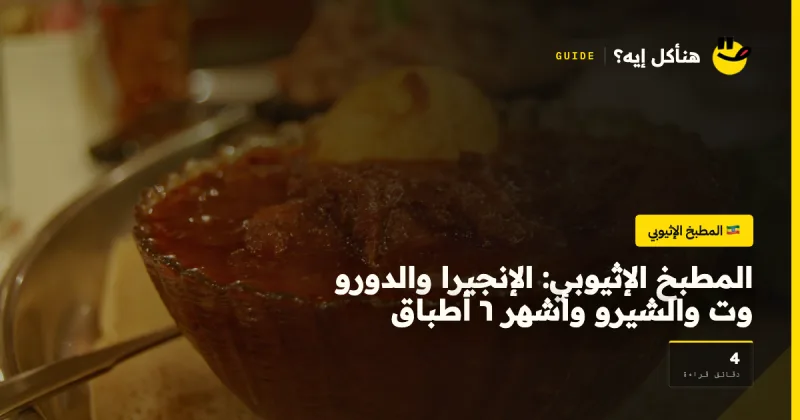
A guide to Ethiopian cooking: injera, doro wat, shiro, tibs and misir wat — berbere, niter kibbeh, teff fermentation, and the rules that matter.
4 min read

A guide to English cooking: fish and chips, the full breakfast, shepherd's pie and beef Wellington — ice-cold batter, double frying, and the rules that matter.
4 min read