
Homemade Egyptian Halawa Tahiniya with Pistachios
Halawa tahiniya succeeds or fails based on two things: the syrup must reach 120°C (a drop in cold water forms a hard ball), and mixing with the tahini must not exceed 1 to 1.5 minutes. A lower syrup temperature yields soft, sticky halawa, while over-stirring separates the sesame oil and leaves it crumbly.
- Prep
- 15 min
- Cook
- 15 min
- Total
- 13 hr
- Calories
- 250
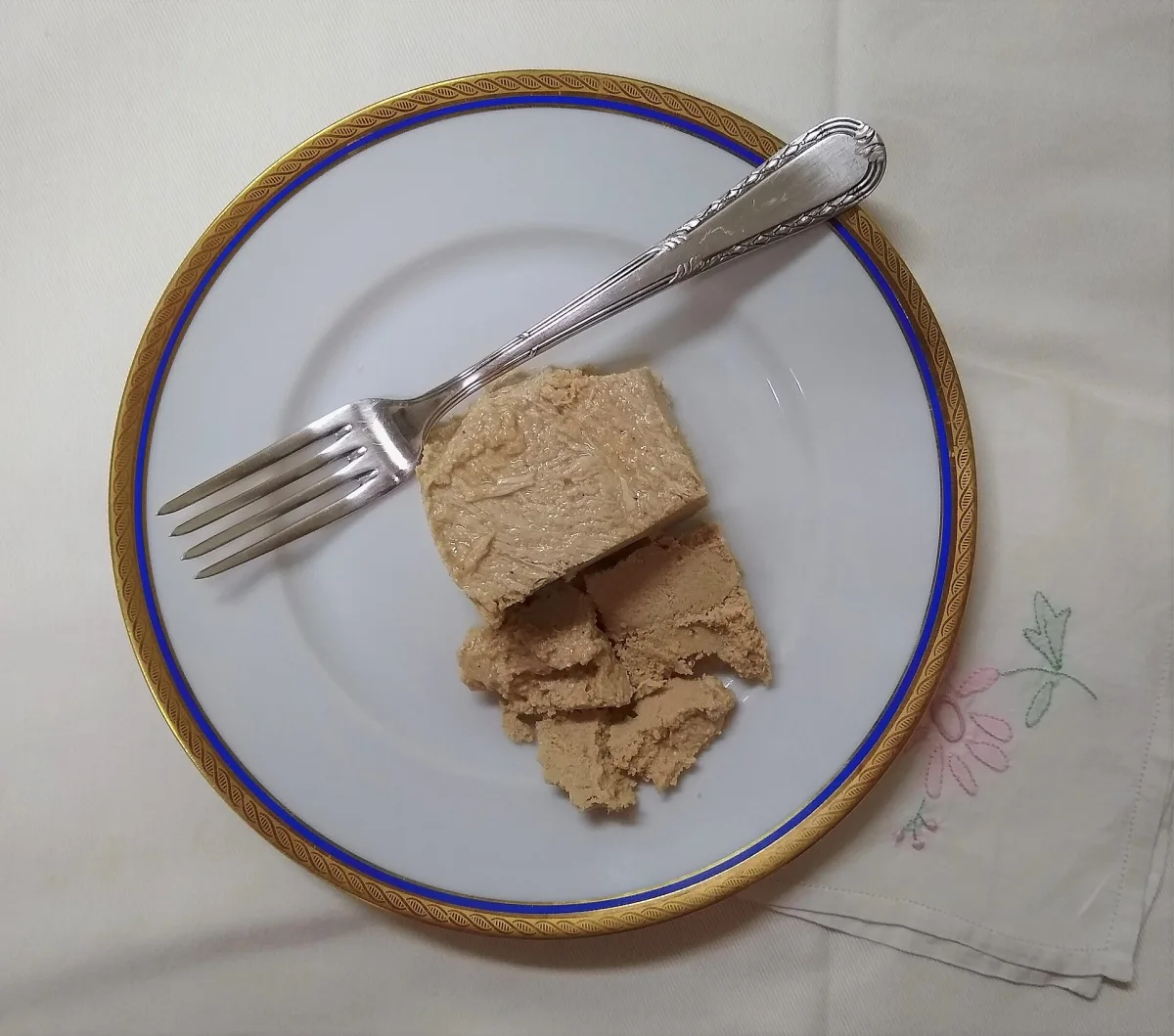
Photo: Mauro Cateb / Wikimedia Commons · CC BY-SA 4.0 · https://commons.wikimedia.org/wiki/File:Halawe_tahinniye.jpg
Halawa tahiniya is a staple of Egyptian breakfast and dinner, enjoyed with baladi bread or tucked into school sandwiches. At home, it is made from just two main elements: raw sesame tahini and sugar syrup cooked to the hard-ball stage, stirred together swiftly until the mixture sets and develops its signature threads. Commercial factories add soapwort root (erq al-halawa) for an extra-white color and long fibers, which you can easily purchase from a spice merchant if you wish to include it.
الوصفة بالفيديو 3:36 min
Method
-
1
Prepare the Pan and Nuts
Line a 20x10 cm loaf pan with parchment paper, leaving overhang on the sides so you can lift the halawa out later. Toast the pistachios in a dry skillet for 3 minutes and let them cool. Have everything ready before cooking the syrup, as the subsequent steps happen in seconds.
⏱ 5 min -
2
Warm the Tahini
Stir the tahini thoroughly in its container to reincorporate any oil separated on top, then place the measured amount in a wide heatproof bowl set over a pot of hot water until it becomes warm to the touch (around 45°C), and stir in the pinch of salt. Cold tahini causes the syrup to seize immediately and turn lumpy.
⏱ 5 min -
3
Start the Syrup
In a heavy saucepan, combine the sugar, water, and lemon juice, and stir over medium heat just until the sugar dissolves, then stop stirring entirely and let it boil. Stirring after it begins boiling causes the sugar to crystallize.
⏱ 4 min -
4
Reach the Hard-Ball Stage
Let the syrup boil for 8–10 minutes until a thermometer reads 120°C. Without a thermometer: drop a bead into a glass of cold water; if it gathers into a firm ball that resists your finger, it is ready. Remove from the heat and stir in the vanilla.
⏱ 10 min -
5
Quick Mixing
Pour the syrup over the warm tahini in a thin stream while folding with a wooden spoon from bottom to top. You will notice the mixture thickening, pulling away from the sides of the bowl, and forming thread-like strands — this occurs within 1 to 1.5 minutes — at which point scatter in the pistachios, fold 3 turns, and stop.
⏱ 2 min -
6
Press into the Pan
Immediately transfer the mixture into the prepared pan, cover with parchment paper, and press firmly with the palm of your hand or the bottom of a cup until smooth with no air pockets. Firm pressing ensures clean, non-crumbly slices.
⏱ 3 min -
7
Chill
Leave the pan for 1 hour at room temperature to cool down, then cover and refrigerate for at least 12 hours. The halawa firms up and develops its final texture slowly; slicing it too early will cause it to break apart.
⏱ 2 min -
8
Slice and Store
Lift the halawa using the parchment paper, slice with a sharp dry knife into 5 cm pieces, and store in an airtight container in a cool spot or in the refrigerator.
⏱ 3 min
Cooked it? Rate it
Your rating tells the next cook whether this recipe is worth their time.
✓ Thanks — your rating is in.
Tips that actually matter
- Want it pale and fibrous like commercial halawa? Boil 1 tbsp soapwort root (from a spice vendor) in 0.5 cup water for 10 minutes and strain, whip 2 tbsp of this liquid until it becomes white foam, and fold it into the hot syrup before pouring over the tahini.
- Use thick raw sesame tahini, not seasoned salad tahini; runny or watered-down tahini results in a soft halawa that will not hold its shape.
- For a chocolate version: separate one-third of the mixture right after combining, stir in 2 tbsp cocoa powder, layer both portions into the pan, and run a knife through to create a marbled pattern.
- Halawa keeps in a sealed container for 1 month in a cool area, and its flavor and flaky texture actually improve 2 days after preparation.
People also ask
Why did my halawa turn out soft and fail to set?
The syrup did not reach the hard-ball stage (it was below 118°C), or the tahini was too thin. Keep it in the refrigerator for a full day and it will likely firm up slightly; if it remains soft, use it as a spread on bread or as cake filling. Next time, test the syrup in ice-cold water before taking it off the stove.
Why did the halawa release oil and become crumbly?
This happens from over-stirring once the mixture has tightened, or from overcooking the syrup until it began caramelizing. Stop stirring the moment the mixture pulls away from the bowl and fibers show, then quickly transfer to the pan and press down.
Can I make halawa tahiniya without powdered milk?
The authentic traditional recipe contains no powdered milk at all: simply tahini and cooked sugar syrup, with soapwort root being optional for color and strands. Powdered milk is used in quick no-cook home variations to thicken without boiling syrup, but the flavor resembles milky fudge rather than authentic halawa tahiniya.
How can I tell the syrup temperature without a thermometer?
Drop a small bit of syrup into very cold water and gather it with your fingers: if it dissolves, it is not ready; if it forms a soft malleable ball, it still needs more time; if it forms a firm, solid ball that holds its shape when pressed, it has reached roughly 120°C and is ready.
Cook mode
Homemade Egyptian Halawa Tahiniya with Pistachios
-
1
Prepare the Pan and Nuts
Line a 20x10 cm loaf pan with parchment paper, leaving overhang on the sides so you can lift the halawa out later. Toast the pistachios in a dry skillet for 3 minutes and let them cool. Have everything ready before cooking the syrup, as the subsequent steps happen in seconds.
-
2
Warm the Tahini
Stir the tahini thoroughly in its container to reincorporate any oil separated on top, then place the measured amount in a wide heatproof bowl set over a pot of hot water until it becomes warm to the touch (around 45°C), and stir in the pinch of salt. Cold tahini causes the syrup to seize immediately and turn lumpy.
-
3
Start the Syrup
In a heavy saucepan, combine the sugar, water, and lemon juice, and stir over medium heat just until the sugar dissolves, then stop stirring entirely and let it boil. Stirring after it begins boiling causes the sugar to crystallize.
-
4
Reach the Hard-Ball Stage
Let the syrup boil for 8–10 minutes until a thermometer reads 120°C. Without a thermometer: drop a bead into a glass of cold water; if it gathers into a firm ball that resists your finger, it is ready. Remove from the heat and stir in the vanilla.
-
5
Quick Mixing
Pour the syrup over the warm tahini in a thin stream while folding with a wooden spoon from bottom to top. You will notice the mixture thickening, pulling away from the sides of the bowl, and forming thread-like strands — this occurs within 1 to 1.5 minutes — at which point scatter in the pistachios, fold 3 turns, and stop.
-
6
Press into the Pan
Immediately transfer the mixture into the prepared pan, cover with parchment paper, and press firmly with the palm of your hand or the bottom of a cup until smooth with no air pockets. Firm pressing ensures clean, non-crumbly slices.
-
7
Chill
Leave the pan for 1 hour at room temperature to cool down, then cover and refrigerate for at least 12 hours. The halawa firms up and develops its final texture slowly; slicing it too early will cause it to break apart.
-
8
Slice and Store
Lift the halawa using the parchment paper, slice with a sharp dry knife into 5 cm pieces, and store in an airtight container in a cool spot or in the refrigerator.


Comments
Cooked it? Tell us how it went, or ask a question — we read every comment.