
Ethiopian Kitfo with Minced Beef
Kitfo is finely minced beef mixed with spiced clarified butter (niter kibbeh) and mitmita chilli. It comes in three degrees: tere (raw), leb leb (rare), and yebesel (cooked through). At home, our advice is to cook it through.
- Prep
- 20 min
- Cook
- 12 min
- Total
- 32 min
- Calories
- 430
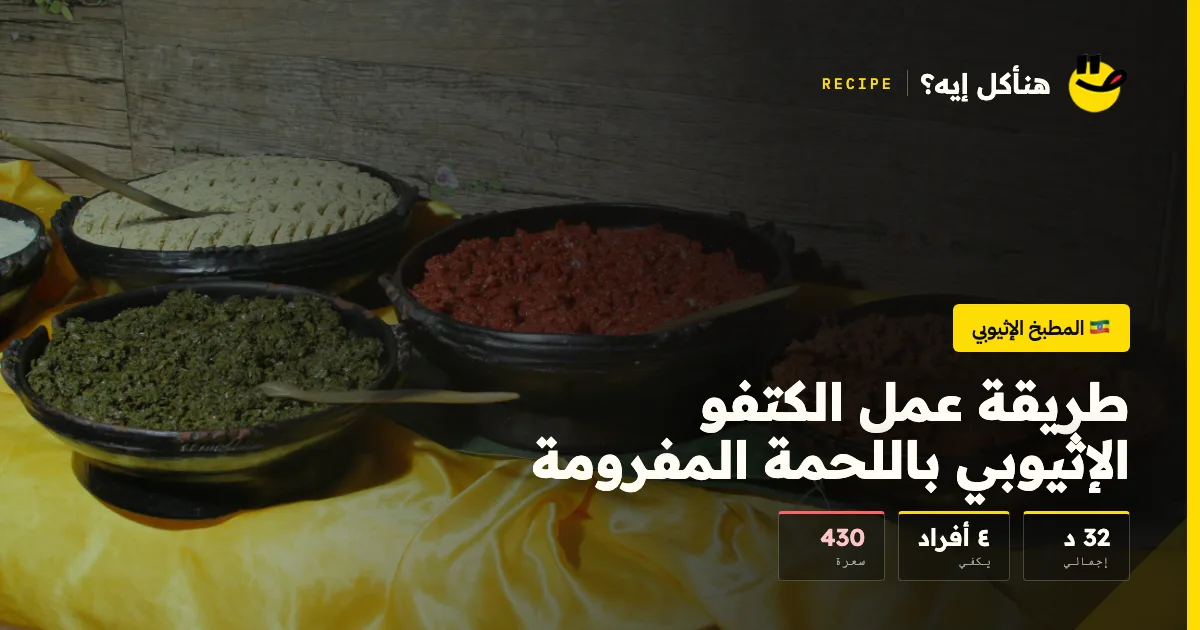
Kitfo is a celebration dish in Ethiopia, served at feasts and holidays. The traditional version is eaten raw, which demands very fresh meat from a source you trust. At home the safer route is to cook it — and the flavour stays close, because the character comes from the niter kibbeh and mitmita, not from the meat being raw.
Method
-
1
Make the niter kibbeh
Warm the butter gently with the fenugreek, cardamom, garlic and ginger for fifteen minutes without letting it boil, then strain out the solids. This is the foundation of the whole flavour.
⏱ 15 min -
2
Mince by knife
Chop the beef very finely with a knife rather than a mincer — knife-chopping preserves the texture, where a mincer presses it into paste.
⏱ 15 min -
3
Cook it through
Warm the meat in a pan over medium heat, stirring constantly, for six to eight minutes until it loses its red colour completely. Do not let it dry out.
⏱ 8 min -
4
Mix in the butter
Take it off the heat and add the warm niter kibbeh, the mitmita and salt, and stir thoroughly. The residual heat is enough to open up the spices.
⏱ 3 min -
5
Rest
Let the mixture rest for five minutes, covered and off the heat, so the spices distribute through the fat and the flavour settles. Taste it before and after and the difference is obvious.
⏱ 5 min -
6
Serve
Serve warm on injera with fresh soft cheese alongside. The contrast between the heat and the cool cheese is an essential part of the dish.
⏱ 3 min
Cooked it? Rate it
Your rating tells the next cook whether this recipe is worth their time.
✓ Thanks — your rating is in.
Tips that actually matter
- Mitmita is hotter and simpler than berbere — if you cannot find it, use berbere with a pinch of chilli.
- Knife-chopping versus mincing is a big difference: a mincer compresses the meat into a paste.
- Niter kibbeh keeps for months in a jar at room temperature and goes into almost every Ethiopian dish.
- The fresh cheese on the side is not optional — it is what tempers the heat.
People also ask
Does kitfo have to be eaten raw?
No. Traditionally it is raw or rare, but at home cooking it through is safer — and the flavour stays close, because the character comes from the niter kibbeh and mitmita.
What is niter kibbeh?
Clarified butter simmered with spices — fenugreek, cardamom, garlic and ginger — then strained. A foundational Ethiopian ingredient that keeps for months.
What can replace mitmita?
Berbere with a pinch of red chilli. Mitmita is simpler in composition and hotter; berbere is deeper and less fiery.
Can I use ready-minced beef?
You can, but the texture will be softer and closer to kofta. Knife-chopping is what gives kitfo its distinctive bite.
Cook mode
Ethiopian Kitfo with Minced Beef
-
1
Make the niter kibbeh
Warm the butter gently with the fenugreek, cardamom, garlic and ginger for fifteen minutes without letting it boil, then strain out the solids. This is the foundation of the whole flavour.
-
2
Mince by knife
Chop the beef very finely with a knife rather than a mincer — knife-chopping preserves the texture, where a mincer presses it into paste.
-
3
Cook it through
Warm the meat in a pan over medium heat, stirring constantly, for six to eight minutes until it loses its red colour completely. Do not let it dry out.
-
4
Mix in the butter
Take it off the heat and add the warm niter kibbeh, the mitmita and salt, and stir thoroughly. The residual heat is enough to open up the spices.
-
5
Rest
Let the mixture rest for five minutes, covered and off the heat, so the spices distribute through the fat and the flavour settles. Taste it before and after and the difference is obvious.
-
6
Serve
Serve warm on injera with fresh soft cheese alongside. The contrast between the heat and the cool cheese is an essential part of the dish.



Comments
Cooked it? Tell us how it went, or ask a question — we read every comment.