
Greek Galaktoboureko with Semolina Custard
Galaktoboureko is a Greek dessert: semolina and milk custard between layers of butter-brushed phyllo, soaked in lemon syrup after baking. The golden rule: cold syrup on hot pastry (or vice versa) — the temperature contrast ensures the phyllo absorbs it properly.
- Prep
- 40 min
- Cook
- 50 min
- Total
- 90 min
- Calories
- 340
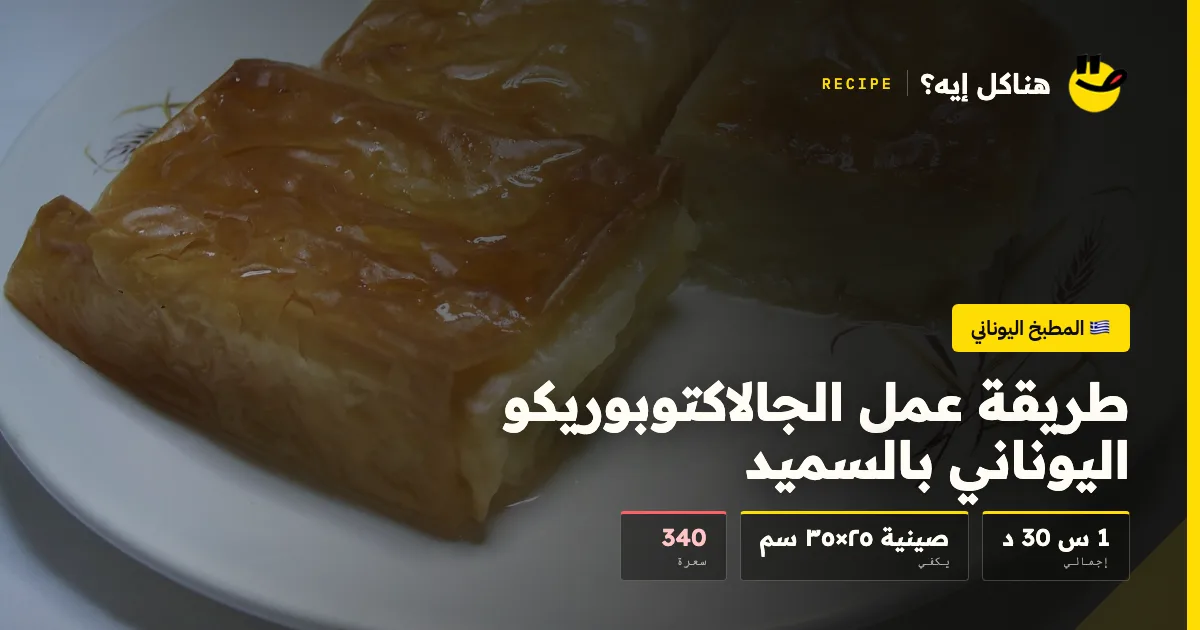
Photo: Philip Mallis — CC BY-SA 2.0 · Wikimedia Commons
The name Galaktoboureko means "milk pie", and it is one of the most beloved sweets in Greece. The difference between it and baklava is that its filling is creamy custard rather than nuts — making it lighter and less sweet.
Method
-
1
The Syrup First
Boil the sugar, water, and cinnamon stick for 10 minutes, turn off the heat and add the lemon juice. Let it cool completely — this is the first step so it is cold by the time the hot dessert comes out. The lemon prevents sugar crystallization.
-
2
Semolina Custard
Heat the milk with half of the sugar and lemon zest until almost boiling. Add the semolina in a thin stream with continuous whisking, and continue stirring over medium heat for 8-10 minutes until it thickens like pudding.
-
3
The Eggs
Beat the eggs with the remaining sugar, and add two ladles of the hot semolina mixture to them with fast whisking (gradual tempering), then return the whole mixture to the pot. Stir for 2 minutes on low heat, turn off and add the butter and vanilla.
-
4
Cooling the Custard
Transfer the custard to a bowl and cover it with plastic wrap touching the surface so it doesn't form a skin, and let it cool down. Very hot custard will melt the butter between the phyllo layers.
-
5
The Bottom Layer
Grease the pan with butter, and arrange half of the phyllo sheets one by one brushing each sheet with butter. Let the sheets hang over the edges of the pan. Cover the remaining phyllo with a damp towel while you work so it doesn't dry out.
-
6
Filling and Topping
Pour in the custard and spread it out. Fold the excess edges inward over the custard, and then arrange the remaining sheets brushed with butter. Brush the top generously with butter.
-
7
Cutting Before Baking
Cut the dessert into squares or diamonds with a sharp knife before baking — cutting after baking breaks the crispy phyllo. Sprinkle a splash of water on top so the layers don't fly around.
-
8
Baking and Soaking
Bake at 170 °C for 45-50 minutes until the top is dark golden and puffed. As soon as you take it out, pour the cold syrup over the hot dessert gradually. Let it sit for at least 4 hours to absorb before serving.
Cooked it? Rate it
Your rating tells the next cook whether this recipe is worth their time.
✓ Thanks — your rating is in.
Tips that actually matter
- Cold syrup on hot dessert — this rule prevents the phyllo from becoming soggy.
- Cover the phyllo with a damp towel while you work.
- Brush every single sheet of phyllo with butter, not every three.
- Cut it before baking, not after.
- Let it sit for 4 hours to absorb the syrup before serving.
People also ask
Why is the syrup cold and the dessert hot?
The temperature difference allows the syrup to be quickly absorbed into the dough without making it soggy. If both are hot or both are cold, the liquid stays on the surface and the phyllo absorbs it slowly, turning into a heavy dough.
What is the difference between it and baklava?
Baklava is filled with ground nuts and is very rich and dense. Galaktoboureko is filled with creamy semolina custard, making it lighter, less sweet, and completely different in texture. Both use phyllo and syrup.
The phyllo breaks while I'm working — what's the solution?
Phyllo dries out in minutes. Cover unused sheets with a damp, wrung-out cloth over plastic wrap. Frozen phyllo must thaw in the fridge overnight, not on the counter. Broken sheets are not a problem in the inner layers.
How many days does it keep?
3-4 days at room temperature covered with a towel (not plastic — it traps steam). The fridge makes the phyllo rubbery. It is best on the second day after it has fully absorbed the syrup.
Cook mode
Greek Galaktoboureko with Semolina Custard
-
1
The Syrup First
Boil the sugar, water, and cinnamon stick for 10 minutes, turn off the heat and add the lemon juice. Let it cool completely — this is the first step so it is cold by the time the hot dessert comes out. The lemon prevents sugar crystallization.
-
2
Semolina Custard
Heat the milk with half of the sugar and lemon zest until almost boiling. Add the semolina in a thin stream with continuous whisking, and continue stirring over medium heat for 8-10 minutes until it thickens like pudding.
-
3
The Eggs
Beat the eggs with the remaining sugar, and add two ladles of the hot semolina mixture to them with fast whisking (gradual tempering), then return the whole mixture to the pot. Stir for 2 minutes on low heat, turn off and add the butter and vanilla.
-
4
Cooling the Custard
Transfer the custard to a bowl and cover it with plastic wrap touching the surface so it doesn't form a skin, and let it cool down. Very hot custard will melt the butter between the phyllo layers.
-
5
The Bottom Layer
Grease the pan with butter, and arrange half of the phyllo sheets one by one brushing each sheet with butter. Let the sheets hang over the edges of the pan. Cover the remaining phyllo with a damp towel while you work so it doesn't dry out.
-
6
Filling and Topping
Pour in the custard and spread it out. Fold the excess edges inward over the custard, and then arrange the remaining sheets brushed with butter. Brush the top generously with butter.
-
7
Cutting Before Baking
Cut the dessert into squares or diamonds with a sharp knife before baking — cutting after baking breaks the crispy phyllo. Sprinkle a splash of water on top so the layers don't fly around.
-
8
Baking and Soaking
Bake at 170 °C for 45-50 minutes until the top is dark golden and puffed. As soon as you take it out, pour the cold syrup over the hot dessert gradually. Let it sit for at least 4 hours to absorb before serving.



Comments
Cooked it? Tell us how it went, or ask a question — we read every comment.