
Japanese Chicken Katsu Curry
Katsu curry is a chicken (or beef) cutlet coated in Japanese panko crumbs and fried until crisp, served on white rice with a thick, sweet Japanese curry — a curry closer to a brown gravy than to a hot Indian curry.
- Prep
- 30 min
- Cook
- 45 min
- Total
- 75 min
- Calories
- 740
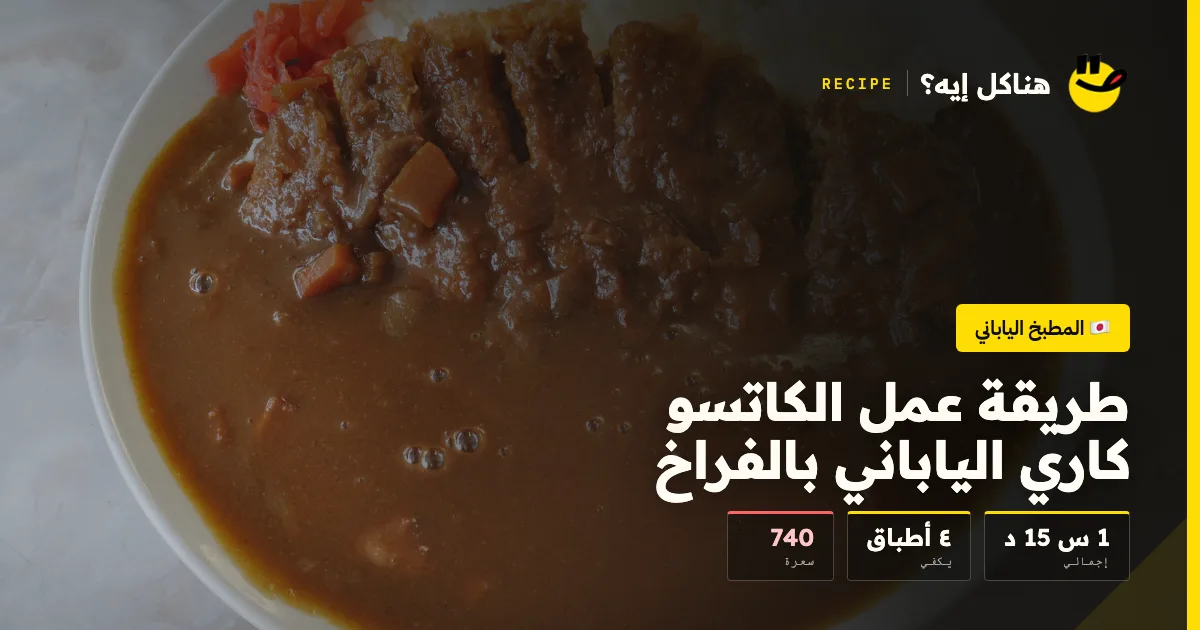
Photo: Andy Li — CC0 · Wikimedia Commons
Japanese curry is something else entirely from Indian curry: sweeter, thicker and milder. Alongside a panko-crusted cutlet, it makes a combination that explains the dish’s huge popularity in Japan.
Method
-
1
The Japanese roux
Melt the butter over low heat, add the flour and stir for 8–10 minutes until it turns light brown, like caramel. Add the curry powder and stir for just one minute. This brown roux is what gives Japanese curry its colour and depth.
-
2
The vegetables
In another pot, sauté the onion in oil for 10 minutes until soft and sweet, then add the carrots and potatoes and stir for 3 minutes. Pour in the stock, bring it to the boil, then simmer for 15 minutes until the vegetables are tender.
-
3
Combining the curry
Take a ladle of the hot liquid and stir it into the roux gradually until you have a smooth, runny paste, then return it all to the pot. Add the soy sauce and honey, and cook for 10 minutes until thick, like a heavy gravy.
-
4
Preparing the chicken
Butterfly the breasts and pound them to an even 1.5 cm, season with salt and pepper and leave for 15 minutes. Even thickness means the whole cutlet cooks at the same moment — uneven cutlets give dry edges and a raw centre.
-
5
Coating in panko
Dip each cutlet in flour (shaking off the excess), then egg, then panko, pressing lightly. Let it rest for 10 minutes on a rack before frying — resting makes the coating stick so it doesn’t fall off in the oil.
-
6
Frying
Heat the oil to 170°C (a panko crumb should bubble at once and turn golden in 30 seconds). Fry only one or two pieces at a time for 4–5 minutes, turning once, until golden. Drain on a wire rack, not kitchen paper.
-
7
Slicing and serving
Let the cutlet rest for 3 minutes, then slice it into 2 cm strips with a sharp knife. Put the rice in the middle of the plate and the curry beside it, with the slices over the border between the two so part of them stays crisp.
Cooked it? Rate it
Your rating tells the next cook whether this recipe is worth their time.
✓ Thanks — your rating is in.
Tips that actually matter
- Stir the roux for 10 minutes until light brown — it is the base of Japanese curry flavour.
- Pound the chicken to an even thickness so it cooks evenly.
- Let the coated cutlet rest for 10 minutes before frying so the coating sets.
- Drain on a wire rack — kitchen paper traps steam and softens the base.
- Put the curry beside the cutlet, not over all of it, so it stays crisp.
People also ask
What is the difference between Japanese and Indian curry?
Japanese curry is sweeter, thicker and milder, and it is based on a butter and flour roux, like French sauces. Indian curry is based on onion, tomato and plenty of spices, with a lighter texture. Japanese curry is eaten with sticky Japanese short-grain rice.
Why does the panko fall off in the oil?
Either the cutlet was wet before the flour, you didn’t let it rest, or the oil wasn’t hot enough. Dry the cutlet well, press the panko on, rest it for 10 minutes, and keep the oil at exactly 170°C.
Can I bake it instead of frying?
Yes, with a good result. First toast the panko in a dry pan with a spoon of oil until golden, then coat the cutlet and bake it at 200°C for 20 minutes on a wire rack. It is less crisp, but the taste is close.
Can I make the curry a day ahead?
Yes, and it is better that way — Japanese curry improves the next day like any stew. Reheat it gently with a splash of water, and fry the katsu fresh when serving.
Cook mode
Japanese Chicken Katsu Curry
-
1
The Japanese roux
Melt the butter over low heat, add the flour and stir for 8–10 minutes until it turns light brown, like caramel. Add the curry powder and stir for just one minute. This brown roux is what gives Japanese curry its colour and depth.
-
2
The vegetables
In another pot, sauté the onion in oil for 10 minutes until soft and sweet, then add the carrots and potatoes and stir for 3 minutes. Pour in the stock, bring it to the boil, then simmer for 15 minutes until the vegetables are tender.
-
3
Combining the curry
Take a ladle of the hot liquid and stir it into the roux gradually until you have a smooth, runny paste, then return it all to the pot. Add the soy sauce and honey, and cook for 10 minutes until thick, like a heavy gravy.
-
4
Preparing the chicken
Butterfly the breasts and pound them to an even 1.5 cm, season with salt and pepper and leave for 15 minutes. Even thickness means the whole cutlet cooks at the same moment — uneven cutlets give dry edges and a raw centre.
-
5
Coating in panko
Dip each cutlet in flour (shaking off the excess), then egg, then panko, pressing lightly. Let it rest for 10 minutes on a rack before frying — resting makes the coating stick so it doesn’t fall off in the oil.
-
6
Frying
Heat the oil to 170°C (a panko crumb should bubble at once and turn golden in 30 seconds). Fry only one or two pieces at a time for 4–5 minutes, turning once, until golden. Drain on a wire rack, not kitchen paper.
-
7
Slicing and serving
Let the cutlet rest for 3 minutes, then slice it into 2 cm strips with a sharp knife. Put the rice in the middle of the plate and the curry beside it, with the slices over the border between the two so part of them stays crisp.


Comments
Cooked it? Tell us how it went, or ask a question — we read every comment.